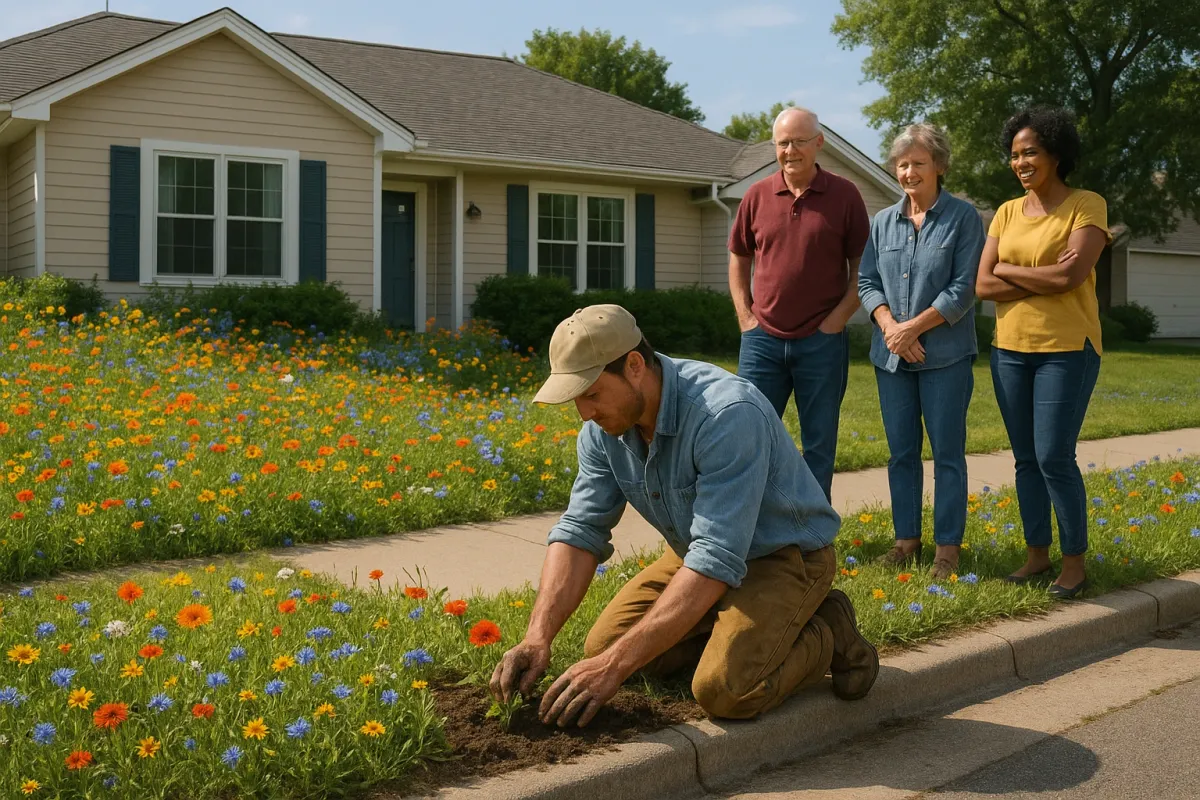
That dynamic shows up in our yards too. We tend to celebrate the flashy “bouquets”—the big purchases, the weekend mulch marathons, the new patio set—while the quiet, steady work of building healthy soil, welcoming birds, and shaping daily rituals goes unnoticed. But just like that daughter’s unseen love, it’s the persistent, thoughtful touches that actually hold a landscape—and a home—together.
Today, inspired by that real-time conversation about who gets credit and who quietly keeps things alive, let’s flip the script on our outdoor spaces. Instead of chasing showy perfection, imagine a porch and landscape that honor the “everyday caregivers” of your home: the small details, the subtle habitats, the quiet corners where you finally exhale.
Below are five design ideas to turn your yard into a living love letter—not to perfection, but to the steady, often‑unseen care that makes life outdoors feel like home.
1. The “Everyday Bouquet” Border: Flowers That Show Up All Season
In the viral story, the son’s occasional bouquet stole the spotlight. In your yard, you can celebrate the opposite: blooms that show up for you day after day, not once in a while. Instead of a single dramatic planting, create an “everyday bouquet” border—a narrow bed along your porch, walkway, or fence that layers color and texture from early spring through frost.
Start with long-blooming, low‑ego workhorses: coneflowers, black‑eyed Susans, salvia, and catmint, paired with ornamental grasses like feather reed or little bluestem. Mix in native perennials that support local pollinators, reflecting a bigger movement happening right now in landscaping—cities and homeowners trading high‑maintenance lawns for eco‑friendly, biodiversity‑rich plantings. Think milkweed for monarchs, asters for late‑season bees, and coreopsis for cheerful midsummer color. The magic is in succession: as one plant fades, another steps forward, so there’s always something quietly beautiful doing its job. This border becomes your daily reminder that steady presence—like the daughter’s unseen work—is the most powerful kind of beauty.
2. The Invisible Helpers Garden: Designing for Birds, Bees, and Quiet Guests
The mother in the news story noticed the flowers, but not the relentless care behind the scenes. Your landscape has its own unseen heroes too: soil organisms, pollinators, songbirds, even bats patrolling the dusk. Around the world, gardeners and designers are responding to alarming drops in pollinator populations by creating habitat-rich yards, and it’s transforming how “beautiful” is defined outdoors.
Dedicate one zone of your yard as an “Invisible Helpers Garden,” intentionally designed not for curb appeal first, but for life itself. Layer nectar‑rich flowers with seed‑bearing plants, berry bushes, and a small water source—a shallow bowl, birdbath, or mini pond. Let a corner go a little wild with leaf litter, fallen branches, or a low, messy brush pile tucked behind taller shrubs. Add a couple of birdhouses or bee hotels, and choose plants that provide food and shelter year‑round rather than just a single Instagram moment. Over time, you’ll notice the subtle payoff: more birdsong at dawn, butterflies looping through the air like living confetti, and that deep, grounded feeling that your yard is part of something larger than itself. Like the daughter in the story, this garden doesn’t shout—but without it, so much quiet goodness would be missing.
3. The Compassion Path: A Walkway That Slows You Down
In the Bored Panda piece, the daughter’s frustration grew from walking the same emotional path over and over, unseen and unappreciated. Outside, we can intentionally build a different kind of path—one that invites pauses, reflection, and self‑compassion instead of rushed routine.
Design a walkway that isn’t just about getting from the driveway to the door, but about taking a breath between the world and home. Instead of a straight, utilitarian line, let your path meander gently, even if you only have a small front yard. Use materials that feel warm and grounded underfoot—gravel that crunches softly, irregular flagstone that asks you to walk more mindfully, or brick that warms in the sun. Flank the path with scented plants at ankle and knee height: thyme between stepping stones, lavender at the edges, rosemary or basil near your porch. Tuck in a low bench or a simple stool halfway along, even if it’s just enough for one person and a mug of tea. This is your place to process the day before you step inside, to notice a new bud, a drifting leaf, the light on the hedge. Unlike the invisible labor in that family drama, this path makes your own inner life visible to you again.
4. The Shared Credit Corner: A Gathering Spot Where Everyone Contributes
The heartache in “Woman Doesn’t See How Much Her Daughter Is Doing For Her, Is Blinded By Flowers From Son” is about recognition and shared credit. Bring that lesson into your landscaping by creating a shared‑credit corner: an outdoor nook intentionally shaped by everyone who lives in or visits your home.
Start with a simple base—a small gravel pad, a section of patio pavers, or the landing of your porch. Then let it grow through contributions instead of one perfect design. One person might paint a terracotta pot; another might add a wind chime or thrifted side table; a child might plant a sunflower in a corner. You could hang a small board or weatherproof notebook where guests can write a word, intention, or doodle that captures how they feel in your space. Plant this corner with forgiving, easy‑to‑care‑for greenery: hardy ferns in shady spots, hostas, or dwarf shrubs that form a gentle backdrop for everyone’s experiments. Over time, this corner becomes a physical record of shared care, not a single person’s vision. It’s the opposite of the “golden child and forgotten helper” dynamic—an outdoor altar to the idea that many hands and hearts can shape one beautiful place.
5. The Quiet Care Ritual: A 10‑Minute Daily Tending Space
That daughter’s story is, at its core, about emotional burnout. She keeps showing up; it keeps going unnoticed. Your landscape can become a powerful antidote to that feeling, but only if it’s designed to support you in small, sustainable doses instead of overwhelming you with chores. This is where the Quiet Care Ritual garden comes in—a space intentionally scaled to match what you can realistically tend in ten minutes a day.
Choose a bed, a series of planters, or even just one large container right off your porch where everything is within arm’s reach. Fill it with plants that respond quickly to small acts of care: herbs that reward frequent pinching with bushier growth, annuals that burst into new blooms when deadheaded, lettuces that come back after you harvest a handful of leaves. Keep your tools right there—a small watering can, pruners, and gloves in a weatherproof box or basket. Each day, instead of doom‑scrolling another story about family drama or internet outrage, step outside for just long enough to water, trim, or harvest something. Watch how tiny, repeated gestures change the space over time. In a world obsessed with big, visible gestures—like the brother’s dramatic flower deliveries—this ritual anchors you in a different truth: small, consistent care reshapes the landscape, and you, from the inside out.
Conclusion
The headline about a daughter overshadowed by a single bouquet hits home because we’ve all felt like that at some point—doing the quiet work while someone else gets the visible flowers. But your porch, your garden, your front step do not have to repeat that story.
By planting long‑blooming borders instead of one‑time displays, designing for hidden wildlife, walking a path that honors your inner pace, sharing the credit in a cozy corner, and building a daily tending ritual, you turn your outdoor space into a living rebuke to that old pattern. Out here, steady effort is celebrated. Quiet beauty is noticed. Every small act of care leaves a visible trace.
Step onto your porch tonight, look around, and ask: where can I honor the unseen work—mine, nature’s, and everyone who shares this space with me? Start there. Let your landscape become the place where what once went unnoticed finally gets to bloom.