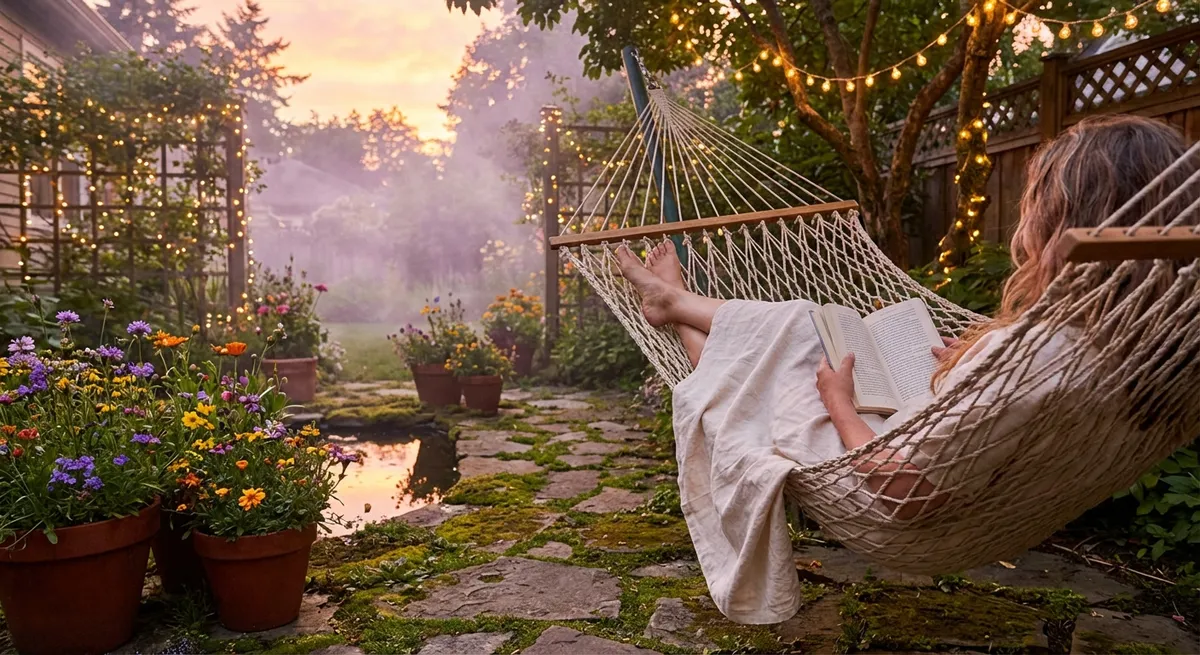
This isn’t about perfection or pricey makeovers. It’s about sculpting small, living scenes that help you breathe deeper, linger longer, and feel a little more at home in your own skin. Below, you’ll find five design ideas to turn ordinary ground into an everyday refuge for outdoor living enthusiasts who want more than just “curb appeal”—they want a landscape that feels like an exhale.
1. The Layered Green Embrace
Imagine stepping outside and feeling like the landscape is quietly wrapping its arms around you. That’s the power of layered planting—a soft choreography of heights, textures, and tones that makes even a small yard feel like a sanctuary instead of a flat, exposed space.
Start with a backbone of taller elements—ornamental trees, upright shrubs, or bamboo screens—to form a living backdrop. In front of that, add medium-height shrubs and perennials that offer seasonal interest: hydrangeas that blush and fade with time, echinacea that keeps bees and butterflies loitering through late summer, or grasses that catch every breath of wind. Closest to your paths and patios, weave in low-growing groundcovers and herbs that spill gently over edges, blurring the line between “garden” and “you.”
The secret isn’t symmetry—it’s rhythm. Repeat a few favorite plants to create a visual heartbeat, letting colors and textures echo softly from one corner to another. A chartreuse hosta can reappear by the steps, that rust-colored grass can pop up near the seating area. Over time, the space stops feeling like individual plants and starts feeling like a single, welcoming embrace.
2. Pathways That Invite You to Slow Down
A landscape without a path is like a story without a plot—you have nowhere to go, no reason to wander. Thoughtful pathways turn your yard into a journey, guiding your senses instead of just your feet.
Swap the idea of a straight shot from porch to gate for something looser and more human: a gently curving flagstone walkway, a meandering line of crushed gravel, or stepping stones floating in a carpet of creeping thyme. Let the path bend just enough that you can’t see exactly where it ends; that small mystery is what invites you to keep going.
Frame your route with low plantings that lean inward but never crowd: lavender that perfumes the air as you brush by, soft ferns that feel cool even in high summer, or flowering catmint that spills like mist across stone. Tuck in small surprises along the way—an unexpected bench, a sculptural rock, a low lantern. Suddenly, the simple act of taking out the trash or grabbing the mail becomes less of a task and more of a tiny walkabout, a daily chance to step into a slower rhythm.
3. A Quiet Corner for Weather Watching
Every landscape needs at least one spot where you can simply sit and listen to what the sky is doing. Think of this as your open-air observatory: a small, intentional nook designed for watching storms roll in, clouds drift by, and stars arrive one by one.
Choose a corner that feels naturally tucked away—maybe under a tree limb, beside a fence, or near a blank wall you can turn into a backdrop. Anchor the space with something comfortable but grounded: an Adirondack chair, a low-slung bench, or even a simple wooden stool paired with a plush cushion that can be brought inside when the weather shifts. Surround it with plants that respond vividly to the elements—tall grasses that hiss and bow in the wind, leaves that glisten after rain, flowers that open to the morning and close at dusk.
Add a small gravel or decomposed granite pad underfoot so mud doesn’t dictate whether you go outside. Include a side table or stump to hold tea on chilly days and iced drinks on warm ones. The goal is to create a seat that feels like it belongs to every season: a place where you’re not just looking at the weather—you’re in conversation with it.
4. Fire and Water: Balancing the Elements
Outdoor living comes alive when your landscape taps into the primal pull of the elements—especially fire and water, the twin forces that calm and captivate in equal measure. When designed well, they become more than features; they’re rituals waiting to happen.
For fire, think scale and intimacy. A low, modern fire bowl, a rustic stone ring, or a narrow linear burner can transform an ordinary patio into an evening gathering place where stories stretch later than you planned. Arrange chairs in a loose circle, leaving space for movement and stargazing. Surround this zone with plants that glow in low light—silver foliage, pale blossoms, and feathery textures that catch the flicker.
For water, you don’t need a sprawling pond. A compact fountain, a ceramic jar with a recirculating pump, or a simple wall-mounted spillway can create a soft soundtrack that muffles street noise and quiets the nervous system. Position it where you can hear it from your favorite outdoor seat—or even through an open window. Accent with moisture-loving plants—hostas, irises, or mosses—to heighten the sense of a small, self-contained world.
You don’t need both fire and water in the same view, but if you do combine them, use planting beds as gentle buffers so each element can shine. Together, they turn your yard into a place where evenings feel longer and the boundary between “weeknight” and “vacation” gets beautifully blurred.
5. Seasonal Scripts Written in Color and Light
A truly soulful landscape doesn’t look the same in every month; it changes with you, offering small, steady surprises as the year moves. Instead of chasing constant peak bloom, think of your yard as a living calendar where each season gets a chance to speak.
In spring, let bulbs and flowering shrubs write the opening lines: tulips and daffodils pushing through cool soil, serviceberry or redbud branches dusted with blossoms. As summer unfolds, hand the story to long-blooming perennials, leafy canopies, and fragrant herbs that invite slow, barefoot afternoons. Autumn can be your season of drama—maples igniting, ornamental grasses turning to copper, seedheads left standing like small sculptures against early frost. In winter, lean into structure and shadow: evergreen silhouettes, red twig dogwood, interesting bark, and outdoor lighting that treats branches and pathways like a shadow play.
Speaking of light, give it just as much attention as plants. Use warm, low-voltage lighting to trace a railing, graze a stone wall, or spotlight a beloved tree. Let lanterns and string lights cluster in only a couple of places so the yard has dark, star-friendly pockets elsewhere. Your landscape becomes less of a day-only experience and more of a 24-hour companion, whispering different things at noon, dusk, and deep night.
Conclusion
Landscaping isn’t just about what people see as they drive by; it’s about how you feel when you step outside and stay. When you layer plants like a soft embrace, carve paths that ask you to wander, claim a corner for watching the sky, invite fire and water to linger, and let every season have a voice, you’re not just decorating dirt—you’re composing a refuge.
You don’t need acres, a big budget, or perfect knowledge to begin. Start with one idea that sparks something in you: a chair under a tree, a curve in a path, a single fountain or fire bowl. Let your outdoor space evolve the way good stories do, one scene at a time. Before long, you’ll have more than a yard. You’ll have an earthbound daydream that knows exactly how to welcome you home.
Sources
- Royal Horticultural Society – Garden Design Basics – Guidance on structure, planting layers, and creating inviting outdoor spaces
- University of Minnesota Extension – Backyard Wildlife Habitat – Insight into planting choices that support birds, pollinators, and seasonal interest
- U.S. Environmental Protection Agency – Green Landscaping – Practical tips for water-wise, sustainable landscaping design
- Cornell University – Garden-Based Learning: Designing a Garden – Educational guidance on layout, paths, and creating functional outdoor rooms
- Better Homes & Gardens – Outdoor Lighting Ideas – Inspiration and technical basics for using lighting to enhance gardens and patios