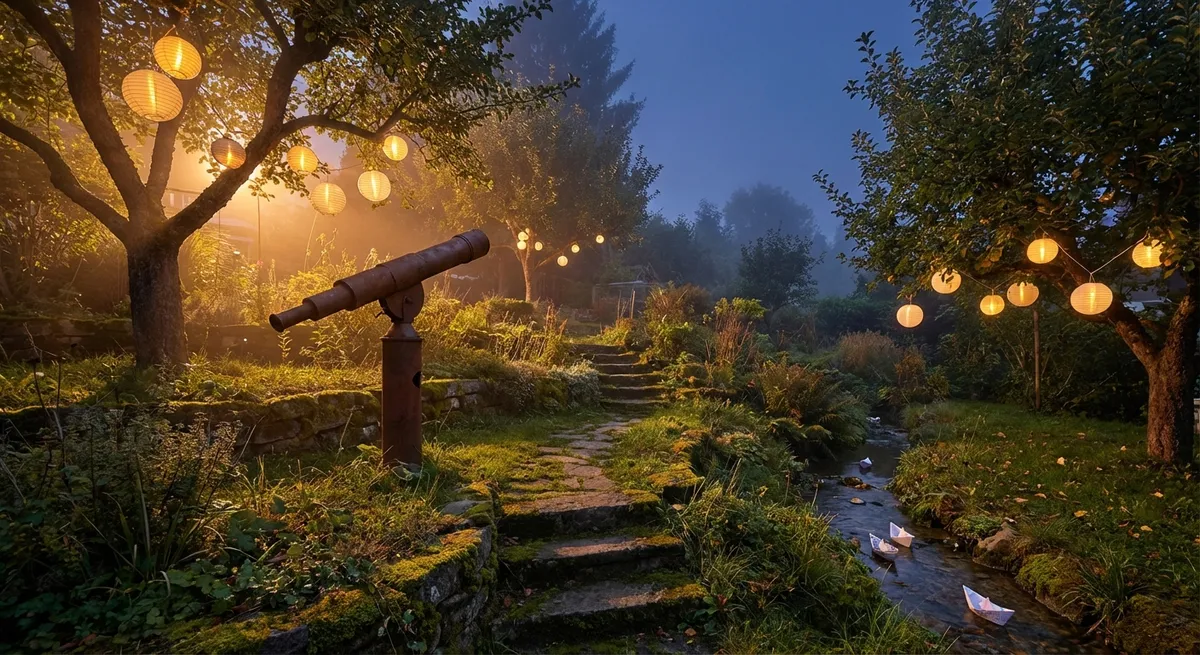
Think of your yard as a story that unfolds every time you open the door. These five design ideas are less about “decorating” and more about designing experiences—moments that pull you out of your head and back into your life.
Designing a Slow Path: Curves, Gateways, and Little Pauses
The journey through your yard should never be a straight line from “here” to “there.” Make the walk itself part of the pleasure.
Let your main garden path curve gently instead of marching in a straight line. Use stepping stones spaced just far enough apart to slow your pace. As you walk, let the landscape reveal itself in small scenes—lavender brushing your legs, a container of herbs by a bend, a low bench tucked into a corner of shade.
Create simple “gateways” to signal shifts in mood: an arbor with climbing roses, two tall planters framing a transition, or a trellis panel that conceals what’s just beyond. These subtle thresholds make even a small yard feel layered, like chapters in a book.
Plant with intention along the path: fragrant groundcovers like thyme between stones, tall ornamental grasses that whisper when you pass, and a few statement shrubs that catch the light at sunrise or sunset. The goal isn’t perfection; it’s a walkway that invites you to take the long way to the back door.
A Firelit Heart: Gathering Spaces That Glow After Dark
Every landscape needs a “heart”—a place where people naturally gather, lean in, and stay longer than they meant to. Fire is one of the oldest ways humans have made that happen.
Center your outdoor life around a fire element that matches your space: a built-in stone fire pit, a sleek gas fire bowl, or even a tabletop fire feature for smaller patios. Arrange seating in a loose circle, not a line, so eye contact and conversation flow easily.
Layer textures around the fire: gravel underfoot for that satisfying crunch, a low retaining wall that doubles as extra seating, side tables for steaming mugs and late-night desserts. Surround the area with plants that look beautiful in low light—silver foliage, feathery grasses, or glossy leaves that catch the flicker of the flames.
Illuminate the edges, not just the center. String lights overhead, solar lanterns along nearby paths, and soft uplighting on a single tree can create an intimate glow without washing out the stars. You’re not just designing a seating area; you’re making a ritual out of dusk.
The Edible Border: Beauty You Can Harvest
What if the loveliest parts of your garden also filled your kitchen? Edible landscaping turns borders, corners, and containers into a quiet parade of flavors and colors.
Blend herbs and vegetables into your existing beds instead of separating them in a “utility” plot. Pair purple basil with marigolds, kale with coneflowers, strawberries as groundcover under roses. Citrus trees in pots, blueberry shrubs as hedging, and espaliered apple trees along a fence all blur the line between ornamental and practical.
Think in layers: taller fruit trees as the canopy, berry bushes and tomatoes forming the middle story, herbs and lettuces carpeting the ground. This layered approach mimics natural ecosystems, supports pollinators, and makes even a tiny space feel rich and abundant.
Design the edible garden with the same care you’d give a flower border. Choose different leaf shapes, bloom times, and colors. Add a simple gravel or brick edging to make the planting feel intentional. When you walk outside to snip mint for tea or harvest tomatoes for dinner, the act of gathering becomes part of the beauty of the space.
Soundscapes: Water, Wind, and Wildlife as Design Elements
Landscaping isn’t just what you see—it’s what you hear when you finally stop scrolling and listen. Thoughtful outdoor design can turn your yard into a soundscape that steadies your breathing and softens the edges of the day.
Introduce water, even in the smallest way. A ceramic fountain, a simple recirculating bowl with a spout, or a narrow rill along a path can transform the mood of a space. The sound doesn’t need to be loud; a gentle trickle is enough to blur street noise and create a sense of refuge.
Plant for sound as much as for color. Tall grasses that rustle in the wind, bamboo that clicks softly, and trees with leaves that whisper during a breeze give your garden a living soundtrack. Place wind chimes thoughtfully—perhaps in a corner where the breeze is softer—to avoid overwhelming the natural musicality of the landscape.
Attract birds and beneficial insects with native plants, berry-producing shrubs, and a simple birdbath. The flash of wings and a few well-timed birdsongs can turn a quiet morning coffee into a small moment of awe. When you shape the sounds of your outdoor space, you’re really shaping the way your nervous system feels when you’re in it.
The Quiet Nook: A Personal Retreat Within the Larger Landscape
Every landscape deserves one place that feels like it belongs to you alone—a corner that seems to lean in and say, “Stay awhile.” This doesn’t have to be big; it just has to be intentional.
Choose a spot slightly away from the main gathering area: beside a side yard, under a small tree, at the very back of the property facing inward. Place a single comfortable chair, a narrow loveseat, or a built-in bench with cushions you don’t mind living outdoors.
Frame this retreat with plants that create a soft enclosure. Tall grasses, a screen of shrubs, or even a row of large pots with lush foliage can give just enough privacy to let your mind unclench. If you can, position your seat so you see something specific: a favorite tree, a view of the sky, or the widest stretch of your garden.
Add one small ritual object—a weatherproof side table with a candle, a lantern, a stack of outdoor-friendly books, or a simple notebook and pen. Nothing fussy, just an invitation. When you sit there at the edge of the day, surrounded by the landscape you’ve shaped, you’re not just in your yard—you’re in conversation with it.
Conclusion
Landscaping isn’t about getting every plant name right or following a perfect plan. It’s about tuning your outdoor space to the rhythm of your life—slower where you need rest, brighter where you crave connection, and always, always full of small details that make you want to step outside.
When your yard becomes a journey instead of a backdrop, you stop “using” it and start living in it. A curved path that invites wandering, a firelit heart that gathers your favorite people, an edible edge that feeds both eye and appetite, a soundscape that calms your thoughts, and a quiet nook that holds your solitude—these are not just design ideas. They are ways of saying yes to more life, just beyond your door.
Sources
- [United States Environmental Protection Agency – Green Landscaping](https://www.epa.gov/soakuptherain/soak-rain-rain-gardens) - Guidance on sustainable landscaping elements like rain gardens and plant choices
- [The Royal Horticultural Society – Garden Design Principles](https://www.rhs.org.uk/garden-design) - Practical advice on paths, focal points, and structural planting in gardens
- [University of Minnesota Extension – Edible Landscaping](https://extension.umn.edu/trees-and-shrubs/edible-landscaping) - In-depth overview of integrating fruits, vegetables, and herbs into ornamental landscapes
- [National Wildlife Federation – Native Plants and Wildlife Gardens](https://www.nwf.org/Garden-for-Wildlife/About/Native-Plants) - Information on using native plants to support birds, pollinators, and sound-rich, living landscapes
- [International Dark-Sky Association – Outdoor Lighting Basics](https://www.darksky.org/our-work/lighting/lighting-for-citizens/lighting-basics/) - Recommendations for gentle, star-friendly outdoor lighting that enhances evening garden spaces