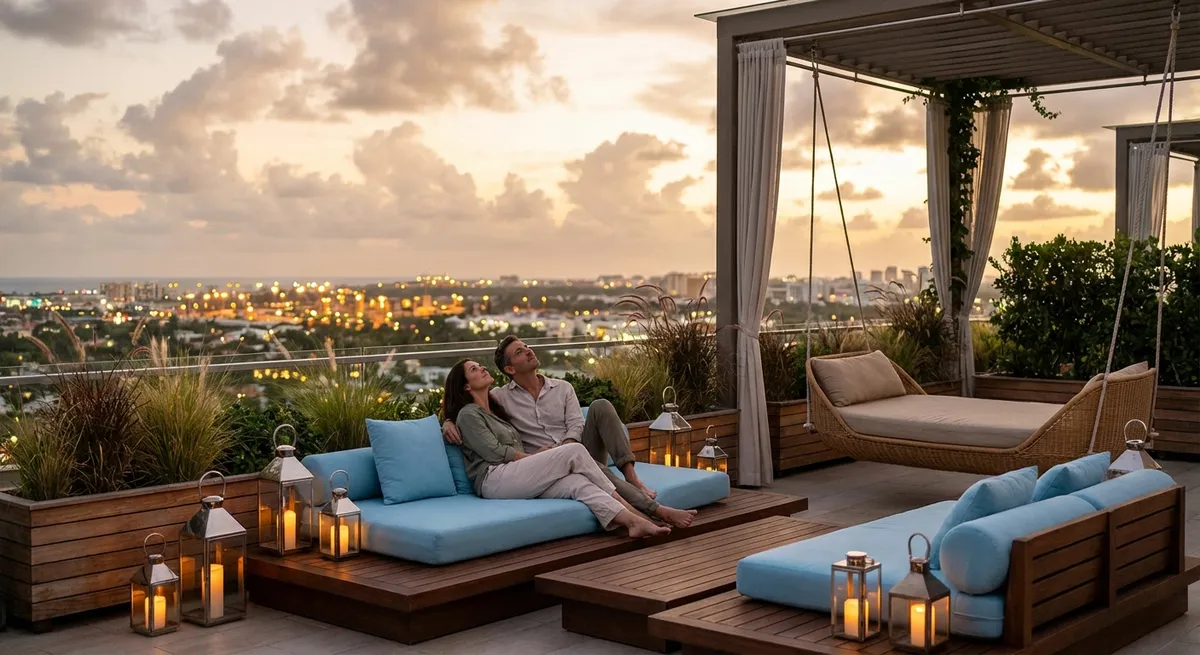
Designing a Soft Landing for Your Everyday Life
Before you think in colors or cushions, think in feelings. How do you want your outdoor space to hold you at the end of a long day? Do you need a place that feels like a slow exhale, or one that nudges you toward laughter and energy?
Start by imagining your outdoor area as a “soft landing.” That could mean a deep outdoor sofa layered with weather-resistant throw pillows, or a pair of reclined lounge chairs that angle you toward the sky instead of a screen. Look for furniture with gentle curves, supportive cushions, and tactile fabrics—performance textiles that resist fading and moisture but still feel like an invitation, not a compromise.
Materials matter here. Teak softly silvers with age, aluminum keeps things light and modern, and all-weather wicker suggests easy, barefoot afternoons. Mix them. A teak bench with a powder-coated steel side table and a woven ottoman feels collected over time, not copied from a showroom. When your furniture looks like it has a story, you’re more likely to sit down and write the next chapter in it.
Idea 1: The Conversation Island
Imagine stepping outside and seeing a small “island” of comfort in the middle of your space—a low-profile outdoor sectional framing a round coffee table, creating a natural circle. This isn’t just seating; it’s architecture in dialogue form. Every angle says: face each other, not your phones.
Choose a sectional or modular lounge chairs that can be rearranged. Surround a central, sturdy table that can hold everything from pizza boxes to candle clusters. Add an outdoor rug to visually anchor the island, making it feel intentional even in a larger yard.
Color can steer the mood. Soft neutrals with one bold accent—like ochre cushions or deep blue pillows—keep things calm but not sleepy. Layer in different heights: floor cushions for overflow guests, a tall side table for drinks, a low stool that can double as a plant stand or extra seating. With this layout, there’s no “good” seat; every spot feels included.
As the sun goes down, the conversation island transforms. Lanterns on the table, a string of lights overhead, and maybe a portable, battery-powered lamp create pockets of glow instead of a single harsh source. You’re not just furnishing a space; you’re shaping how stories are told in it.
Idea 2: The Reading Nook in the Breeze
Some days, outdoor living is less about entertaining and more about hiding—in a good way. A reading nook is a small, intentional retreat, perfect for anyone who craves a quiet corner with a book and the sound of wind instead of a playlist.
Start with a single indulgent piece: a chaise lounge, a hanging chair, or a deep, enveloping armchair designed for outdoors. The best ones almost insist you curl your legs up. Place it where the light is kind—near a wall for afternoon shade or under a pergola or umbrella if your space runs hot.
Add a small side table, big enough for a drink, a book stack, and maybe a journal. Then layer softness: a breathable, outdoor-rated throw blanket for cooler evenings, a lumbar pillow for long chapters. Plants can act as “walls” for your tiny library—tall grasses in containers, a climbing vine on a trellis, or a potted olive tree to create a sense of enclosure without stealing the sky.
Lighting is crucial for late reading sessions. A rechargeable outdoor lantern or solar-powered floor lamp beside your chair turns the nook into a twilight refuge. Over time, this corner becomes less about a chair and more about a ritual: you, a book, and the hum of the outside world, still there but finally quiet enough to share the page.
Idea 3: The Dining Table That Stretches Time
Outdoor dining isn’t just about grilled food and paper plates. With the right furniture, it becomes a slow ritual that pulls people outside and keeps them there long after the last bite. The dining table is the anchor—choose one that feels generous, even if your space is small.
For compact spaces, extendable outdoor tables or narrow, farmhouse-style tables can seat more people without overwhelming the footprint. Benches on one side are incredibly versatile: they tuck away neatly and can seat kids, adults, or both in a casual, communal way. Mix in chairs with arms at the ends for comfort and a sense of grounded elegance.
Think about texture and temperature. Metal tables reflect light and keep things sleek; wood adds warmth and ages gracefully; concrete (or composite versions) brings a sculptural, modern calm. Use seat cushions or chair pads covered in outdoor fabric to soften firmer frames. A table feels more inviting when it says “stay,” not “perch.”
Above and around the table, decorate with restraint but intention: a runner instead of a full tablecloth for practicality, a tray with candles and a small potted herb as a centerpiece you won’t mind moving for serving dishes. If you can, add a simple overhead structure—string lights, a pergola beam, or even a shade sail. It visually marks this as a place where time moves differently, where meals can drift into conversations that don’t need to hurry anywhere.
Idea 4: The Lounge That Doubles as a Daybed
There’s a particular kind of luxury that comes from being able to nap outside without planning it—just drifting off mid-afternoon because the furniture made it possible. Designing a versatile lounge that can become a daybed gives your outdoor space its own version of a “weekend” feeling, any day of the week.
Look for outdoor sofas with deep seats or dedicated daybeds designed for exterior use. The key is depth: you want enough room to lie sideways without feeling like you might roll off. Modular pieces are powerful here. Two chaise lounges pushed together, or a corner sectional with a large ottoman pulled in, can transform into an impromptu bed when needed.
Layer with weather-resistant cushions in varying firmness: a supportive base cushion, softer back cushions, and a couple of oversized pillows for sprawling. An outdoor-friendly throw or quilt folded at the end invites spontaneous naps without needing to go back inside.
Place your lounge-daybed hybrid where it interacts generously with nature—ideally where you can see sky, greenery, or water (even if that “water” is just a birdbath or a small fountain). A low side table for books and drinks and a portable shade solution (moveable umbrella or shade sail) complete the setup. Suddenly, your outdoor area isn’t just a place to sit; it’s a place to completely let go.
Idea 5: The Flexible “Move-Everything” Setup
Not everyone has a large yard or a permanent patio. Balconies, small decks, and shared courtyard spaces demand agility. The solution? Furniture that moves with you—and with the day you’re having.
Choose lightweight, stackable, or folding furniture pieces: bistro sets, folding teak chairs, nesting side tables, and stools that can double as tables or plant stands. This approach lets a morning coffee corner transform into an evening gathering spot without feeling cramped. Sleek outdoor poufs or low modular cubes can slide into any configuration you need.
Consider pieces on wheels: a bar cart that can become a plant trolley, a rolling bench, or a mobile storage unit for cushions and blankets. When everything can shift, your space becomes less rigid and more responsive to how you actually live—solo mornings, work-from-porch afternoons, or small group dinners.
Color and pattern can add personality without permanence. Removable cushion covers, outdoor rugs you can roll up, and interchangeable pillow sets let you change the mood seasonally. One day, your space might feel like a quiet retreat in soft earth tones; the next, it can wake up in bright corals and blues for a small celebration. In a flexible setup, your furniture is more like choreography than architecture—always ready to rearrange itself around your life.
Conclusion
Outdoor furniture is more than decor; it’s the scaffolding for the life you want to live beyond your walls. A single chair can become a sanctuary. A table can become a remembering place. A lounge can become a quiet kind of freedom.
When you choose pieces that invite the sky in—soft, adaptable, generous—you’re not just styling a porch or patio. You’re creating a place where the days stretch, the evenings linger, and the ordinary moments of your life finally have room to unfold. Step outside, sit down, and let the furniture hold the rest.
Sources
- Mayo Clinic – The Benefits of Time Outdoors - Overview of how outdoor time supports mental and physical well-being, reinforcing the value of outdoor living spaces
- U.S. Department of Energy – Patio, Pool & Outdoor Lighting - Guidance on efficient outdoor lighting that can complement furniture layouts and ambiance
- Sunbrella – Performance Fabric Technology - Details on weather-resistant, fade-resistant textiles suitable for outdoor cushions and upholstery
- University of Minnesota Extension – Decks, Porches and Patios - Practical considerations for planning and furnishing outdoor living areas
- Wood Database – Teak Overview - Information on teak’s durability and weathering characteristics, relevant to choosing long-lasting outdoor furniture