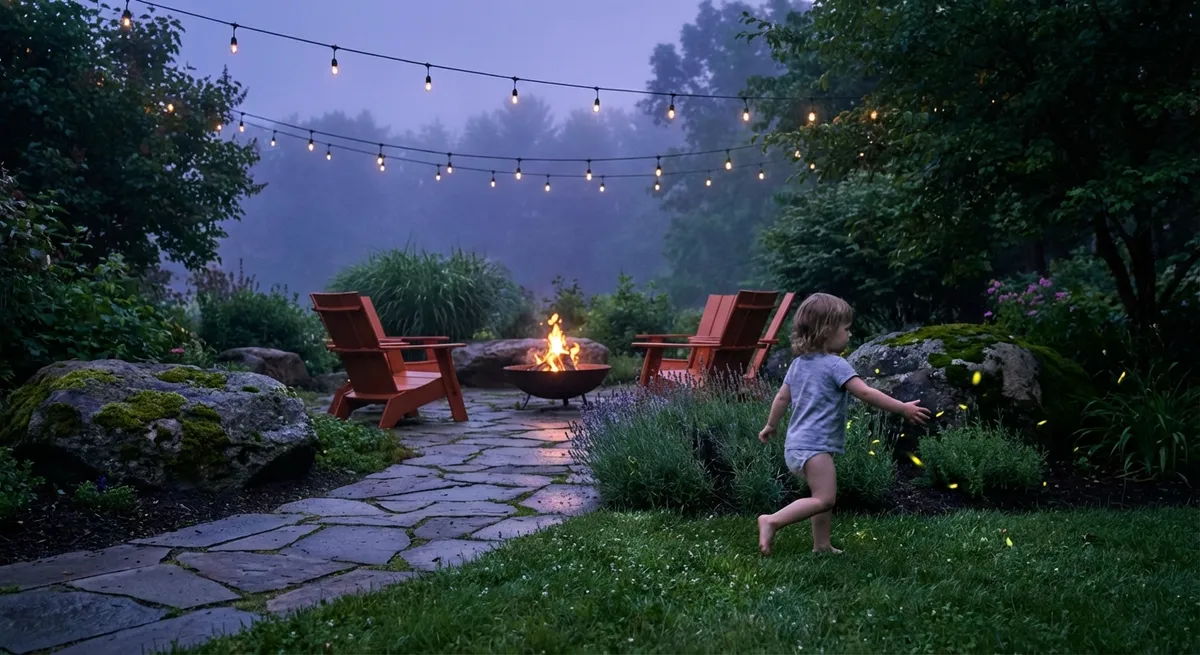
Below are five design ideas that turn outdoor space into an experience—landscapes that don’t just look beautiful, but feel like they’re on your side.
1. The Meandering Path That Refuses to Rush You
Straight lines are for schedules; winding paths are for people who want to breathe.
Design a path that bends gently instead of marching in a line. Let it curve behind a tall grass planting, slip past a flowering shrub, or narrow briefly as it ducks under a low-hanging branch. Use materials that feel grounded and human—crushed gravel that crunches, stepping stones set in moss, reclaimed brick with the softened edges of time.
Layer the sides of the path like a story unfolding: low groundcovers at your feet, knee-high blooms brushing your legs, taller shrubs or ornamental grasses shoulder-height and above. This vertical layering makes each step feel like a small reveal.
Subtle destination points—an old bench, a birdbath, a lantern on a stump, a small sculpture—encourage pauses. The goal isn’t to get from house to fence as fast as possible; it’s to create a journey worth taking even when you have nowhere to be.
2. The Seasonal Stage That Never Stops Changing
A truly magnetic landscape doesn’t peak for one perfect weekend and then fade into “just green.” It keeps reinventing itself.
Begin with a backbone of trees and shrubs that offer structure in every season: a small ornamental tree with spring blossoms, a shrub with fiery fall foliage, a conifer that keeps its color through winter. Around this skeleton, add perennials and bulbs with staggered bloom times—early bulbs for the first hopeful color, summer showstoppers, and late-blooming asters and sedums that carry you into sweater weather.
Think beyond flowers. Choose plants with interesting seed heads, bark patterns, or winter silhouettes. Ornamental grasses that catch frost, red-twig dogwood that glows against snow, hydrangea blooms left to dry on the stem—these details give your yard a quiet off-season charisma.
A seasonal landscape is a living clock. It teaches you the rhythm of your own piece of earth, so you’re not just watching the year pass on a calendar—you’re watching it grow, fade, and begin again right outside your window.
3. The Scented Corridor That Turns Evenings into Ritual
There’s something almost ceremonial about walking through fragrance. It asks you to notice, to inhale, to be present for a second longer than usual.
Create a “scent corridor” along the route you use most—maybe the path from driveway to front door, or from back door to patio seating. Place aromatic plants where your hands and shoulders naturally brush them: lavender along the edge of a path, rosemary by the steps, thyme between stones, mint in a container you can reach as you pass.
Layer evening and night-scented plants near your outdoor seating area. Night-blooming jasmine, nicotiana, or moonflower can transform the simplest chair and side table into an evening sanctuary once the sun slides down. Even a single pot of fragrant herbs, warmed by the day’s heat and releasing scent at dusk, can shift the mood.
As the air cools and the first stars arrive, you’ll find yourself stepping outside not just to “check the yard,” but to take a slow, scented lap—an everyday ritual that feels surprisingly close to meditation.
4. The Soft-Edged Sanctuary for Birds, Bees, and Quiet Hearts
Wildlife-friendly landscaping isn’t just an ecological choice; it’s an emotional one. A garden buzzing with bees, visited by butterflies, and frequented by songbirds feels alive in a way clipped lawns never quite manage.
Begin by relaxing the edges. Replace a slice of turf with a pollinator patch or mini wildflower meadow. Choose native plants whenever you can—they’re adapted to your climate and offer the right nectar, seeds, and shelter for local species. Look for a mix of flower shapes and bloom times so something is always on the menu.
Add water, even in the simplest form: a shallow birdbath, a small bubbler fountain, or a glazed saucer filled with pebbles for bees to land on. The sound of gentle water belongs in every sanctuary.
Most importantly, let a little imperfection stay. Fallen leaves beneath shrubs become habitat. Seed heads left on perennials feed winter birds. A corner that’s “a bit wild” becomes a home, not a flaw.
You’ll find that when you plant for other living things, you grow something in yourself too—a quiet, steady satisfaction in sharing your space.
5. The Fire-and-Shadow Nook That Glows After Sunset
Even the smallest yard can host a pocket of magic after dark.
Select a spot that feels a bit tucked away—against a fence, near a tree, or in a corner of the patio. Frame it with plants that look dramatic in low light: tall grasses that catch the glow, glossy-leaved shrubs, or pale flowers that seem to float at night. Add texture with elements like a rough stone, a woven chair, or a wooden stool that doubles as a side table.
Introduce a gentle fire element or soft light source: a compact fire bowl, lanterns clustered on the ground, string lights draped with intention rather than excess. The key is contrast—small pools of light against larger fields of shadow so the night still feels like night.
Keep the seating intimate: two chairs, a bench, or even floor cushions on an outdoor rug. This is a place for whispered conversations, solo journaling, or simply watching the embers and listening to the crickets.
By designing for darkness as deliberately as you design for daylight, you give your landscape a second personality—the daytime garden’s quieter, deeper twin.
Conclusion
Landscaping is often treated as a finishing touch, an afterthought once the “real” work of building is done. In truth, it’s the opposite: it’s the beginning of a relationship. With your soil. With the seasons. With the creatures that share your space. And, quietly but profoundly, with yourself.
When you trade straight lines for wandering paths, single-season color for year-round change, empty corners for sanctuaries, your yard stops being a backdrop and starts becoming a place you live in, not just walk through.
Step outside with intention. Imagine how you want to feel out there—unhurried, inspired, held—and let every plant, stone, light, and texture move you a little closer to that feeling. Your landscape doesn’t have to be grand to be unforgettable; it just has to be honest, and designed for the way you actually want to spend your days.
Sources
- United States Environmental Protection Agency: Green Landscaping - Guidance on sustainable landscaping practices and rain gardens
- Lady Bird Johnson Wildflower Center (University of Texas at Austin) - Extensive database and information on using native plants in landscape design
- National Wildlife Federation: Garden for Wildlife - Best practices for creating wildlife-friendly yards and pollinator habitats
- Royal Horticultural Society: Designing Your Garden - Principles of garden layout, structure, and planting for year-round interest
- Royal Horticultural Society: Sensory Gardens - Ideas for incorporating scent, texture, and sound into landscape design