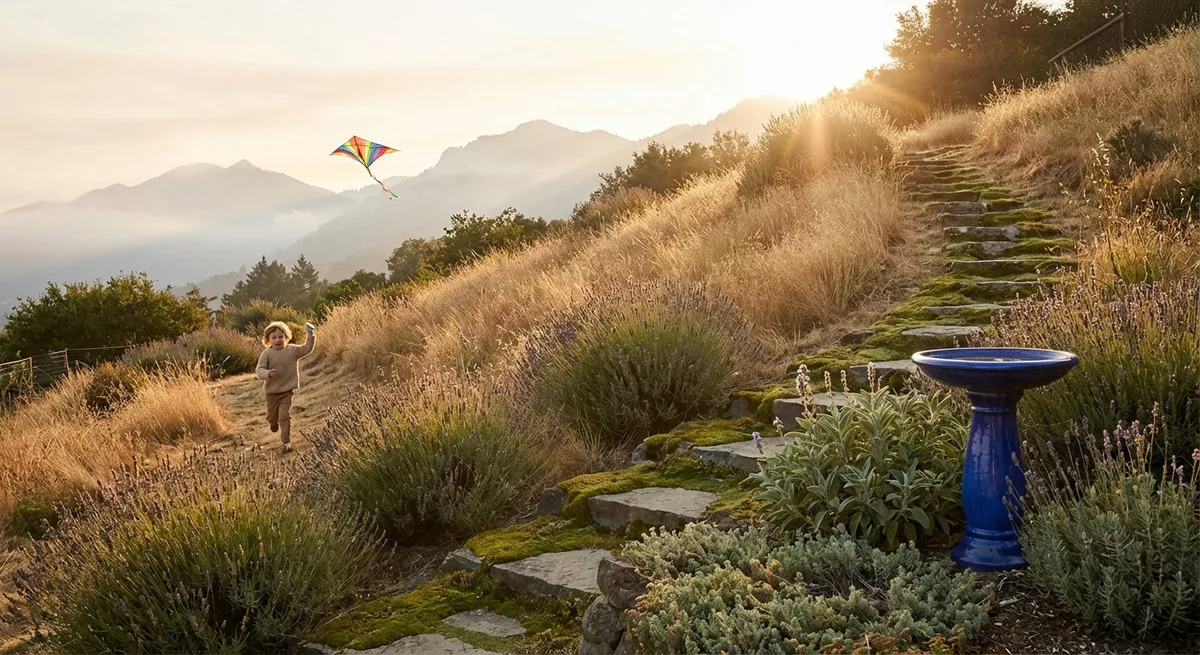
Below are five design ideas to help you shape a landscape that doesn’t just decorate your life, but participates in it—through scent, light, texture, memory, and the quiet magic of growing things.
Plant Rooms: Shaping Outdoor Spaces That Feel Like Chapters
Instead of thinking of your yard as one big open space, imagine it as a book of short chapters. Each “room” offers a different mood: a corner for coffee and reflection, a wide-open space for laughter and lawn games, a tucked-away path for wandering thoughts. Landscaping becomes your way of drawing these chapters into existence.
You can define these plant rooms using low hedges, rows of ornamental grasses, or even a simple change in ground texture—from smooth pavers to crunchy gravel or soft groundcover. A small flowering tree can serve as an outdoor “ceiling,” softening harsh sunlight and making a space feel held instead of exposed. Taller elements like trellises wrapped in vines or freestanding screens give you the power to close a view or frame it, just like a picture on a wall.
In a larger yard, you might weave these rooms together with curves instead of straight lines so every turn feels like a reveal. In a small yard, even a single L-shaped bench with potted plants behind it can carve out a nook that feels intentionally separate from the rest of the space. The goal is not to build walls, but to gently suggest boundaries—using plants, light, and texture—to signal to your brain: this spot is for resting, this one is for gathering, this one is for dreaming.
The Story Path: Designing Walkways That Invite Wandering
A simple path can be more than a shortcut from the porch to the gate. Done thoughtfully, it becomes an unfolding story, guiding your eyes and your feet at the same time. When you slow a path, you slow the person walking it—and that’s where the magic begins.
Curving paths are especially powerful: they hide what’s next, inviting just one more step. You might use natural stone with wild thyme or creeping moss peeking between the cracks, releasing scent as you walk. Crushed gravel offers a satisfying crunch underfoot, making every step feel intentional and grounding. Even concrete can become poetic when softened by ornamental grasses, low perennials, and small solar lights tucked subtly along the edges.
Plant taller elements at turns or pauses in the path—like a striking shrub, a birdbath, or a simple bench—to create tiny destinations. These spots give you permission to stop, breathe, and notice. In compact spaces, consider a looped mini-path that simply circles a centerpiece tree or raised bed, turning even a small garden into a place to stroll rather than just stand.
Every material and plant along the path is a character in your story: the feathery movement of miscanthus in the breeze, the glossy leaves of boxwood you brush against, the surprise of a flower you didn’t see coming from the house. The path is more than circulation; it’s the ritual of arriving.
Sensory Layers: Landscaping That Lets You Feel Every Season
A landscape that touches your senses lives with you, not just around you. Think of your yard as a full orchestra rather than a single instrument—sight, scent, sound, and touch working together so that stepping outside feels like entering a quiet symphony.
Start with sight: mix evergreens with deciduous trees and shrubs so your yard doesn’t go emotionally flat in winter. Seek plants that change dramatically with the seasons—spring blossoms, summer lushness, fall color, winter bark and structure. Layer heights so your eye travels naturally from groundcovers and low perennials to medium shrubs and then to taller structural trees.
Then add fragrance. Herbs like lavender, rosemary, and thyme can border walkways and patios so you brush by them daily. Plant night-scented flowers near seating areas you use in the evening, such as jasmine or Nicotiana, so fragrance arrives right when you’re finally ready to unwind. Place a few potted plants with bold textures—fuzzy lamb’s ear, glossy camellia leaves, the papery flick of ornamental grasses—in reach of your hands.
Sound is the secret ingredient. A small fountain or bubbling urn can mute neighborhood noise and create a soft, continuous hush. Wind chimes, if chosen carefully, can be subtle rather than overwhelming. Choose plants that move—bamboo canes, grass plumes, small-leaved trees that tinkle in the wind—so your yard always feels quietly alive. When this sensory layering is done well, your space becomes less of a backdrop and more of a living companion that meets you differently in January than it does in June.
Wildlife Welcome: Turning Your Yard Into a Gentle Refuge
When you invite birds, butterflies, and pollinators into your landscape, you’re not just creating a prettier view—you’re participating in a larger story of care and connection. The flutter of wings outside your kitchen window, the quiet visit of a hummingbird at your breakfast table, these are moments that tether you to something bigger than your to‑do list.
Start by choosing a few native plants suited to your region; they’re the ones local wildlife recognizes as home. Flowering perennials like coneflower, bee balm, and milkweed can bring in butterflies and bees, while berry-producing shrubs offer food and shelter for birds. Layer in a mix of bloom times so something is always in flower from early spring through late fall, turning your yard into a dependable rest stop.
Water is an invitation few creatures can refuse. A simple birdbath, shallow dish, or small recirculating fountain offers a lifeline, especially in hot summers. Add a few flat stones so insects and small birds have a safe landing spot. Even leaving a small brush pile or a patch of wild meadow-like planting in a corner can provide crucial habitat.
The beauty of a wildlife-friendly landscape is that it feels less manicured, more alive. You don’t have to give up order or elegance; you simply loosen your grip in certain areas. Over time, you’ll start to recognize regular visitors—the robin that favors the same branch, the goldfinch that loves your sunflowers. Your yard stops being just “yours” and becomes a shared refuge, humming at the edges with its own quiet life.
Gathering Edges: Places Where People and Plants Overlap
The most memorable outdoor spaces blur the line between where the garden ends and living begins. Instead of large, empty lawns with seating marooned in the middle, imagine “gathering edges” where plants and people share the same air—close enough that you can lean back and touch a leaf, trail your fingers through a flower, or inhale the scent of basil over a summer meal.
Build your primary seating or dining area so it feels cradled by greenery on at least two sides: a low hedge behind a bench, raised beds flanking a dining table, or a border of tall perennials forming a soft wall. This creates intimacy and gently shields you from the outside world, even in a small urban yard. Consider mixing edible plants with ornamental ones—tomatoes twining up a trellis beside climbers, herbs filling in gaps between flowers, strawberries spilling over the edge of a raised bed at your feet.
Make sure there is at least one spot designed for lingering: a deep chair with a small table for a book and a mug, a swing beneath a tree, or a simple bench angled toward the best view. Add a layer of warm, low lighting so the space feels welcoming even after sunset—string lights, lanterns, or pathway lights that highlight nearby plants instead of just blasting the seating area.
These gathering edges become the emotional heart of your landscape. They’re where birthday cake is sliced, where hard conversations go a little softer in the open air, where ordinary Tuesday dinners feel just a bit more like a celebration simply because you’re outside, surrounded by things that grow.
Conclusion
A landscape is more than a frame around your house; it’s a living language your home uses to speak to you. With thoughtful design, your yard can become a place that slows you down on busy mornings, absorbs your worries in the hush of evening, and offers you small, steady doses of wonder all year long.
You don’t need acres or perfection to begin. Start by shaping one small plant room, or softening a single path. Welcome one birdbath, one scented herb, one quiet bench at the edge of the garden. Over time, your outdoor space will start to feel less like a project and more like a relationship—one that meets you at the door and whispers, every time you step outside: stay a while, breathe, this is your place.
Sources
- United States Environmental Protection Agency – Green Landscaping - Discusses sustainable landscaping practices and design ideas that support healthy outdoor spaces
- National Wildlife Federation – Garden for Wildlife - Explains how to design yards that support birds, butterflies, and pollinators
- Royal Horticultural Society – Garden Design Principles - Covers core concepts like creating garden rooms, paths, and layered planting
- University of Minnesota Extension – Designing Outdoor Spaces - Offers research-backed guidance on structuring functional and beautiful landscapes
- Cornell University – Creating a Sense of Place in the Landscape - Explores how landscape design influences mood, experience, and connection to outdoor spaces