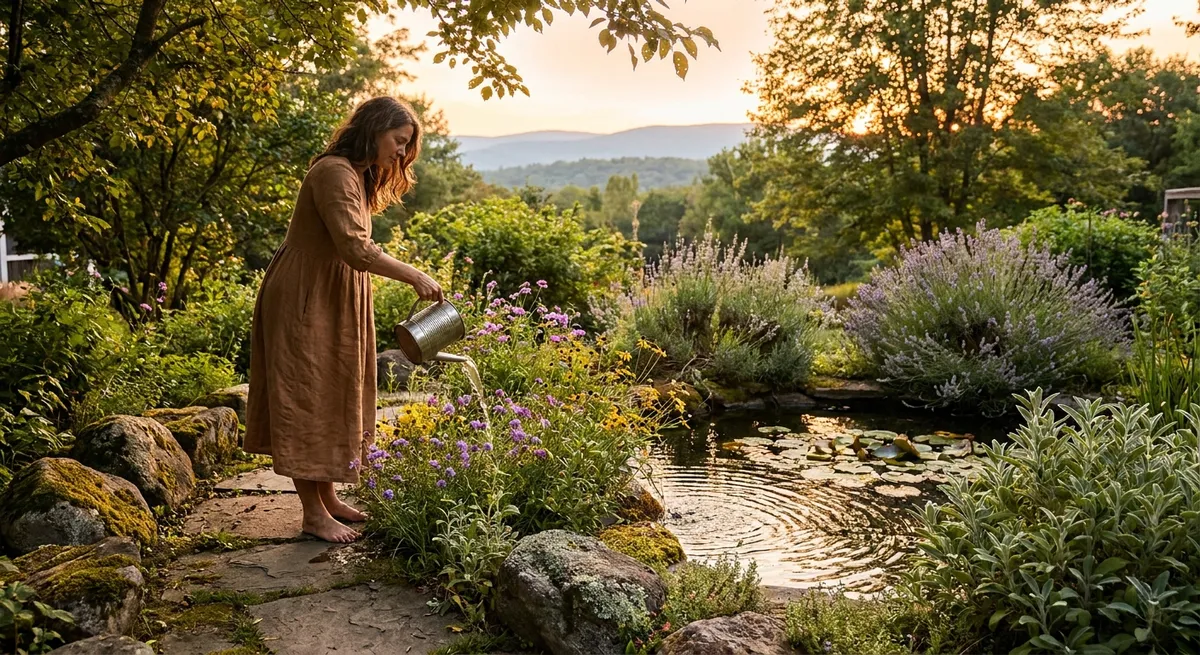
Designing for Feeling, Not Just for Looks
Most landscapes begin with a shopping list: mulch, shrubs, maybe a tree that promises fall color. But the landscapes that linger in your memory start with a feeling. Close your eyes for a moment and ask: how do I want to feel when I step outside? Unrushed? Playful? Quietly powerful? Your answer should be the compass for every decision you make.
Instead of asking, “What should I plant here?” ask, “What experience could this corner hold?” A narrow side yard can become a contemplative walkway, a front yard a neighborhood gathering space, a shady patch an afternoon reading lounge. Think of light as a material, just like stone or wood. Notice where the sun lands in the morning and where shadows pool at dusk—then lean into those moods with your design. Landscaping becomes less about filling space and more about composing moments.
When you design from the inside out—starting with what you want to feel—your yard begins to tell a story that’s yours alone. The result isn’t just a “pretty yard”; it’s a place that knows how to meet you where you are, on your best days and your hardest ones.
Idea 1: The Meandering Path That Slows Time
Straight paths are for getting somewhere. Meandering paths are for remembering you don’t always have to. A gently curving walkway invites you to wander instead of rush. It draws your eyes—and your feet—forward, one soft bend at a time, like a sentence that never quite ends with a period.
Choose materials that feel good underfoot: gravel that crunches softly, flagstone that holds the day’s warmth, or wood chips that breathe the scent of the forest after rain. Let plants blur the edges—ornamental grasses that sway and whisper, low herbs like thyme or chamomile that release fragrance when brushed, and perennials that lean in just a bit, making each step feel like passing through a friendly crowd.
Layer your plant heights so the path feels like a gentle embrace: groundcovers at your feet, knee-high blooms beside you, taller shrubs or small trees offering a leafy canopy. Consider small pauses along the way—a stone to sit on, a birdbath, a lantern. These are the commas in your landscape’s language, encouraging you to stop mid-sentence and look around. Over time, this path becomes less about where it leads and more about who you become while walking it.
Idea 2: A Seasonal Theater Right Outside Your Door
Imagine your yard as a four-act play, each season a new scene with its own colors, textures, and small surprises. Spring’s soft greens and blossoms give way to summer’s lush fullness, then to autumn’s fire and winter’s quiet architecture. When you design for seasonal drama, your landscape never feels finished—and that’s exactly the point.
Start by giving each season a starring role. In spring, welcome the first brave colors with bulbs—daffodils, tulips, crocus—that push through cold soil and promise that winter is not forever. In summer, create abundance: flowering perennials, berry-producing shrubs, and leafy canopies that throw generous shade. Autumn can be your symphony of gold and crimson, with maples, serviceberry, or oakleaf hydrangeas turning the whole yard into a slow-burning sunset. Winter, often forgotten, is where structure shines: evergreens, sculptural branches, grasses left standing to catch frost and morning light.
Think in layers of time as well as layers of height. Choose plants with staggered bloom times so something is always waking up or bowing out. Add a few simple rituals: a particular chair you bring out only in spring, a lantern you light only when the first autumn chill arrives, a favorite mug for watching snow collect on the branches. Your landscape becomes a calendar you can walk through, reminding you that change is not just inevitable—but beautiful.
Idea 3: An Edible Border That Nourishes More Than Hunger
There is a particular magic in eating something you picked five minutes ago, from a few steps away. Edible landscaping tucks that magic into everyday life. Instead of confining food to a separate vegetable patch, you let it mingle with your ornamental plants, blurring the line between “garden” and “yard.”
Swap some of your usual shrubs for fruiting ones: blueberries as foundation plantings, currants along a fence, dwarf apples or pears as living sculptures. Edge pathways with low-growing herbs—rosemary, oregano, chives, thyme—so your strolls become sensory tastings. Mix leafy greens and colorful lettuces into flower beds; they bring incredible texture and are every bit as beautiful as many ornamentals.
As you design, think about who else you’re feeding. Native flowering plants draw pollinators, making your edible garden more productive. A shallow water dish or small birdbath turns your yard into a waystation for birds, who reward you by eating some pests. You’re not just planting food; you’re planting a tiny ecosystem of exchange and generosity. Harvest days become small celebrations, and your landscape stops being purely decorative—it starts to participate in your life, one ripe berry and sun-warmed tomato at a time.
Idea 4: A Quiet Soundscape in Green and Stone
Landscaping is often about what we see, but the most restorative spaces are designed for the ears as much as the eyes. A soundscape garden is an invitation to listen—to birds, to water, to wind, and to the silence in between. It’s a sanctuary for those days when your brain feels loud and the world feels louder.
Begin by softening the sounds you don’t want. Dense shrubs or hedges can muffle street noise, while earth berms or tall grasses help absorb sound. Then add the notes you do want: a small fountain or bubbler that murmurs instead of roars, bamboo that clicks in the breeze, leaves that clap or rustle, seed heads that rattle gently in winter wind. Wind chimes, if you love them, can be placed where the breeze is light, so their song is occasional, not constant.
Choose plants that invite birdlife—native species rich in nectar, seeds, or berries—and give them places to land and nest. A single tree can become an orchestra when dawn arrives. Position a bench where the acoustics feel right, perhaps near a wall that bounces sound back softly. Over time, you’ll find that this space trains your attention. You step outside, sit down, and realize: the quiet isn’t empty. It’s full of tiny, patient sounds that were always there, waiting for you to notice.
Idea 5: A Firelit Circle for Stories and Stars
Some landscapes are meant for daylight, but others wake up when the sky turns indigo. A firelit circle—whether with a built-in fire pit, a portable bowl, or even a cluster of lanterns—anchors your yard at night and turns it into a place where stories naturally begin. Fire’s glow pulls people together, softening faces, lengthening conversations, and making even ordinary evenings feel like an occasion.
Design your circle with intention. Choose durable materials underfoot—gravel, stone, decomposed granite—that can handle embers and weather. Arrange seating in a true circle or gentle arc so everyone belongs to the same conversation. Mix chairs with low stools or cushions to create layers of comfort and vantage points. Frame the space with plants that shine at night: silvery foliage, white or pale blooms that catch the glow, fragrant flowers like evening primrose or night-blooming jasmine.
Remember the sky as part of your design. Keep lighting gentle and indirect so stars remain visible. A simple string of warm white lights or a couple of low, shielded path lights is often enough. This becomes the place for unplugged birthdays, spontaneous s’mores, late-night confessions, and quiet solo evenings when you just need to stare into the flames and let your thoughts settle. Over time, the circle collects memories the way stones collect lichen—slowly, quietly, beautifully.
Conclusion
Landscaping is more than arranging plants and hardscape; it’s composing a life-sized invitation to feel, to slow down, to connect. A meandering path that softens your pace, a yard that changes with the seasons, borders that feed both body and ecosystem, spaces tuned for sound and silence, a firelit circle that holds your favorite people—these are not decorations. They are habits of the heart, made visible.
You don’t need a sprawling property or a limitless budget. You only need to start with one small moment you’d like to experience outside: a place to sip coffee in calm, a corner to watch the light fade, a patch of earth where something living depends on you. Let that single intention guide your first step. The rest of the landscape can grow from there—rooted in who you are, and reaching, gently, toward who you’re becoming.
Sources
- Cornell University Cooperative Extension – Introduction to Landscape Design – Overview of principles like form, line, and seasonal interest that underpin thoughtful yard planning.
- United States Department of Agriculture (USDA) – Plants Database – Authoritative resource for researching plant characteristics, native ranges, and suitability for different regions.
- Royal Horticultural Society – Designing a Garden for Wildlife – Practical guidance on creating landscapes that support birds, pollinators, and other beneficial wildlife.
- University of Minnesota Extension – Edible Landscapes – Detailed information on incorporating fruits, vegetables, and herbs into ornamental plantings.
- Environmental Protection Agency (EPA) – Green Landscaping with Native Plants – Insights into using native plants and thoughtful design for sustainable, climate-resilient yards.