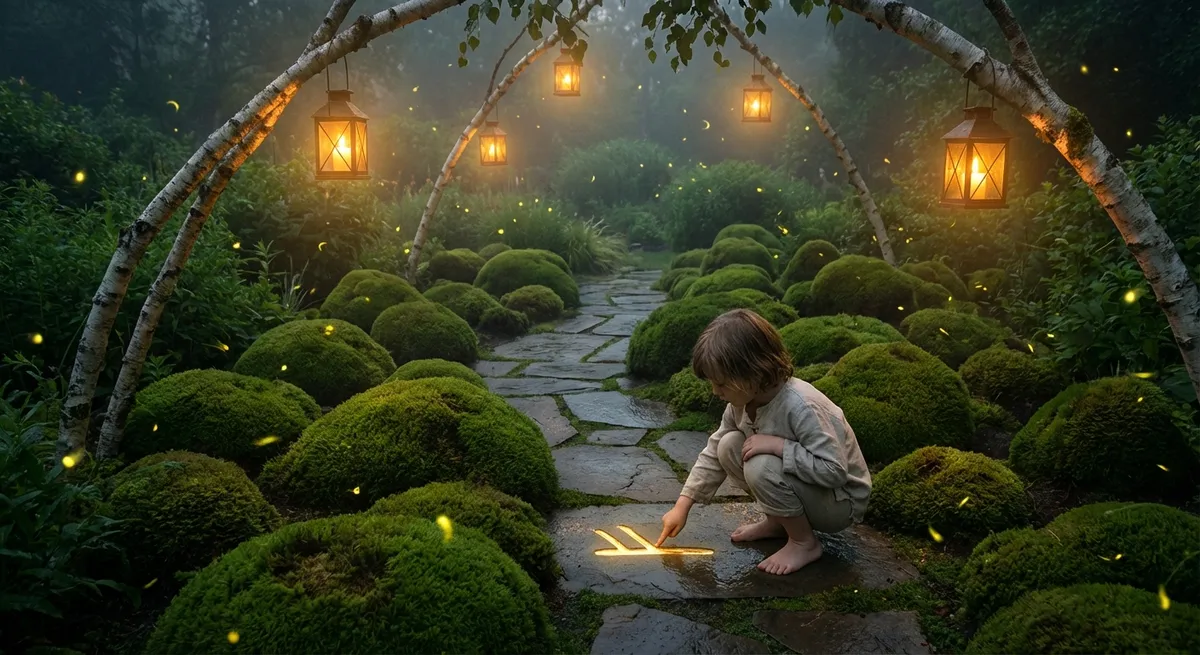
On Porch Pad, we believe your landscape can become a living story—one that changes with the seasons, holds your favorite rituals, and quietly says, “Stay a little longer.” Below are five design ideas to help you shape a yard that feels less like a project and more like a personal sanctuary you can’t wait to step into.
1. The Wander-Path Garden: Designing a Yard That Invites You to Roam
Straight paths rush you from point A to point B; wandering paths invite you to experience the in-between.
Imagine stepping outside and following a gently curving path of stone or gravel that refuses to show you everything at once. A turn here hides the hammock. Another curve reveals a small bench tucked under a tree. Along the way, you brush by lavender, thyme, or mint, their scent rising up as if your footsteps are waking the garden. This style of landscaping is about sequence—what you see, smell, and feel first, second, and third.
To create your own wander-path, think in “moments” instead of square footage. Where is the first place you’d like to pause? Maybe it’s near your favorite flowering shrub or a small fountain. Add a path that meanders toward it rather than aiming like an arrow. Use mixed materials—flagstone with thyme growing in the joints, or compacted gravel framed with low grasses—to keep the journey soft and natural.
Plant taller shrubs or ornamental grasses in strategic spots to create partial screens. These slight visual barriers make your yard feel deeper and more mysterious, even if your space is modest. The goal is simple: no single glance should reveal everything. Your yard should give you a reason to keep walking.
2. The Seasonal Storyboard: Letting Your Yard Change With the Year
A powerful landscape doesn’t look its best once; it changes, chapter by chapter, as the year unfolds.
Picture early spring: tight buds on fruit trees, shy green shoots, the excitement of what’s coming. Summer arrives with deep greens, heavy blossoms, and the rustle of full-grown leaves. Autumn paints your yard in copper and amber, ornamental grasses catching the low light. Winter strips everything back to the bones—bare branches, interesting bark, silhouettes against a pale sky.
To design this living storyboard, choose plants for their seasonal roles. Spring performers like tulips, daffodils, and serviceberry trees offer an early burst of color and life. Summer perennials—coneflower, black-eyed Susan, salvia—keep the energy high and invite pollinators. Fall stars like maple trees, burning bush, and switchgrass bring drama and warmth. Winter interest can come from red twig dogwood, evergreens, and perennials left standing with seed heads for birds.
Think of your landscape as a rotating cast instead of a static picture. Map out your yard on paper and note which areas you’ll see most from your porch, kitchen window, or favorite chair. Make sure each vantage point has something interesting to say in every season: a scarlet tree in autumn, a clump of ornamental grass that rattles in winter wind, a flowering shrub that announces spring before the calendar does.
When your yard changes this intentionally, stepping outside feels like turning the page of a book you never want to finish.
3. The Gathering Green: Crafting a Soft, Natural Room Under the Sky
Some landscapes are meant to be admired. Others are meant to be lived in.
The Gathering Green is about creating an outdoor “room” that doesn’t rely on walls or ceilings, but still feels held and welcoming. Think of a generous patch of soft groundcover or lawn framed by layered plants, trees, and a few thoughtful seating areas. This is where you stretch out with a book, spread a picnic blanket, or gather friends for a slow evening of conversation.
Begin by choosing your “floor.” In some yards, that’s a well-tended lawn. In others, it might be a tapestry of low-growing plants such as clover, creeping thyme, or a mix of native groundcovers. Surround this soft center with a layered edge: low perennials and groundcovers at the front, medium shrubs behind them, and trees or tall grasses forming the outer frame.
Instead of a single seating area, scatter options like chapters in a story: a pair of chairs beneath a tree’s canopy, a bench along the edge of a planting bed, a swing facing the widest view. Even a simple log or large flat rock can become a favorite landing spot. Lighting can be minimal—just enough to make the space feel safe and intentional without overpowering the night.
The aim is to give your landscape a heart—a place where people naturally gravitate, where shoes come off, where time forgets to rush.
4. The Quiet Water Corner: Turning Sound into a Soft Backdrop
Water in the landscape doesn’t need to roar to make an impact. Sometimes the gentlest sounds transform a space the most.
Picture a small corner of your yard with a simple fountain bowl, a narrow rill, or a tiny pond edged with river stones. The air is filled not with silence, but with a soft, consistent murmur—like whispered conversation you don’t need to answer. Birds arrive for a drink, dragonflies strafe the surface, and suddenly this corner becomes a destination rather than a forgotten edge.
To design a calming water feature, start with scale. A small courtyard might suit a ceramic urn fountain or a simple wall-mounted spout. A larger yard could hold a shallow reflecting pool or a recirculating stream that winds between rocks. Plant around the water with a mix of textures: broad-leafed hostas, feathery grasses, and flowers that lean in toward the moisture.
Think about what you want the water to sound like. Higher drops create livelier splashing; lower falls and hidden outlets create a soothing hum. Position a chair or bench close enough to hear but far enough that stray splashes don’t find you. Even a modest fountain can turn daily stress into background noise, helping your mind soften its edges.
The gift of a water corner is simple: every time you step outside, there’s something alive and quietly moving, reminding you that calm is not the absence of motion—it’s a different rhythm.
5. The Edible Edge: Blurring the Line Between Garden and Landscape
Why should beauty only be something you look at, when it could be something you harvest too?
The Edible Edge is about folding fruits, herbs, and vegetables into your landscape so seamlessly that your yard cares for your senses and your table. Imagine a front walkway lined with rosemary and sage instead of purely ornamental shrubs, blueberries glowing like small lanterns along a fence, or a small espaliered apple tree trained against a sunny wall.
Start at the edges where you’re already used to looking: along paths, near your porch steps, tucked between ornamental plants. Many edibles are stunning in their own right—rainbow chard with glossy leaves, purple basil, flowering thyme, and feathery dill. Mix them with perennials and annuals so the garden feels lush rather than strictly “edible.”
Layer your plants for function and beauty: taller fruit trees or trellised beans create canopy, mid-height shrubs like currants or blueberries add structure, and herbs fill the gaps. Choose varieties that thrive in your climate and sunlight conditions to keep maintenance realistic. Native or climate-adapted edible plants, when available, can support local wildlife and reduce your workload.
The real magic happens when you step outside with a mug of tea and come back in with fresh mint, or when a friend drops by and leaves with a handful of tomatoes and a sprig of basil. Your yard stops being just scenery; it becomes a partner in your everyday rituals.
Conclusion
A landscape doesn’t have to be grand to be transformative. It just has to feel intentional—shaped with care, tuned to your rhythms, and willing to change with you.
Maybe you’ll start with a single winding path, a small fountain, or a few herbs along the border of your flower bed. Maybe you’ll sketch the seasons on paper, planning how each part of your yard will speak in spring, summer, fall, and winter. Over time, these choices accumulate into something quietly powerful: an outdoor space that doesn’t just look beautiful, but lives beautifully with you.
Step outside today and imagine what your yard could say if it were a story. Then give it a first sentence—one plant, one stone, one corner at a time.
Sources
- University of Minnesota Extension – Sustainable Landscape Design - Covers core design principles like line, form, texture, and seasonal interest for home landscapes.
- Royal Horticultural Society (RHS) – Creating a Garden for All Seasons - Guidance on choosing plants and structures that provide year-round beauty.
- U.S. Environmental Protection Agency – Water-Smart Landscaping - Practical tips on designing water-efficient yet attractive landscapes.
- Cornell University – Edible Landscaping - Explains how to integrate fruits, vegetables, and herbs into ornamental landscapes.
- National Wildlife Federation – Garden for Wildlife - Resources on designing landscapes that support birds, pollinators, and other wildlife.