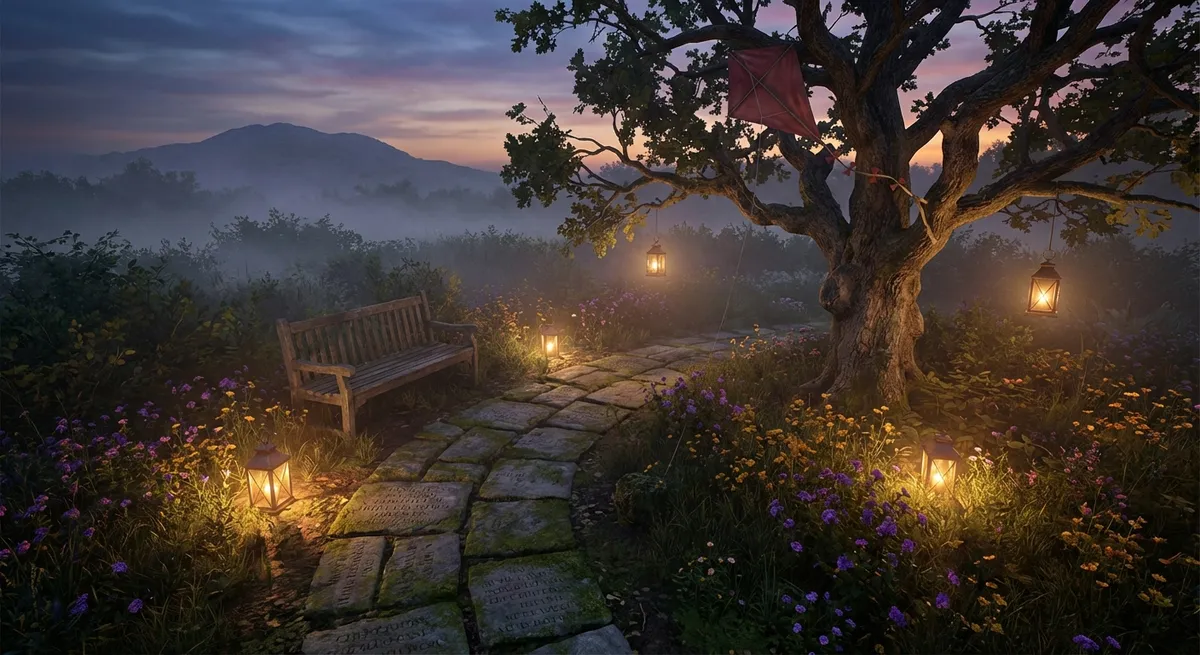
Below are five design ideas that outdoor living enthusiasts can use as sparks, not rules. Let them bend, blur, and evolve until the landscape outside your door feels less like “decor” and more like a place that knows your name.
1. The Meandering Spine: Paths That Guide, Pause, and Surprise
Instead of a straight shot from gate to door, imagine your yard as a journey with a gentle spine—a path that guides you, slows you, and occasionally asks you to pause. A meandering path, whether gravel, stepping stones, decomposed granite, or reclaimed brick, can turn even the smallest yard into a sequence of moments rather than a single glance.
Design your path with rhythm in mind: a narrow stretch that makes you walk single file, then a widening where two people can stand and talk; a curve that reveals a birdbath or sculpture only when you’re nearly on top of it. Layer low-growing plants along the edges—thyme that releases scent when brushed, soft groundcovers that lean toward your ankles, small ornamental grasses that sway like a crowd that parts as you pass.
Think about where the path asks you to stop. Maybe it swells into a tiny platform under a single tree, or forks around a raised bed, inviting you to circle and inspect what’s growing. Add a simple bench built into a curve, or even a flat boulder that holds the warmth of the day. This isn’t a sidewalk; it’s the thread that stitches your outdoor spaces together, inviting you into the less-obvious corners of your own land.
2. The Living Room Sky: Framing a Room Without Walls
Outdoor living enthusiasts know: the best “room” in the house might have no roof at all. Instead of scattering furniture randomly across a patio or lawn, imagine building a room under the open sky. Every room needs edges, a ceiling, and a focal point—landscaping lets you create all three with plants, light, and texture.
Hedges, trellises, or tall planter groupings can carve out boundaries without feeling boxed in. A pair of small trees, their canopies almost touching, become a natural ceiling that filters light into something softer and more welcoming. Overhead string lights, a pergola draped in vines, or even a single dramatic pendant-style outdoor light can make the space feel intentional rather than improvised.
Choose materials that echo the interior of your home—a similar color palette for fabrics, similar metal finishes, a continuation of wood tones—so stepping outside feels like the story continues, not like you’ve arrived on a different planet. Anchor the “room” with a focal point: a low fire feature, a large planter overflowing with seasonal color, a water bowl that mirrors the sky. In this framed outdoor room, conversations linger longer, meals feel less rushed, and the night doesn’t send you inside so quickly.
3. The Four-Season Canvas: Planting for Time, Not Just Today
A yard designed only for summer blooms is like a story that ends in the middle of a sentence. A truly soulful landscape tells time: it glows differently in spring light, whispers in autumn winds, and holds its own when winter strips everything bare.
Begin with structure—evergreen shrubs, ornamental grasses, and trees with interesting bark or branching patterns. These are your landscape’s bones, the lines that stay when all the color has stepped off stage. Then layer in spring ephemerals and bulbs that appear almost suddenly—daffodils near a front walk, tulips that lean into morning light, crocuses at the base of a tree that felt empty all winter.
For summer, think in waves instead of a single burst: early, mid, and late-season perennials that hand the torch from one to the next. Autumn is your chance to let the landscape smolder—plants with fiery foliage, seed heads that catch the low sun, shrubs with berries that feed migrating birds. Even in winter, the right combination of evergreens, dried flower stalks, and snow-catching branches can make the yard feel composed rather than abandoned.
As you plan, walk your property in each season and at different times of day. Notice where the first sun lands, where the frost lingers, where wind funnels. Let your plant choices become answers to what the year is already doing outside your door. Over time, your landscape won’t just be beautiful—it will be legible, a calendar written in leaves, blossoms, and shadows.
4. The Wild Threshold: Blurring the Edge Between You and Nature
More and more, outdoor lovers are craving something less manicured and more alive—a wildness that hums, flutters, buzzes, and rustles. Instead of a stark line between lawn and beds, or between your yard and the world beyond, consider softening those boundaries until it’s hard to tell where “your” landscape ends and the larger ecosystem begins.
This can be as simple as trading a strip of turf for a pollinator border filled with native perennials, grasses, and shrubs that local birds and insects recognize as home. Plant in drifts rather than single specimens—a loose river of coneflowers, a patch of asters, a stand of switchgrass—so the space feels intentional even as it moves and self-seeds.
Let some edges go a little unfixed: a corner where fallen leaves can gather and decompose, a brush pile discreetly tucked behind shrubs for small wildlife, a section of fence softened by climbing vines and flowering climbers. Add a shallow water source—a birdbath, a small pond, even a simple saucer set at ground level—and suddenly the yard becomes less of a set piece and more of a sanctuary.
A wild threshold isn’t neglect; it’s a collaboration. It’s learning which plants belong to your region, which pollinators visit at dusk, which birds rely on late-season berries. Over time, you’ll notice the yard asking less from you and giving more in return—less mowing, more birdsong; fewer chemicals, more fireflies and butterflies.
5. The Memory Garden: Spaces That Hold Your Personal Landmarks
Every outdoor enthusiast has moments they wish they could pin to the ground: a favorite camping trip, a grandparent’s garden, the first place they felt at home under the open sky. Your landscape can quietly hold those memories—not as obvious monuments, but as subtle landmarks woven into the design.
Choose plants with personal meaning: the lilac that reminds you of your childhood street, the rosemary that recalls a meal in a seaside town, the maple like the one that shaded your first apartment. Place them with intention—by a favorite chair, outside the kitchen window, near the path you take every morning—so your daily routes brush past your own history.
Incorporate found objects—a stone from a beloved hike, a piece of driftwood from a special beach, reclaimed bricks that were once part of a family home—into borders, stepping stones, or small altars of meaning. Create a “quiet corner” with a single chair, a small table, and a planting that changes dramatically over the year: blooms in spring, lush foliage in summer, color in fall, strong silhouettes in winter. This becomes a living journal of who you are and who you’ve been.
You can even plant for people you love: a tree for a new child, a flowering shrub in memory of someone gone, a herb bed for the friend who taught you to cook. Over the years, your yard becomes more than a collection of plants; it becomes a map of your milestones, a place where memories no longer float untethered but have roots, bark, petals, and shade.
Conclusion
Landscaping isn’t just arranging plants—it’s arranging the way you move, pause, remember, and return. A meandering path that slows you down, a sky-roofed room that gathers your people, a four-season canvas that marks the year, a wild threshold that welcomes more than humans, and a memory garden that quietly honors your story—each of these ideas is a doorway, not a destination.
Your yard doesn’t have to be grand to be meaningful. Start with one corner, one curve of path, one cluster of plants that bloom when you most need them. Let your landscape grow alongside your life, season by season, until stepping outside feels less like leaving home and more like entering another room that was always waiting for you.
Sources
- [U.S. Department of Agriculture – Plant Hardiness Zone Map](https://planthardiness.ars.usda.gov) - Essential for choosing plants suited to your climate and long-term, four-season success
- [Lady Bird Johnson Wildflower Center (University of Texas at Austin)](https://www.wildflower.org/collections) - Native plant databases and regional plant lists to support “wild threshold” and pollinator-friendly designs
- [Royal Horticultural Society – Garden Design Ideas](https://www.rhs.org.uk/garden-inspiration/garden-design) - Practical inspiration for paths, outdoor rooms, and structural planting concepts
- [National Wildlife Federation – Certified Wildlife Habitat](https://www.nwf.org/garden-for-wildlife/certify) - Guidance on turning your yard into a thriving habitat for birds, pollinators, and other wildlife
- [Cornell University – Gardening Resources](https://gardening.cornell.edu) - Research-backed advice on plant selection, seasonal interest, and sustainable landscape practices