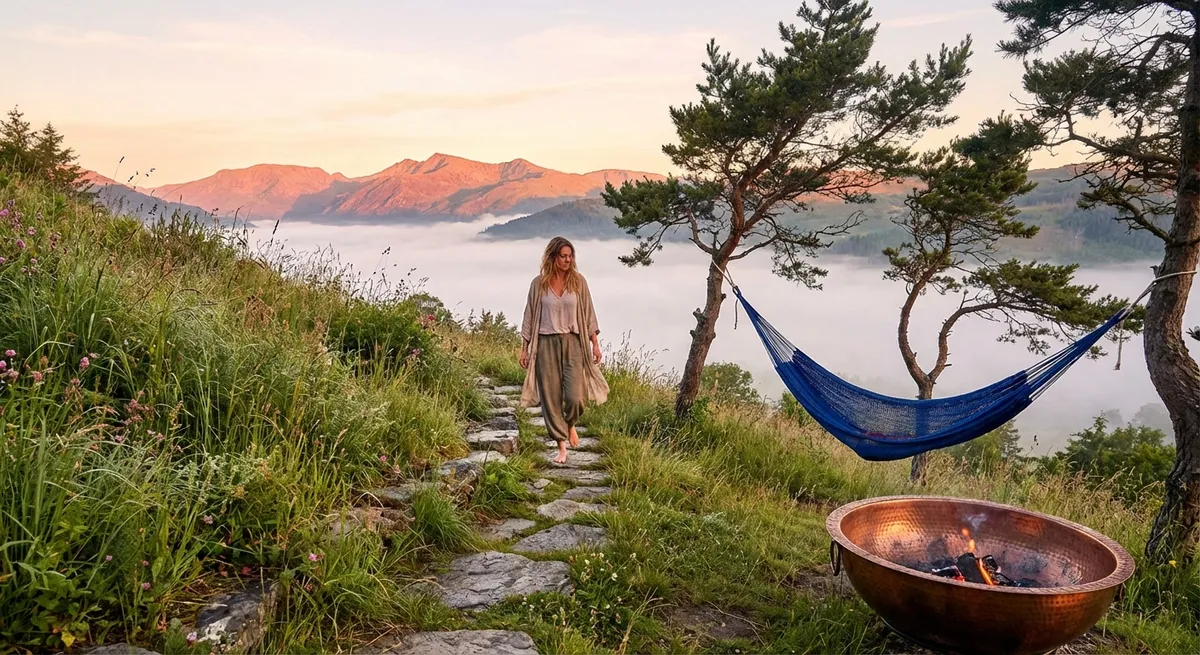
This isn’t about perfect hedges and magazine lawns. It’s about crafting an outdoor world that makes you linger on the steps, breathe deeper, and remember that your life gets to feel beautiful on ordinary days. Let’s explore five design ideas that speak to outdoor living enthusiasts: spaces that hold coffee and conversation, stargazing and storms, quiet work and loud laughter.
Planting for Seasons, Not Just for Spring
Many landscapes are built for that one glorious week in spring—then quietly fade into background scenery. Designing for all four seasons means your yard becomes a year-round story instead of a one-act play.
Begin with structure. Evergreen shrubs, ornamental grasses, and small trees create the skeleton of your landscape so it looks alive even when flowers sleep. Think of boxwood or holly lining a pathway, a Japanese maple painting your autumn in deep red, or feather reed grass shimmering in winter light. Layer in perennials that take turns blooming: tulips and daffodils lifting winter’s curtain, coneflowers and black-eyed Susans blazing through summer, asters and sedums holding on bravely into fall.
Don’t forget texture. The velvety leaves of lamb’s ear, the glossy sheen of magnolia, the rustle of aspen leaves—these are subtle details you feel as much as see. Add a few fragrant plants near seating areas: lavender brushing your ankles, jasmine climbing a trellis, thyme spilling between stones. When your landscape is designed as a year-long experience, stepping outside in January or July feels like turning a fresh page instead of revisiting old scenery.
Pathways That Guide the Pace of Your Day
A path is more than a way to get from the driveway to the door; it’s a way to choose how you move through your life. Fast, direct paths say, “You’re busy—keep going.” Meandering, generous paths whisper, “You can slow down here.”
Design your pathways to suggest different moods. A straight, stone walkway to the front door keeps things practical for guests and groceries, but a side path that curves through tall grasses or under arching branches invites wandering. Use materials with character: irregular flagstone that makes your steps deliberate, pea gravel that crunches softly and signals your arrival, wooden boardwalk sections that feel adventurous after rain.
Lighting transforms paths into nighttime invitations instead of dark zones you avoid. Low, warm lights hidden among plants, subtle step lights, or solar lanterns hung along a fence turn an evening walk into a gentle ritual. Let small details spark joy: a thyme-scented groundcover between pavers, a single sculptural stone placed where the path bends, or a bench tucked along the route where you can pause, sit, and watch the light move across your garden. Your pathways can become companions to your routines, guiding not just your footsteps, but your pace.
A Fire and Water Corner That Steadies Your Spirit
Outdoor living enthusiasts know this instinctively: if you give people a flame or a ripple of water, they will gather. The combination of fire and water in a landscape feels like holding two opposites in your hands—warmth and coolness, motion and stillness, brightness and reflection.
You don’t need a massive installation. A simple gas or wood-burning fire pit encircled by comfortable, weather-resistant chairs can turn an ordinary evening into something that feels like a tiny vacation. Choose natural stone or metal that will age gracefully: a fire bowl that develops a soft patina, stone seating walls that hold daytime warmth into dusk. Surround the area with plants that glow under low light: pale ornamental grasses, white flowers, or silver-leaved herbs that catch the ember’s flicker.
Balance the fire with some element of water. That might be a small fountain that hums quietly in the corner, a wall-mounted feature trickling into a narrow basin, or a modern ceramic bowl with a gentle bubbler. The visual of flame dancing and water moving gives your mind somewhere to rest. Add layered textures around this zone—cozy throws stored in a deck box, ceramic lanterns, and planters overflowing with seasonal color. This corner of your yard can become the place you go to steady yourself after long days, to rewrite your mood before you step back inside.
Edible Edges: Blending Beauty and Harvest
There’s something grounding about stepping outside and picking part of your own meal. Edible landscaping lets your yard work double shifts: it pleases the eye and fills your bowl. And when done thoughtfully, it can be as elegant and sculptural as any ornamental garden.
Start with the edges—the spaces where your decorative and functional worlds meet. Instead of a standard hedge, try blueberry bushes that flame red in fall. Replace a purely ornamental shrub with a dwarf apple or pear tree whose blossoms intoxicate in spring and whose fruit surprises you in September. Plant rosemary, oregano, and chives as a soft, fragrant border along paths or patios; let strawberries spill from raised beds or containers like a green waterfall dotted with red.
Vertical space is your secret ally. Train grapes, kiwis, or climbing beans on arched trellises over a walkway, turning a simple path into a doorway of abundance. Wooden planters on a balcony, terracotta pots on steps, and hanging baskets by the porch can hold tomatoes, peppers, and herbs, turning small spaces into micro-harvest areas. Combine colorful chard, kale, and marigolds in one bed so it looks intentional, not “vegetable patch in the front yard.” When your landscape feeds both your senses and your kitchen, the ritual of going outside shifts from “checking on the yard” to “visiting the pantry that lives under the sky.”
Outdoor Rooms That Stretch Your Home’s Imagination
Your home doesn’t end at the back door; that’s just where the walls give up. Thoughtful landscaping can carve your yard into “rooms” that extend your daily life into the open air. When you start to see your outdoor space this way, it stops being just a lawn and becomes a living floor plan.
Begin by deciding what kind of rooms your life would love: a quiet reading nook, a long-table dining grotto, a morning-yoga deck, a kids’ exploration corner, or a laptop-friendly perch drenched in natural light. Use plantings, screens, and level changes to define zones: tall grasses or trellises as soft walls, a low stone border as a “threshold,” a raised deck or sunken fire circle as a distinct destination.
Furnish each outdoor room with intent. A small gravel courtyard with bistro chairs under a tree can become the coffee-and-conversation spot. A pergola draped in wisteria or climbing roses can shelter a dining table that hosts lingering brunches and late-night card games. Add an outdoor rug, cushions, and a side table to transform a corner of your patio into a lounge that begs for a book and a bare-feet afternoon. Integrate power outlets and subtle lighting where possible—string lights, lanterns, or built-in fixtures—so your outdoor rooms feel usable at sunrise and after dark.
Over time, these spaces begin to change your habits: you answer emails on the porch instead of at the kitchen counter, you stretch under the open sky instead of the living room ceiling, you share meals with birdsong instead of background TV. The landscape stops being separate from your life and starts being the stage on which it unfolds.
Conclusion
Landscaping is not just an art of plants and stones; it’s an art of moments. When you design your outdoor space around the ways you want to feel—steadier, freer, more awake—you stop chasing a “perfect yard” and start cultivating a life that breathes, outside.
A garden that holds all four seasons, paths that slow your steps, a fire and water nook that hushes your thoughts, edible edges that reward your curiosity, and outdoor rooms that stretch your home’s imagination—these are not luxuries reserved for sprawling estates. They’re choices, layered over time, in any size space.
Step outside today and look at your current yard, balcony, or tiny patch of ground as raw potential. Ask it: How could you help me live more fully? Then begin, plant by plant, stone by stone, to build a landscape that wakes you up inside—again and again.
Sources
- American Society of Landscape Architects (ASLA) – Residential Design Trends - Insight into current residential landscaping trends and design priorities
- Royal Horticultural Society – Year-Round Planting Ideas - Guidance on choosing plants for four-season interest
- University of Minnesota Extension – Edible Landscaping - Practical information on integrating fruit and edible plants into home landscapes
- U.S. Environmental Protection Agency – Green Landscaping - Covers environmentally responsible landscaping strategies and ideas
- The Spruce – Outdoor Living Spaces Design Guide - Design ideas and examples for creating functional outdoor rooms