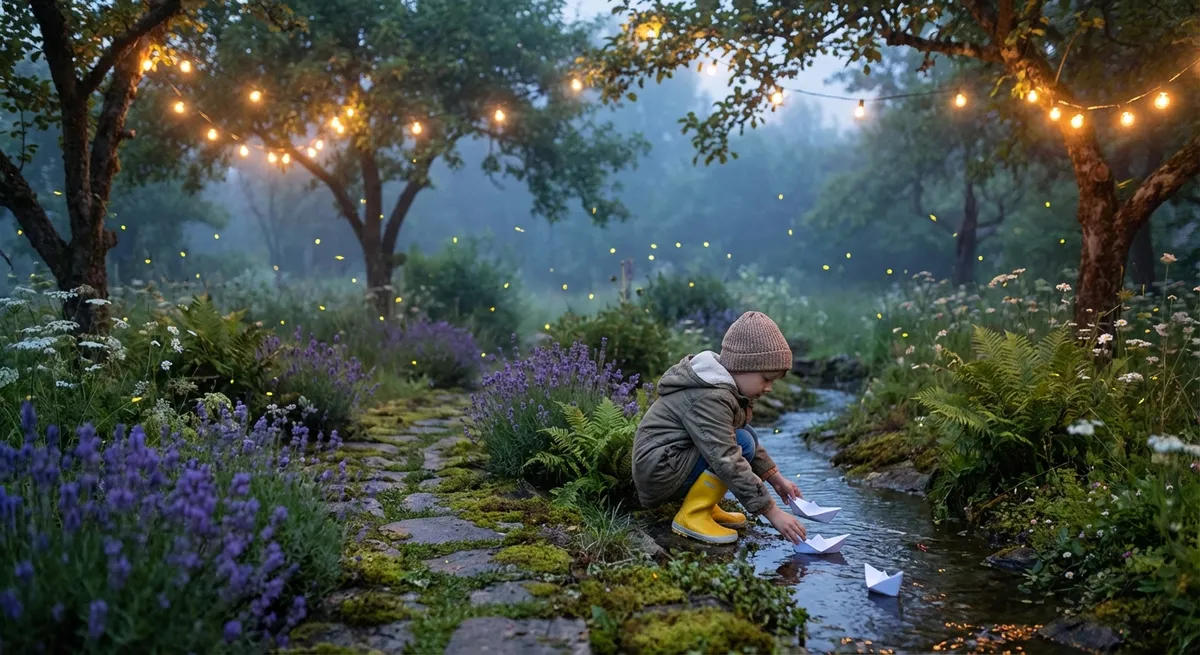
This is for the people who crave that feeling—the outdoor living enthusiasts who see a yard, a side strip, or even a tiny patio and think: there’s a story here, waiting to be told. Let’s shape a landscape that doesn’t just look good in photos, but feels like a place your life can unfold in real time.
Designing for the Life You Actually Live
Before you plant a single flower or set a single stepping stone, pause and ask: How do I really want to live out here? Not how a magazine says you should live, not how your neighbor does it—but how you feel most alive outdoors.
Maybe your real wish is a quiet reading corner with birdsong instead of a big entertaining deck. Maybe you’re chasing a kid-friendly lawn framed by low-maintenance borders, or a sunrise coffee nook surrounded by herbs you can actually use. When you define the daily moments you crave, the landscape begins to arrange itself around those rituals.
Consider your senses as your design guide:
- Sight: Where do your eyes naturally rest when you step outside? Place your most dramatic plants, sculptural trees, or statement containers in those sightlines.
- Sound: Water, wind in grasses, buzzing pollinators, clinking wind chimes—let sound become part of your design “materials.”
- Smell: Lavender, rosemary, jasmine, flowering vines—fragrance turns a simple step outside into a small ceremony.
- Touch: Rough stone, smooth wood, soft grass, feathery grasses—textures make a yard feel alive under your fingertips and bare feet.
When you design from your senses and your daily rhythms, even a small patch of earth can feel like it was built just for you.
Idea 1: The Meandering Path That Slows Time
Straight paths are efficient. Meandering paths are magical. A gently curving walkway—of gravel, flagstone, or even simple wood rounds—invites you to move more slowly, to notice leaf shapes, light shifts, and the way shadows pattern the ground.
Instead of racing from the back door to the gate, imagine this:
- A path that slips behind a shrub, so you have to turn your head and discover what’s tucked just out of view.
- Edges softened by low-growing herbs like thyme or woolly yarrow that spill over the stones and brush your ankles as you walk.
- Mini “pauses” along the way—an oversized flat rock for sitting, a single bench under a small tree, a pot of seasonal flowers in a quiet corner.
Think of your path as a story line and each bend as a new chapter. Use taller plants (ornamental grasses, hydrangeas, small shrubs) to create gentle “walls” that guide your movement without feeling closed in. Even in a narrow side yard, a subtle zigzag can transform a passage into a place worth strolling.
A meandering path doesn’t just move you through the landscape—it changes how you move through your day, nudging you to take the longer, lovelier way whenever you can.
Idea 2: A Layered Green Backdrop That Feels Like a Living Mural
Every great outdoor living area needs one thing: a backdrop that quietly holds the scene together. Instead of a flat fence line or a single row of shrubs, think in layers, the way a painter thinks in background, midground, and foreground.
Start with the tallest layer—trees or large shrubs that create a sense of enclosure. They don’t have to be massive; even small ornamental trees like serviceberry, redbud, or Japanese maple can anchor a space and soften harsh lines.
In front of that, add a middle layer of medium-height plants: flowering shrubs, bushy perennials, tall ornamental grasses that sway with the slightest breeze. This is where you can play with seasonal color—spring blossoms, summer foliage, autumn fire, winter silhouette.
Finally, tuck in a foreground layer:
- Low mounded plants that knit everything together.
- Groundcovers that fill “empty” soil with texture.
- Trailing plants that spill over stones or planters like green water.
The result? When you look out from your porch or patio, you don’t see random plants—you see a living mural that shifts across the year. Your outdoor furniture, fire pit, or dining table suddenly feels framed, as though you’ve placed a room right inside a painting.
For enthusiasts who love hosting, this layered backdrop is the secret to photos that look effortless and evenings that feel lush without overwhelming upkeep.
Idea 3: A Gathering Circle Carved from Stone and Sky
Every landscape deserves one space that feels like a destination—a place where people instinctively drift and linger. Think of it as a gathering circle, even if it’s not literally round. Its edges are defined not by walls, but by intention.
Picture this:
- A ring of low, weathered stone or pavers tucked into a corner of the yard, just far enough from the house to feel like “away,” but close enough to carry a tray of snacks.
- Seating that wraps around the center—whether that’s a fire bowl, a large planter, or a simple low table stacked with lanterns.
- Surrounding plants chosen not just for looks, but for ambience: tall grasses that rustle, shrubs that catch the light, a small tree whose branches arch overhead like a natural canopy.
This doesn’t have to be elaborate. Even a minimalist version—a gravel circle, two chairs, and a single tree—creates a place with gravity. The circle says: this is where we talk longer, stare at the stars, share the “someday” plans and the “today was hard” truths.
For outdoor living enthusiasts, the gathering circle becomes the heart of the landscape story: a little arena for the unscripted moments that turn into favorite memories.
Idea 4: A Productive Edge Where Beauty and Harvest Meet
Landscapes can look beautiful and feed you at the same time. Instead of isolating vegetables and herbs into a separate, utilitarian rectangle, weave them into the parts of your yard you already love to be in.
Imagine a productive edge:
- A sunny border along the fence where blueberry bushes mingle with ornamental grasses.
- A row of culinary herbs—basil, sage, thyme, oregano—lining the path you walk every evening.
- Vertical supports with climbing beans, peas, or cucumbers instead of only ornamental vines.
Edible plants bring their own aesthetic: glossy leaves, surprising flowers, fruits that change color with the season. A neatly pruned rosemary can be as sculptural as a boxwood. A row of rainbow chard can outshine many flower beds.
By placing these plants near your main outdoor living area, you create a landscape that’s constantly interactable. You reach down for a sprig of mint for your drink. You pluck cherry tomatoes without leaving the conversation. You watch pollinators follow the same paths you do.
For enthusiasts who love to host, cook, or simply feel more connected to what they eat, a productive edge turns the landscape into a living pantry—one that looks as good as it tastes.
Idea 5: A Quiet Corner That Catches the Golden Hours
Every outdoor space has one underappreciated superpower: a certain angle of light that makes it glow. It might be the slant of early morning pouring across a small patio, or the soft blaze of late afternoon hitting the back fence. Your job as a landscape storyteller is to find that light and build a quiet corner to receive it.
Start by noticing: when does your outside feel most magical? When shadows go long? When everything sharpens with midday clarity? Once you find your golden hour, design a nook to meet it halfway.
That might look like:
- A simple bench under a small ornamental tree, placed exactly where the light catches dappled leaves.
- A compact deck or platform just big enough for two chairs, facing the direction of sunset.
- A gravel or stone pad with a lounge chair and a side table, tucked where morning light first touches the yard.
Surround this corner with plants that react beautifully to light: feathery grasses that halo at dawn or dusk, silver-leaf plants that shimmer, foliage with burgundy or chartreuse tones that glow when backlit.
This becomes your personal observatory—a place to greet the day or say goodbye to it, to watch the sky’s mood change, to reset without leaving home. For those who truly love outdoor living, this is often the spot that quietly becomes non-negotiable, the routine you miss when you skip it.
Conclusion
Landscaping isn’t about filling space; it’s about shaping the way you move, feel, and gather under an open sky. A meandering path that slows your steps. A layered green backdrop that turns your seating area into a living painting. A gathering circle carved from stone and sky. A productive edge that feeds both eyes and appetite. A quiet corner tuned to the golden hours.
Together, these ideas don’t just decorate your yard—they choreograph a life that happens a little more often outside.
Step onto your porch, your stoop, your balcony, your back door threshold. Look out. Somewhere in that view is the beginning of a landscape that will whisper you outside, day after day, until going out there feels as natural as breathing in.
Sources
- United States Environmental Protection Agency – Green Landscaping – Guidance on environmentally friendly landscape practices and design principles
- University of Minnesota Extension – Sustainable Home Landscaping – Research-based advice on plant selection, layering, and yard planning
- Royal Horticultural Society – Garden Design Basics – Foundational concepts for creating structure, paths, and focal points in outdoor spaces
- Cornell University – Gardening Resources – Practical information on edible landscaping, pollinator plants, and site planning
- Lady Bird Johnson Wildflower Center – Native Plant Information Network – Extensive database to help choose region-appropriate plants for layered, ecological designs