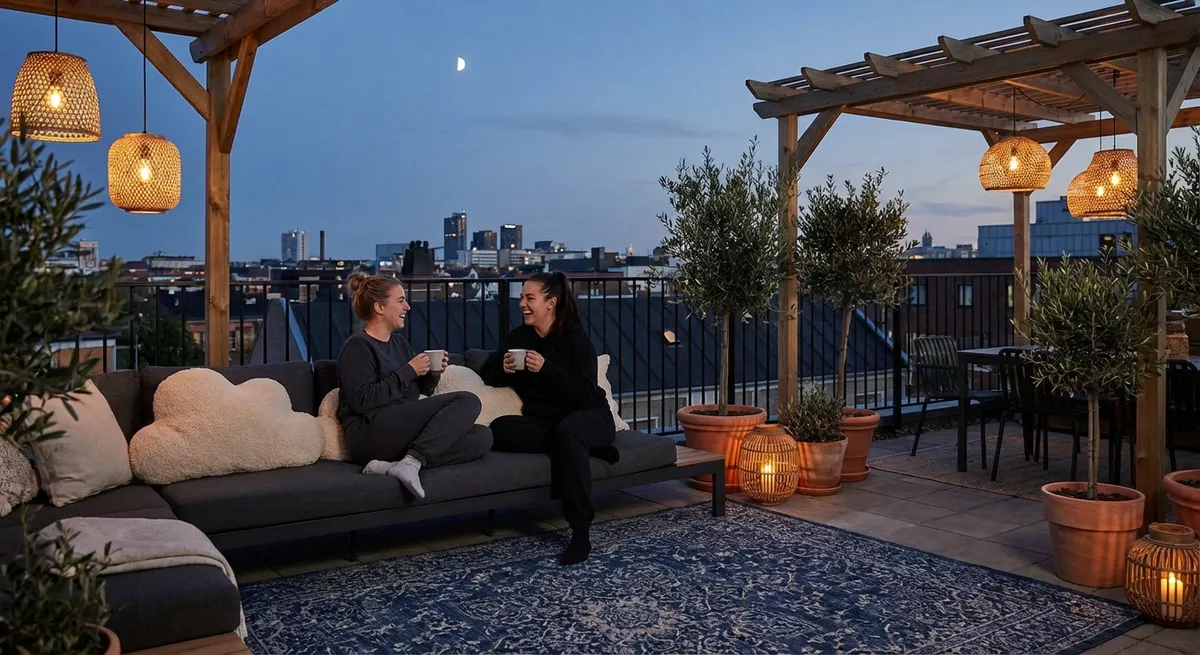
Outdoor furniture isn’t just about somewhere to sit. It’s about building a stage for your life’s quiet miracles: the first coffee before the sun, the late‑night talk you didn’t know you needed, the nap that saves your whole week. Let’s shape your open‑air space into a moonlit living room you can’t wait to come home to.
Idea 1: The Storytelling Sofa Under the Sky
Imagine walking out your back door and being greeted by a deep, low outdoor sofa that feels less like “patio furniture” and more like a cloud that decided to land in your yard. Choose a frame in a warm, natural material—teak, eucalyptus, or a smooth composite wood—and layer it with extra‑thick cushions in a soft, matte fabric. This is the anchor of your outdoor living room, the place where people instinctively gravitate and conversations stretch long past “I should probably go.”
To keep it inviting, think in terms of indoor comfort translated outside: oversized back cushions you can sink into, a throw blanket tucked into a basket nearby, and side tables just close enough for a mug or a book. Arrange your sofa to face something peaceful: a line of trees, a string‑light canopy, even a well‑placed lantern cluster. When your seating points toward calm, your thoughts tend to follow. With the right sofa, your outdoor space stops being a pass‑through and becomes a destination.
Idea 2: Floating Lounge Nooks With Modular Pieces
Instead of one big set that dictates your layout, try building “floating” lounge nooks with modular chairs, loveseats, and ottomans that can drift wherever your life needs them. Picture a trio of low armchairs that can huddle together for game night, then scatter toward the edges of the deck when you’re craving a more open, gallery‑like flow. Modular furniture invites you to treat your space like a sketchbook: no arrangement is permanent, and that’s the beauty.
Choose pieces with clean lines and a light visual footprint—slim metal legs, slatted seats, and cushions in sunset‑inspired tones like terracotta, clay, or soft sage. Add one unexpected shape, like a round ottoman that can stand in as an extra seat, footrest, or even a small table with a tray on top. Over time, your nooks will start to tell you how they want to be used: a corner that always catches the last patch of sun becomes your reading spot, and a cluster that naturally forms near the railing turns into your “city‑view lounge.” Your outdoor furniture stops being a fixed set and becomes a living, evolving layout.
Idea 3: Dining Tables That Blur Dinner and Stargazing
Outdoor dining shouldn’t feel like dragging the kitchen table outside—it should feel like stepping into a different chapter of the day. Choose a table that celebrates the setting it lives in: a live‑edge wood top that echoes the trees around it, a sleek, matte black table that mirrors the night sky, or a pale stone surface that reflects candlelight like water. Pair it with chairs that are comfortable enough to linger in, with supportive backs and cushions that don’t insist on perfect posture.
To make the table feel like a bridge between dinner and stargazing, keep it low‑clutter but high‑texture. A woven runner, a cluster of pillar candles in various heights, and a single sculptural centerpiece—a bowl of citrus, a branch in a ceramic vase, or a cluster of lanterns—are all you need. As the meal ends and the sky darkens, let the table shift roles: plates give way to notebooks, sketchpads, or just empty space for hands to wrap around warm mugs. The right dining furniture turns “eat and go inside” into “stay a little longer; the sky’s just getting interesting.”
Idea 4: The Reading Retreat: One Chair, A Whole World
Every outdoor space deserves a throne—the kind of chair that makes you exhale the moment you sit down. Look for a generously scaled lounge chair or chaise that curves around you, almost like a hug: high sides, a supportive back, and arms wide enough to balance a book or laptop. This is your reading retreat, your solo sanctuary, your graceful escape that lives just steps from home.
To make this chair feel like its own tiny universe, treat everything around it like set design. Add a slender side table for tea and a battery‑powered lantern or solar floor lamp that casts a mellow, book‑friendly glow. A small outdoor rug underfoot instantly frames it as a “room” rather than a random chair on a deck. If you have overhead structure, hang a lightweight outdoor curtain or bamboo shade nearby—something you can pull across to soften afternoon sun or block a busy view. When one chair is intentionally placed and lovingly styled, it stops being furniture and becomes a portal: step into it, and the rest of the world can wait.
Idea 5: Layered Textures That Turn Hard Spaces Soft
The secret to outdoor furniture that feels truly livable isn’t just what you sit on; it’s what surrounds it. Think of your porch or patio as a canvas, and your furniture as the first brushstroke. Then, layer in softness. Start with an outdoor rug large enough to tuck under at least the front legs of your chairs or sofa—something with a subtle pattern or a woven texture that looks like it could live indoors. It instantly erases the “hard floor” feeling and invites bare feet.
Next, introduce a symphony of textures: a rope‑woven side chair that catches the light, a slatted wood bench with a linen‑look cushion, a metal coffee table with a smooth, cool surface. Add pillows that mix patterns but share a similar color story—think ocean blues in different shades, or an earthy palette of sand, clay, and moss. Don’t forget vertical texture: a tall plant beside the seating, a lattice panel with climbing vines, or a narrow shelf hung with a few weather‑friendly decorative pieces. When you layer texture thoughtfully, even a small balcony starts to feel like a curated retreat, and your outdoor furniture transforms from objects to atmosphere.
Conclusion
Outdoor furniture is more than chairs and tables—it’s an invitation. An invitation to step outside your routines, to give the evening air a seat at the table, to claim a corner of the world as your soft place to land. When you choose pieces that echo how you actually want to live—not just how a catalog looks—you turn open air into open possibility.
Start with one move: the sofa that anchors conversation, the chair that becomes your retreat, the table that keeps people lingering under the stars. Let each piece whisper, Stay awhile. Before long, your porch, patio, or balcony won’t just be where your home ends—it will be where your favorite moments begin.