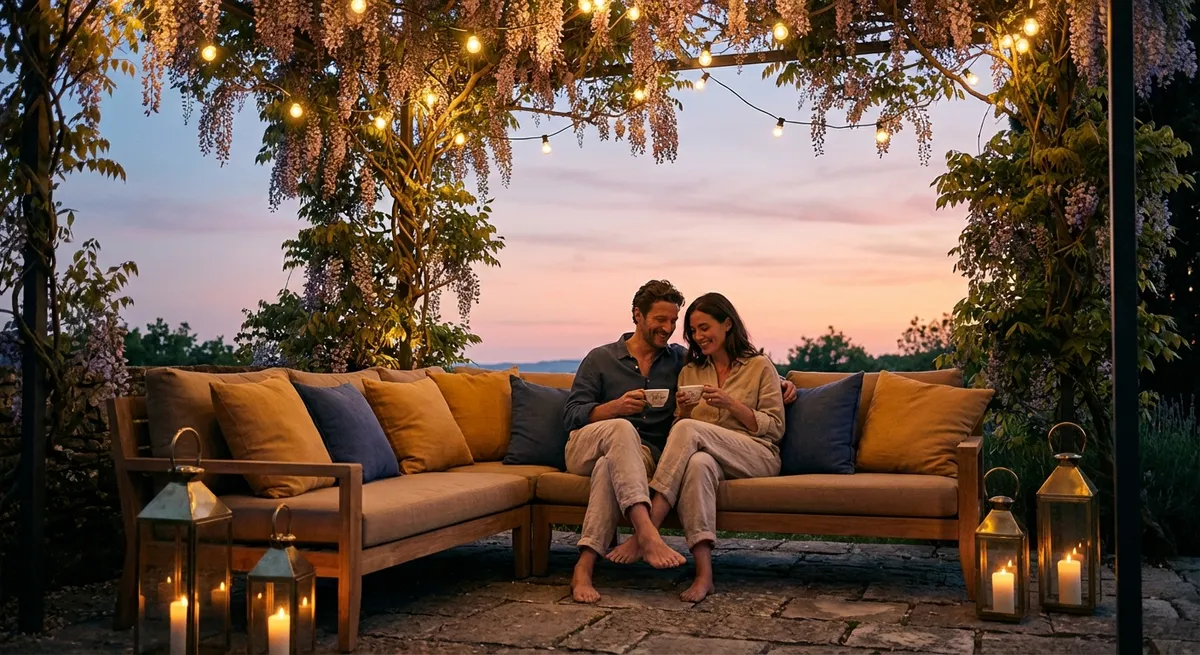
Outdoor furniture is more than chairs and tables; it’s an invitation. An invitation to linger five minutes longer, to catch one more story, to notice that the sky is putting on a show for free. If you’ve been dreaming of a space that pulls you outside and holds you there, these design ideas are your starting line.
1. The Fireside Circle: Furniture That Gathers Stories
Imagine a circle of low, deep chairs pulled around a fire feature—maybe a sleek gas fire bowl, maybe a rustic wood-burning pit that crackles like a familiar song. The furniture here should feel like an embrace: wide armrests for resting mugs, cushions that invite you to sink in, fabrics that stay cool in the sun and warm by the fire.
Choose materials that can stand up to both weather and time: powder-coated aluminum for modern silhouettes, teak or acacia wood for warmth and character, or all-weather wicker for that cozy, woven texture. Arrange the seating so no one’s stuck at the edge; a true fireside circle lets everyone see everyone, and that’s where the conversations stretch late into the night.
Add small, movable side tables that can slide between chairs—perfect for hot cocoa in the winter or iced drinks in the summer. If you have the space, mix in a single oversized lounge chair or rocking chair that becomes “the storytelling seat,” the place where someone always ends up with a blanket around their shoulders and a tale to tell.
Lighting matters here, too. Let your furniture glow in the firelight, but support it with soft, low-level lighting: lanterns on the ground, string lights above, or solar path lights that outline the circle. Together, they turn your seating into a ritual—something you look forward to lighting up at the end of the day.
2. The Dawn Nook: Morning-First Furniture for Quiet Starts
Not every outdoor space needs to be ready for a crowd. Some spaces exist for just one or two people and the sound of morning. If you have even a small balcony, a sliver of deck, or a sunny corner of your porch, you can build a “dawn nook”—a place you associate with first light, fresh air, and a gentle start.
Begin with scale. Choose a compact bistro set, a slim-legged café table with two chairs, or a single cushioned lounge chair with an integrated side table. Look for pieces with open, airy frames—metal or slender wood—that don’t visually crowd a small area. The goal: furniture that feels light enough to float.
Comfort is key in the early hours. Opt for chairs with supportive backs and seat cushions wrapped in outdoor performance fabric. Add a soft throw you can leave outside or hang on a nearby hook. If you face the sunrise, consider a simple outdoor shade or umbrella to filter light once the sun climbs higher.
Dress your morning furniture with rituals. A tray that lives on the table, ready for coffee or tea. A stack of weather-resistant coasters. A slim plant stand beside your chair with herbs like mint or rosemary whose scent wakes you up better than any alarm.
Let this nook be designed for slowness: no TV, no task lighting, no clutter. Just a small, beautiful arrangement of furniture that tells your brain, “Here, we start differently.”
3. The Long Table Dream: Dining Furniture for Lingering Meals
There is something deeply hopeful about an outdoor dining table. It’s a promise that you’ll make time for meals that run too long, for candles that drip down to the base, for plates pushed aside to make room for board games or sketchbooks.
When you choose your outdoor dining furniture, think beyond “Where will we eat?” and ask, “What do we want these evenings to feel like?” A long rectangular table suggests big gatherings and shared platters. A round or oval table creates a more intimate, everyone-facing-everyone energy. If you’re working with a smaller patio, a foldable or extendable table lets you toggle between everyday and celebration mode.
Material choices become part of the story. A solid teak or eucalyptus table will pick up dings and rings and sun-kisses over time, aging into something that looks like it has a history. A sleek metal or glass-topped table leans modern, reflecting the sky and bouncing light into evening meals. Concrete or stone-topped tables bring grounding weight—a sense of permanence.
Mix and match your seating: benches on one side for kids or laid-back gatherings, chairs with arms at the ends for the “anchor” seats, maybe a pair of cushioned dining armchairs that double as reading spots when the table’s empty. Don’t be afraid to break the set—pair a wood table with black metal chairs, or rattan chairs with a steel frame table for texture play.
Then, layer in softness. Outdoor seat pads, washable cushions, and a few throw pillows on a nearby bench invite people to stay longer than the meal. Overhead, add string lights or a weatherproof pendant lantern centered above the table. Suddenly, your furniture isn’t just for eating; it’s for birthdays, late-night talks, and all the in-betweens.
4. The Lounge Layer: Modular Pieces That Shift With Your Life
Some days, your outdoor space needs to be a reading retreat. Other days, it needs to host a spontaneous group of friends, a movie night, or an afternoon nap in the shade. Modular outdoor furniture turns your patio or deck into a living, changing canvas that can follow your life instead of boxing it in.
Start with a modular sectional: multiple segments that can be rearranged into an L-shape, a U-shape, a pair of loveseats, or even separate chairs. Look for units with universal connectors or non-slip feet so your setup feels solid, not wobbly. Choose neutral bases—grays, soft taupes, natural wood, or black metal—and express your personality through cushions and textiles that can be swapped out as your taste evolves.
Add ottomans that can do triple duty: footrests, extra seating, or coffee tables with a tray placed on top. Nesting tables let you expand surface area when you need it and tuck pieces away when you don’t. A low, wide coffee table in the center anchors the arrangement, giving everyone somewhere to set down a book or drink.
Think in layers: rugs, pillows, throws, lanterns. An outdoor rug under your modular setup immediately signals “room,” defining the space and making the furniture feel rooted. Pillows in varied sizes and patterns turn straight-backed seating into lounge-worthy territory. Throws draped over the back of the sectional soften the edges and make evening lounging irresistible.
With modular furniture, nothing is permanently fixed. That’s the magic. You can turn your layout toward the sunset one month, reorient it toward the garden blooms the next, or open it up into an expansive social zone when the guest list grows. Your space becomes something you can keep rewriting.
5. The Quiet Edge: Solo Furniture for Reflection and Reset
Every outdoor space deserves at least one seat that belongs to no one and everyone at once—a seat that feels like a pause button. This is the “quiet edge”: a single piece of furniture positioned at the boundary of your space, facing a view, a tree, a bird feeder, or simply the sky.
The form it takes depends on you. A gently swaying hammock chair hung from a sturdy beam or stand. A sculptural Adirondack chair that cradles you back toward the open air. A chaise lounge that lets you stretch out with a book and forget how long you’ve been there. A daybed tucked under a pergola, layered with weather-resistant pillows that feel far too indulgent for a Tuesday afternoon—and yet, there you are.
Place this piece where the world feels a little quieter: the far corner of the yard, the edge of a deck near greenery, the balcony rail where the wind moves more boldly. Surround it with simple companions: a single side table, a potted plant or two, maybe a small outdoor lantern.
This is less about entertaining and more about returning to yourself. Choose materials that feel good on bare skin—smooth wood, fabric that doesn’t overheat, cushions with just enough give. Let this furniture teach you to step away from your screen, to feel the air change hour by hour, to remember that you exist outside your to-do lists.
When outdoor furniture is chosen with this intention, it becomes more than décor. It becomes a small, steadfast practice of coming home to your own life.
Conclusion
Outdoor furniture has a quiet power. It shapes how you move, how you gather, and how you notice the world beyond your walls. A fireside circle for stories, a dawn nook for slow beginnings, a long table for shared meals, a modular lounge that grows and shifts with you, a single contemplative chair at the edge of everything—each of these arrangements is a love letter to the life you want to live outside.
You don’t need acres of land or a designer budget to begin. You just need one intentional choice: a chair placed where the light is kindest, a table set where the breeze keeps you company, a cushion that makes you want to stay a little longer.
Start there. Let your furniture be the gentle nudge that gets you out the door. The sky will handle the rest.
Sources
- U.S. Department of Energy – Outdoor Living Spaces - Guidance on planning functional outdoor spaces and considering climate, comfort, and layout
- North Carolina State University Cooperative Extension – Selecting Outdoor Furniture - Practical advice on materials, durability, and maintenance for outdoor furnishings
- Consumer Reports – Best Patio Furniture Buying Guide - Independent testing and recommendations for outdoor furniture types and materials
- Sunbrella Official Site – Outdoor Fabric Guide - Information on performance fabrics, UV resistance, and care for outdoor cushions and upholstery
- University of Minnesota Extension – Creating Outdoor Rooms - Concepts for zoning outdoor areas with furniture, lighting, and accessories to support different activities