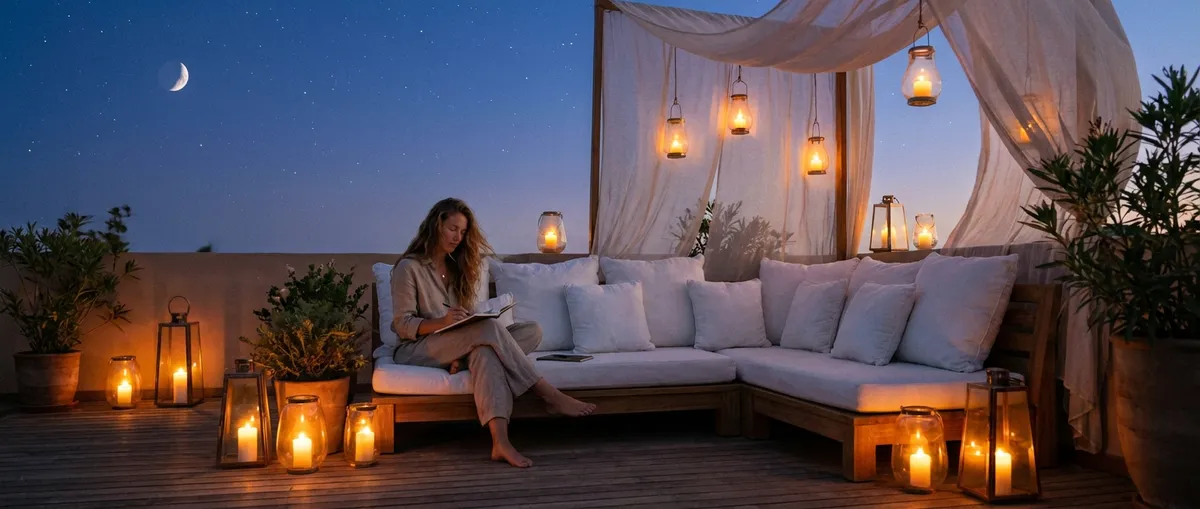
Below are five design ideas that invite you to think bigger about your porch, patio, or backyard—not as an extension of your home, but as the part of it that finally gets to breathe.
Idea 1: The Lounge Drift – Low Seating That Slows Time
Imagine sitting close to the ground, where the world feels quieter and your thoughts move at half-speed. Low-slung outdoor sofas, deep club chairs, and sprawling floor cushions create a “lounge drift” effect—everything feels softer, more fluid, less urgent.
Choose modular outdoor sectionals with deep seats and plush, weather-resistant cushions. Anchor them with an oversized coffee table or a low, wide ottoman that can double as extra seating. Add a woven outdoor rug to visually “float” the seating zone, and suddenly your patio feels like its own island.
Play with layered textures: linen-look cushions, a slatted teak table, a fringed throw in a muted earth tone. This layered softness encourages lingering—books go unread because conversations take over, and the evening stretches out as if it forgot about the clock.
Idea 2: The Dining Threshold – A Table That Feels Like a Welcome
An outdoor dining area can feel like a threshold between inside and outside—a long, generous surface that collects plates, candles, stories, and laughter. The furniture you choose determines whether this becomes a place for rushed meals or long, unhurried evenings.
Start with a table that fits how you live, not just your square footage. If you host often, consider an extendable outdoor table in a durable material like powder-coated aluminum, teak, or high-pressure laminate. If you’re designing for two but dreaming of more, a round café-style table with stackable chairs is enough to make even a balcony feel intentional.
Let your chairs tell a story. Mix materials—wicker with metal, sling chairs with a solid wood table—to keep the space from feeling too stiff. Add cushions in a color palette that echoes your surroundings: ocean hues near a pool, terracotta and rust tones in a desert landscape, leafy greens under dense trees.
Finish with portable lanterns or string lights draped near, but not over, the table, so the light feels like a gentle frame. This turns every meal—whether it’s takeout or a feast—into a conscious crossing from the business of the day into something more sacred and shared.
Idea 3: The Solo Corner – A Single Chair as a Sanctuary
Sometimes, all you need is one perfect chair to change how you experience your entire outdoor space. A “solo corner” is less about square footage and more about intention: you’re carving out a place where you can read, write, think, or simply exist.
Choose a chair you can fall into, not just sit on. A deep Adirondack, a cushioned swivel lounge chair, or a hanging egg chair can become your outdoor signature piece. Add a small side table—just big enough for a drink, a notebook, or a candle.
Place this setup where the light feels kind: maybe it catches the first sun in the morning or gets the last gold of the afternoon. Use planters or a small folding screen to frame the area, giving it a sense of gentle privacy, even in a shared yard.
This is your weather-watching station, your “one more page” nook, your place to listen to wind and birds instead of notifications. When one chair is chosen with care and placed with intention, it stops being just furniture and becomes a ritual.
Idea 4: The Flexible Escape – Pieces That Move With Your Life
Outdoor spaces are rarely static. One night you’re hosting eight friends, the next you’re alone with a journal and a blanket. Furniture that can’t adapt quickly becomes background noise. Furniture that can adapt becomes your co-creator.
Think in layers of portability. Lightweight stackable chairs, foldable bistro sets, and nesting side tables let you reshape your layout in minutes. Pair a sturdy outdoor bench with two movable stools; today the bench lives by the fire pit, tomorrow it flanks the dining table for extra seating.
Consider multi-use pieces: an outdoor storage bench that hides cushions or kids’ toys; a large metal or concrete side table that can also serve as a sculptural plant stand; a pouf that doubles as a footrest or extra seat. Choose a cohesive color story so that, no matter how you rearrange, everything still feels like it belongs together.
The freedom to reconfigure isn’t just practical—it’s psychological. It reminds you that your space, like your life, can be edited, refreshed, and reimagined without starting over.
Idea 5: The Texture Symphony – Let Materials Tell the Story
When you step outside, your senses are already awake: the feel of the air, the warmth of the sun, the rustle of leaves. Outdoor furniture can join that symphony instead of fighting it, especially when you treat texture as a design language, not just a detail.
Combine smooth with rough, matte with glossy, soft with sturdy. A sleek aluminum frame wrapped in warm-toned rope; a solid teak dining table softened by cotton-blend cushions; a concrete coffee table surrounded by woven resin chairs. Each pairing keeps your eye moving and your hands curious.
Let nature be your color consultant. Reflect the tones of your environment—sand, stone, ocean, forest, sunset—through your fabrics and finishes. Neutrals with subtle patterning will age gracefully in the sun, while a few strategically placed bold cushions or patterned poufs keep the space from feeling too careful.
Include at least one tactile surprise: a chunky knit outdoor throw, a braided jute-look rug rated for exterior use, or a sculptural side table that feels almost like found art. These pieces give your outdoor space personality, the way a favorite jacket or pair of boots gives you presence when you walk into a room.
Conclusion
The best outdoor furniture doesn’t simply survive the weather; it makes you want to step outside, again and again, until your porch or patio feels as alive as any room inside your home. Whether it’s a low lounge that slows time, a generous dining table ready for stories, a single sanctuary chair, a flexible mix of movable pieces, or a symphony of textures, each choice is an invitation.
You’re not just placing chairs and tables; you’re composing a setting where your daily moments can expand, where the sky feels closer, and where ordinary days have more room to become memories.
Sources
- U.S. Department of Energy – Outdoor Living Spaces - Guidance on planning functional, comfortable outdoor areas with attention to climate and materials
- Consumer Reports – Buying Guide to Outdoor Furniture - Detailed overview of materials, durability, and what to look for when selecting outdoor pieces
- Better Homes & Gardens – Outdoor Room Ideas - Inspiration and practical ideas for arranging and styling outdoor living spaces
- House Beautiful – Outdoor Furniture Ideas - Curated examples of outdoor furniture setups and design approaches
- HGTV – Outdoor Design and Decorating - Tips, trends, and visual references for designing inviting outdoor environments