Idea 1: The “Morning Ritual” Patio
Imagine stepping outside barefoot, coffee warming your hands, and the world still soft with early light. A morning-ritual patio is designed for this exact moment: quiet, unhurried, and deeply personal.
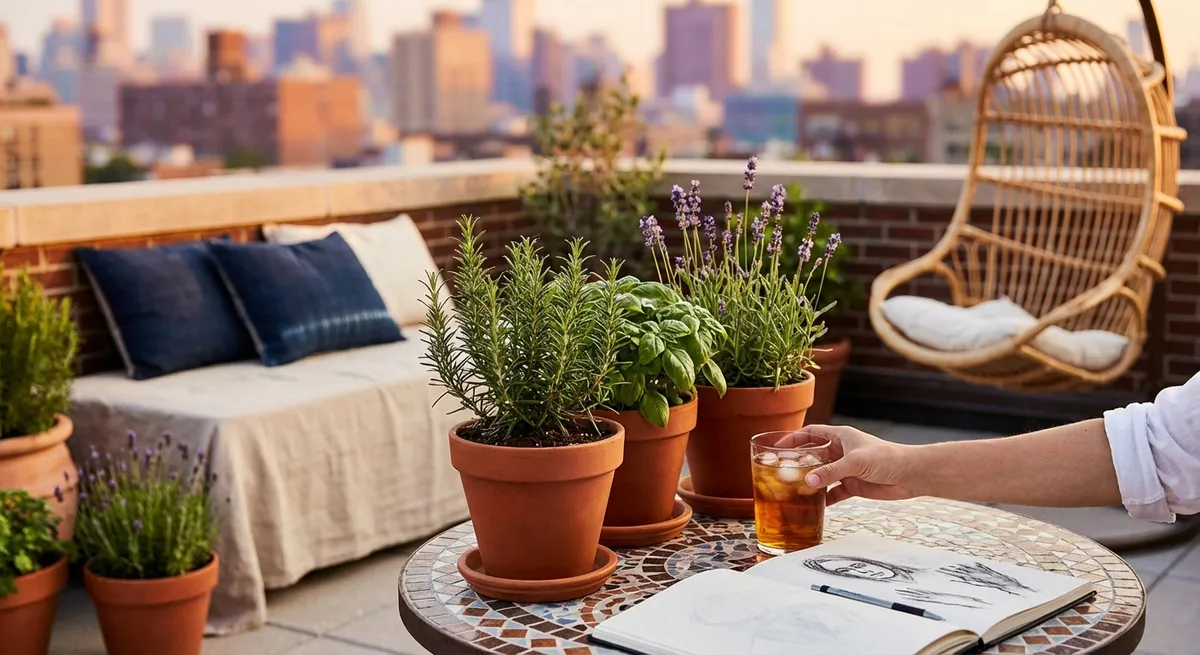
Start with a small anchor—maybe a bistro table tucked into a corner, or a single, generous lounge chair with a side table. Layer in textiles that invite you to linger: a weather-resistant outdoor rug, a soft throw, cushions in calm, sunrise-inspired tones like pale terracotta, dusty rose, or light sage. Add a cluster of potted herbs—basil, mint, rosemary—so that when the sun hits, the air carries a whisper of scent.
If you have a wall, fence, or railing, use it as a vertical backdrop. A slim shelf can hold a few favorite books, a candle lantern, or a tiny speaker for soft music or a morning podcast. Choose gentle, indirect lighting—string lights on dimmers or a small solar lantern—to make those early, pre-dawn starts or cozy twilight tea breaks feel intentional.
This patio isn’t about entertaining a crowd; it’s about creating one sacred spot that says: Start here. Breathe here. Return to yourself here.
Idea 2: The “Garden Canvas” Patio
If you’ve ever wished your patio felt like an open-air studio for nature, this is your blueprint. The garden canvas patio treats every surface—floor, walls, planters—as part of a living painting that changes with the seasons.
Begin by framing the patio clearly: outline the space with planters, raised beds, or even a simple pea gravel border to define where “patio” ends and “yard” begins. Choose a color story for your plants: maybe deep purples and blues for a moody, contemplative feel, or sunny yellows and whites for brightness and joy. Think about height and texture—tall ornamental grasses that sway, blooming perennials at eye level, groundcovers that soften hard edges.
If your climate allows, layer in edible beauty: cherry tomatoes climbing a trellis, strawberries spilling from a pot, or dwarf citrus trees in containers. When your patio feeds both your eyes and your dinner table, every minute outside feels doubly rich.
To tie it all together, treat your furniture and decor as brushstrokes. A bench in a soft, muted hue can echo the color of your favorite bloom. A mosaic-topped table can mirror the speckled pattern of foliage. Over time, as plants grow and shift, your patio becomes a living artwork—never finished, always becoming.
Idea 3: The “Fire & Storytelling” Patio
There’s something ancient and grounding about gathering around a flame. A fire-and-storytelling patio is built for late-night conversations, shared blankets, and that feeling of time slipping without anyone checking a clock.
Center the space around a focal point: a fire pit, chiminea, or modern gas fire table. Arrange seating in a circle or semi-circle—this layout matters, because it nudges people toward connection. Think low, comfortable chairs with cushions you don’t mind people curling into, plus a few sturdy side tables for mugs of cocoa, wine glasses, or bowls of snacks.
Layer your lighting intentionally. Fire provides warmth and flicker, but soft surrounding light—solar path stakes, low-voltage spotlights on plants, or warm string lights overhead—builds a sense of cozy enclosure without overpowering the flames. Have a dedicated basket or bench for blankets so people can settle in without hunting for warmth.
If you love storytelling, rituals, or meaningful moments, create a small “memory shelf” or crate nearby: maybe a stack of favorite board games, a jar with printed conversation prompts, or a weather-safe box of old photos to pass around. The design isn’t just about aesthetics; it’s about setting the stage for nights you’ll remember long after the embers fade.
Idea 4: The “Al Fresco Dining Studio” Patio
Think of your patio as a studio where meals become experiences, not just checkmarks on a to-do list. An al fresco dining patio doesn’t have to be formal. It just has to make eating outside feel easy, delightful, and repeatable.
Choose a table that fits your real life: a long farmhouse-style table if you love hosting, a round bistro table for intimate dinner dates, or a fold-out option if you’re stretching a small space. Surround it with chairs that invite lingering—no one wants to rush off a meal because the seating is uncomfortable. Add cushions that can handle weather and spills, and consider a bench or two for flexible seating.
Shade is your secret ingredient. A pergola, shade sail, large umbrella, or even a row of tall plants can make a midday meal comfortable and keep the space from feeling stark. If you can, place your dining area within a short, direct line from your indoor kitchen, or create a mini “outdoor pantry” station—a shelf or cart with plates, napkins, candles, and utensils that live outside for the season.
Dress the table like a daily invitation, not just a party trick. A simple runner, a cluster of mismatched lanterns, or a row of potted succulents turns “Let’s just eat outside” into “Why wouldn’t we eat outside?” With a few rituals—Friday pizza under the sky, Sunday morning pancakes in the fresh air—your dining patio becomes the heartbeat of your home.
Idea 5: The “Quiet Creative Corner” Patio
Every creator—writer, painter, planner, dreamer—deserves a place where ideas can land softly. A quiet creative corner patio is a cocoon for that spark: part retreat, part workspace, part sanctuary.
You don’t need much square footage. A single lounge chair or loveseat, a compact writing desk, or a sturdy café table can anchor the space. Add a chair you genuinely love sitting in; your back and your creativity will thank you. Consider a movable cart or storage bench for notebooks, sketch pads, paints, or your laptop, and choose weather-safe containers so you’re not constantly hauling things in and out.
Sound is as important as sight here. Use plants, textiles, or even a small fountain to shape the acoustic landscape. Tall bamboo or hedges can muffle street noise; a water feature can provide calming white noise. A bluetooth speaker can bring in instrumental music when you need focus.
Visually, keep the palette calm but inspiring—soft neutrals with one or two accent colors you associate with clarity or imagination. Add one object that feels like a personal totem: a sculpture, framed quote, or piece of driftwood that reminds you why you make what you make. With every detail, you’re telling your brain: This is where we show up. This is where ideas find us.
Conclusion
Your patio doesn’t need to look like anyone else’s Pinterest board to be extraordinary. It just has to hold the life you want to live a little more of—slow mornings, long conversations, shared meals, or quiet bursts of creativity. Start small: one chair that feels right, one plant that makes you smile, one ritual you’ll actually keep.
Over time, these choices stack up into something beautiful and deeply personal—a space that doesn’t just sit outside your home, but stretches your life outward, under the open sky. Your patio is waiting. The next unforgettable moment might be just one step through the door.
Sources
- U.S. Department of Energy – Outdoor Lighting Tips – Guidance on choosing energy-efficient, outdoor-appropriate lighting for patios and yards
- University of Minnesota Extension – Container Gardening – Practical advice on selecting plants, pots, and soil mixes for patio containers and small-space gardens
- Royal Horticultural Society – Garden Design Principles – Foundational design ideas for structuring outdoor spaces, including layout, balance, and plant selection
- Harvard Health – The Health Benefits of Being Outdoors – Research-backed overview of how time outside supports mental and physical well-being
- This Old House – How to Build a Fire Pit – Step-by-step guidance and safety tips for creating a backyard fire feature