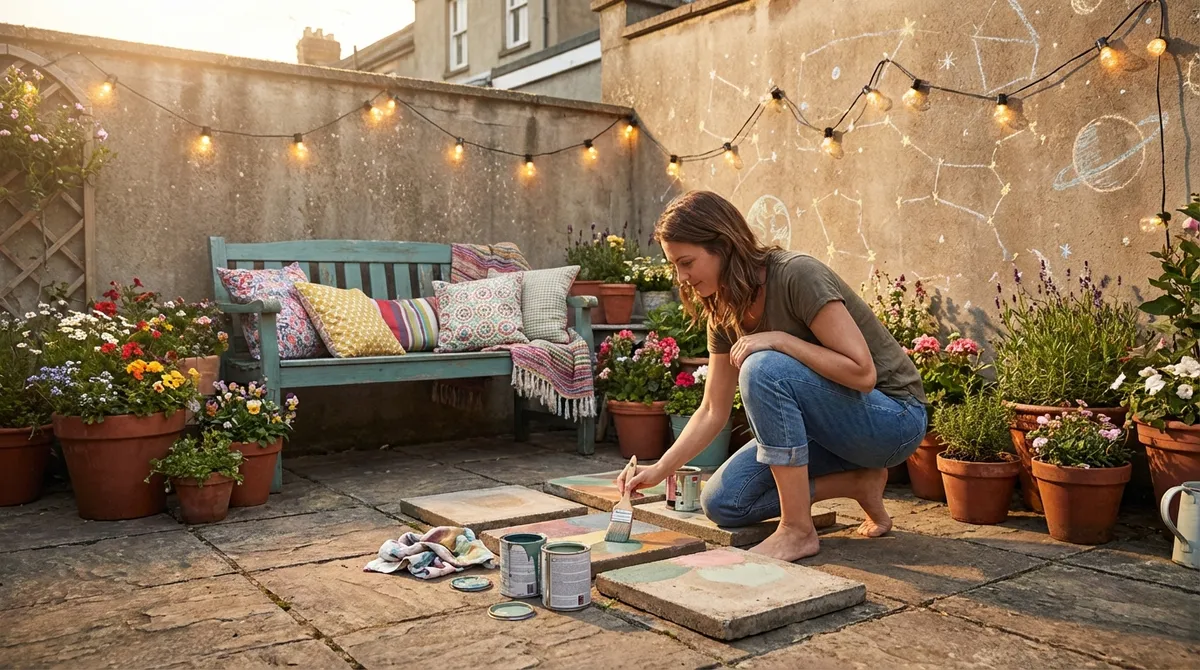
Below are five patio ideas designed not as “looks” to copy, but as atmospheres to inhabit. Picture them, tweak them, and let them shape the outdoor life you’ve been craving.
Idea 1: The Dawn Nook — A Patio That Wakes Up With You
This is the patio that belongs to early risers, slow sippers, and anyone who loves the quiet hinge between night and day. Think of a small, clearly defined corner as your “dawn stage,” even if the rest of the patio stays simple.
Choose seating that invites lingering: a deep lounge chair with a cushion soft enough to hold you for that first cup of coffee, or a slim bench lined with textured pillows. Place it where the first light hits—east-facing if possible—so the sun’s arrival feels like part of the ritual instead of distant scenery.
Layer in warmth for cool mornings: a woven throw hanging on a simple hook, a small side table that can hold both a mug and a notebook, and a low lantern with a battery candle or real flame for those extra-early hours. Add something alive and growing—herbs in terracotta pots, a lemon tree in a container, or a single big planter of grasses that shimmer in the sunrise breeze.
This patio idea isn’t about entertaining. It’s about making space for the version of you that appears before the rest of the world wakes up. Quietly, consistently, this little nook starts to feel like your reset button.
Idea 2: The Storyteller’s Circle — A Patio Built for Long Conversations
Design this patio as if the main activity isn’t eating or sunbathing, but talking. Not the hurried, half-distracted kind, but the hours-long, “I didn’t realize it was midnight” kind.
Begin with shape. Circles naturally pull people toward each other, so arrange chairs, stools, and maybe a low outdoor sofa around a focal point: a fire pit, a low round table, or even a large central planter. Mix seating heights—one or two rocking chairs, a cushioned chair-and-a-half, a pouf or floor cushion—to give guests options and make the space feel unbuttoned and welcoming.
Lighting becomes your co-host here. Layer string lights overhead for a soft canopy glow, then add small pools of light at eye level: a lantern on the table, a floor lamp rated for outdoors in a corner, tea lights clustered on a tray. The goal is to see people’s faces clearly, but leave the edges of the patio in velvety shadow so the world feels pleasantly far away.
Keep the table surfaces generous enough for shared snacks, decks of cards, and the inevitable pile of phones placed face down. Toss a lightweight blanket over the back of each chair in cooler months, and consider a basket of extra throws so no one has to ask. Over time, these small comforts tell your friends, “Stay. We’re not in a hurry here.”
Idea 3: The Moveable Feast — A Patio That Shifts With Every Gathering
Some patios need to be many things in one week: weekday workspace, weekend brunch venue, evening cocktail bar, kid-friendly craft zone. Instead of fighting that, design for flexibility and let your patio behave like a stage set—pieces that slide, fold, and rearrange on cue.
Choose lightweight, stackable chairs that are comfortable enough for a meal but easy to move. Opt for a table with a folding or drop-leaf design or a pair of smaller café tables you can push together for a crowd or pull apart for two intimate spots. Add a rolling cart that can play countless roles: coffee station in the morning, bar cart at night, plant stand when it’s off-duty.
Storage matters here. Big outdoor baskets or a bench with hidden compartments can swallow cushions, blankets, string lights, and tabletop decor when the weather shifts or you need a blank canvas. Instead of committing to one “set look,” build a small collection of swap-in pieces: different table runners, a set of colorful napkins, a few candles in the same metal or glass finish for easy mixing.
Most importantly, leave some open floor space. That negative space is what lets the patio transform—from dance floor to yoga mat zone to a place for kids’ chalk masterpieces. The more the patio can adapt, the more often you’ll find a reason to use it.
Idea 4: The Greenroom Retreat — A Patio Wrapped in Living Walls
Imagine your patio as a backstage greenroom for your life: a place you slip into between scenes to breathe, reset, and remember what matters. To create that feeling, surround your patio with living edges that soften noise, block harsh views, and frame the sky.
Use vertical space generously. Install trellises along the patio border and train vines—clematis, jasmine, climbing roses, or native climbers suited to your climate—to create a perfumed, leafy wall over time. In smaller yards, consider modular vertical planters or slim raised beds that hug the perimeter; fill them with herbs, tall grasses, and plants with interesting textures and silhouettes.
On the floor, break up a plain concrete slab with outdoor rugs and clusters of containers. Mix heights and materials: a tall olive tree in a simple clay pot, low bowls of succulents, and medium-height planters of basil, mint, or lavender that release scent each time you brush by. Add a water element if you can—a small fountain, a tabletop bubbler, or even a ceramic bowl with floating flowers—to layer in subtle sound.
Seating here should feel cocooned. Look for a chair with a high back or a loveseat tucked against greenery so you can lean into a soft boundary. A side table for tea, a notebook, or a sketchbook completes the feeling that this patio isn’t on display for the world. It’s where you go to refill before stepping back into it.
Idea 5: The Twilight Studio — A Patio Where Creativity Comes to Light
Not every patio has to be about dining or lounging. Some want to be a studio, a place where your imagination gets first claim on the evening hours. If you’ve ever wished you had a space to paint, write, play music, or simply think in peace, let your patio become that open-air workshop.
Start by organizing the space around a “maker’s table”—it could be a sturdy outdoor dining table, a vintage workbench sealed for weather, or a simple folding table that appears when inspiration hits. Make sure you’ve got access to power if you need it: an outdoor-rated extension cord for a laptop, a small speaker for music, or task lighting for detail work.
Speaking of light, design for the changing sky. Soft ambient lighting—overhead strings, a paper lantern, or wall sconces—keeps the overall mood gentle. Then add a brighter, focused light you can pivot toward the project at hand: a clamp-on task light or adjustable outdoor lamp. This contrast between moody glow and bright focus tells your mind, “This is a place to sink in.”
Store creative tools in weatherproof containers or a small outdoor cabinet: brushes, notebooks, yarn, instruments, even a stack of inspiring books. Add a comfortable chair that supports both daydreaming and doing; you want to be able to stare at the horizon and then snap back to work without moving far.
The goal isn’t perfection; it’s permission. A patio that looks ready for messy brilliance makes it easier to start—even if all you create today is a single sentence, a half-finished sketch, or a new melody hummed into the gathering dark.
Conclusion
Your patio is more than flooring and furniture; it’s a thin slice of the outdoors where your indoor life can loosen its collar. Whether you’re welcoming the first light in a dawn nook, gathering in a storyteller’s circle, reshaping a moveable feast, disappearing into a greenroom retreat, or tinkering away in a twilight studio, the magic comes from intention, not square footage.
Stand at your back door for a moment and look again. Imagine how you want to feel when you step outside: awake, connected, flexible, sheltered, creative. Let that feeling choose the next small change—a single chair moved to catch the sunrise, one string of lights, a pot of herbs, a table waiting for whatever you dream up next.
That’s how bare slabs become story-filled spaces: one thoughtful layer, one lived-in hour, one beautiful, ordinary day at a time.
Sources
- Environmental Protection Agency: Green Landscaping - Guidance on using plants and rain-friendly landscaping to create healthier outdoor spaces
- University of Minnesota Extension: Outdoor Living Spaces - Research-based tips on designing comfortable, functional patios and yards
- American Society of Landscape Architects (ASLA) Outdoor Living Trends - Insights into current design trends like flexible furniture and outdoor “rooms”
- Harvard Health: The Health Benefits of Time Outdoors - Explores why spaces like patios and gardens can boost mental well-being
- Better Homes & Gardens: Patio Design Ideas - Practical examples and inspiration for layouts, materials, and decor choices