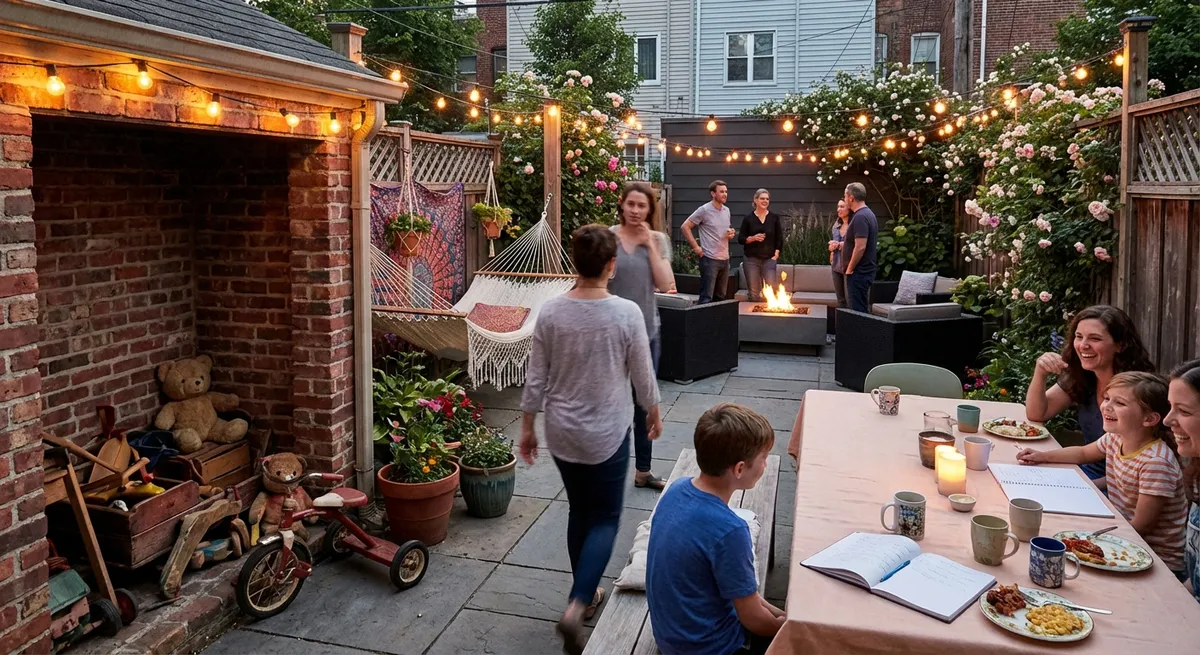
Below are five design ideas that don’t just decorate a patio—they invite you to use it differently, to linger longer, and to live a little more awake.
1. The Conversation Circle: A Space That Listens Back
Picture this: instead of pushing your furniture against the railing, you pull it inward, into a circle or soft arc. Immediately, the patio stops feeling like a waiting room and starts feeling like a campfire—even if the “fire” is just a candle cluster on a low table.
Choose deep, low seating—sectionals, modular outdoor sofas, or a curved bench—and anchor the center with a round coffee table or fire pit. Keep the perimeter clear so every path leads into the circle, not around it. Add cushions in layered neutrals with one bold accent color (a deep terracotta, sea-glass green, or inky blue) to make the space feel intentional, not accidental.
Lighting should whisper, not shout. Think string lights overhead, a lantern or two at ground level, and maybe a single sculptural floor lamp rated for outdoors. The goal is to create a glow that flatters faces and makes time feel slower. When you sit here with someone, the patio stops being a backdrop and becomes a witness to your conversations.
2. The Quiet Studio: Turning Your Patio Into a Creative Nook
Your patio can double as a studio—whether your art is painting, journaling, reading, or simply thinking without a screen. Instead of treating it like overflow space, design it like a room with a purpose: your personal outdoor atelier.
Start with one strong, beautiful work surface: a bistro table for writing, a wide console for sketching, or a sturdy outdoor table that can handle paint splatters and coffee rings. Add a single, deeply comfortable chair with proper back support; this is not a place for “just okay” seating. Beside it, tuck a slim cart or storage box for brushes, notebooks, books, or craft supplies—so creativity doesn’t have to wait while you run back inside.
Layer the sensory experience: an outdoor rug underfoot, a potted herb or fragrant plant nearby (lavender, rosemary, jasmine), and a small portable speaker or wind chime for a gentle soundscape. If your climate is hot, a shade umbrella or a simple sail shade turns harsh light into a soft, workable glow. When you step into this corner, your brain recognizes: here, we make things. Here, we’re allowed to be unhurried.
3. The Green Room: A Living Backdrop of Plants and Texture
Think of your patio as a stage and your plants as the set design. Instead of a few lonely pots, imagine layered greenery at different heights: tall, mid, and low, like the tiers of a small forest hugging the edges of your space.
Use taller planters or trellises along walls and railings for climbers—clematis, climbing roses, star jasmine, or ivy—depending on your climate. In front of those, add mid-height shrubs or grasses in containers: dwarf boxwood, ornamental grasses, or compact hydrangeas. Closer to where you sit, keep it intimate with smaller pots—herbs, succulents, trailing vines—so your eye moves through layers of texture and color.
Mix materials as much as plants: clay pots, glazed ceramics, woven baskets rated for outdoors, or minimalist metal planters. Let one sculptural plant steal the show—a Japanese maple in a large container, a big-leaf tropical like elephant ear, or a dramatic agave.
The effect is powerful: walls soften, noise blurs, and the patio becomes a kind of green room where you can mentally reset between the scenes of your day. You’re not just next to nature; you’re cradled by it.
4. The Savoring Table: Designing for Long, Unrushed Meals
Eating outside can be more than a picnic; it can be a ritual that anchors the week. To make that happen, your patio dining area needs to feel like an invitation, not an afterthought.
Choose a table that fits how you actually gather. If you host often, go for an extendable table or a generous rectangle. If you mostly linger with one or two people, a round table encourages easier conversation and feels cozy even when it’s just you and a book. Opt for chairs you’d be happy to sit in for hours—cushioned, supportive, and stable. Outdoor cushions with removable, washable covers make it easy to keep things fresh.
Lighting is your secret ingredient. Layer it: a pendant or string lights overhead, candles or LED lanterns on the table, and maybe a soft uplight on a nearby tree or wall. Keep a basket nearby with throws or shawls for cooler evenings so no one has to cut the night short.
Add small rituals that turn “eating outside” into “dining”: a favorite tray for carrying food out, cloth napkins in a simple color palette, a single vase or bottle repurposed as a flower holder. When you build the space for savoring, you naturally start to savor more—food, time, and the people at your table.
5. The Seasonal Stage: A Patio That Changes With the Weather
Instead of designing your patio once and letting it go stale, think of it as a stage that shifts with the seasons. The bones stay the same—your layout, your main furniture—but the accents change, so your outdoor life feels refreshed without a full makeover.
In spring, lean into softness: pastel cushions, lightweight throws, pots bursting with bulbs or cool-season annuals. A simple bird feeder or birdbath can bring movement and song close to your seating area. In summer, swap in brighter, sun-loving textiles and shade solutions—umbrellas, canopies, or outdoor curtains—to make the heat feel intentional, not oppressive.
Autumn might bring in deeper, warmer tones—rust, olive, mustard—and plants like mums, ornamental cabbages, or late-season grasses. Add lanterns and a small fire feature if your space and local regulations allow it. Winter, in many climates, doesn’t have to mean abandonment; keep a core of evergreen plants, add waterproof cushions you don’t mind storing and bringing out, and a stash of wool blankets to transform a cold afternoon into an outdoor cocoa moment.
By treating your patio as a living, changing set, you give yourself permission to step into each season more fully. The space becomes a quiet prompt: the year is turning—how do you want to live out here right now?
Conclusion
Your patio doesn’t need to be big, expensive, or perfectly styled to become an unforgettable part of your life. It just needs intention. A circle of chairs that calls people closer. A small table that whispers, “Bring your notebook.” A green wall that softens a hard day. A dining nook where time stretches. Textiles and light that shift with the seasons you’re walking through.
When you see your patio not as an accessory to your home, but as another room in your story, everything changes. This is where you can practice being present, one sunrise coffee, late-night talk, and barefoot step at a time.
Sources
- American Society of Landscape Architects – Outdoor Living Trends – Insights on how people are using outdoor spaces and current design priorities
- Royal Horticultural Society – Container Gardening Guides – Practical advice on choosing and arranging plants in pots for patios and small spaces
- Better Homes & Gardens – Patio Design Ideas – Visual inspiration and layout examples for various patio sizes and styles
- Harvard Health Publishing – The Healing Power of Nature – Research-backed benefits of spending time outdoors for mood and well-being
- U.S. Department of Energy – Outdoor Lighting Tips – Guidance on efficient, safe outdoor lighting options for patios and yards