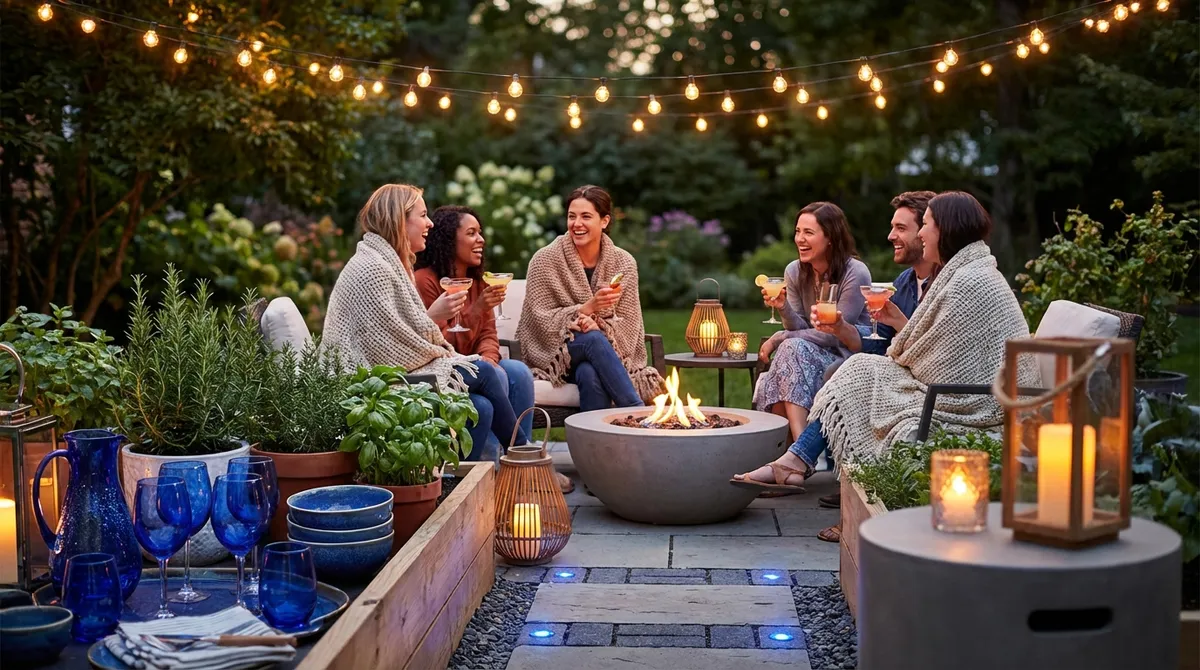
Let’s imagine your patio as a stage for your evenings: softer, slower, lit from within. Below are five design ideas that don’t just decorate your space—they change the way your nights feel.
Idea 1: The Firelit Conversation Circle
Picture this: a ring of chairs pulled close enough that knees almost touch, a low fire casting light that flickers like old film. Above, the night sky; below, the quiet crackle of flames. This isn’t just a seating area—it’s a hearth without walls.
Design a simple conversation circle around a fire element—this could be a classic fire pit, a sleek gas fire table, or even a chiminea tucked into a corner. Choose chairs or deep lounge seats that invite lingering, not perching. Layer them with textured cushions and throw blankets in warm, earthy tones that echo the glow of the flames.
Add a side table or two where mugs of tea, glasses of wine, or late-night snacks can land. Keep lighting low and warm—string lights dimmed to a soft hum or small lanterns that glow like quiet stars. The goal is intimacy: a sense that once you sit down here, time loosens its grip. Conversations feel deeper under firelight; even silence feels like good company.
Idea 2: The Patio as an Open-Air Reading Room
Think of your patio as a book you can step inside. The air smells of jasmine or mint, the light is soft and golden, and your favorite chair is waiting like a loyal character. This idea turns your outdoor space into a sanctuary for single-tasking: reading, journaling, or simply thinking.
Start with one hero seat—a cushioned lounge chair, a small outdoor daybed, or a swinging chair that moves gently with the breeze. Position it so it catches the best light in late afternoon but still has a view you love: a tree, a bit of sky, the soft rhythm of your neighborhood.
Flank this chair with a small table and a floor lantern or wall sconce for twilight reading. Add a weather-resistant basket for blankets and a tray for stacking books or journals. If you have the space, incorporate low, built-in benches lined with cushions along a wall, turning it into an “outdoor bookshelf” of seating.
Soften the edges of the space: tall planters with feathery grasses, potted herbs for scent, and a small outdoor rug to anchor the nook. This isn’t just about décor—it’s about telling your mind, “This is where we slow down and follow a single story at a time.”
Idea 3: The Patio Garden That Grows Your Dinner
Imagine stepping outside and picking the garnish for your drink, the basil for your pasta, or the strawberries for dessert—without ever leaving the patio. A small, intentional kitchen-garden patio doesn’t require acres of land; it asks only for curiosity and a few containers.
Turn a section of your patio into a living pantry. Line one wall or railing with vertical planters or shelves, filled with herbs like rosemary, thyme, basil, mint, and chives. Use larger pots for compact tomatoes, peppers, or dwarf citrus trees if your climate allows. Add a raised planter box for lettuces or edible flowers: nasturtiums, pansies, or calendula that can brighten both plates and mood.
Design your seating nearby so you’re surrounded by the textures and scents of what you’re growing. A simple café table with two to four chairs turns this into an outdoor “garden restaurant” where you’re both chef and guest. Lighting can be simple but enchanting: warm string lights and a few solar lanterns nestled among the leaves.
The joy here is daily and practical: clipping herbs for breakfast eggs, plucking mint for evening tea, or stepping out into the rain to see which leaves hold little silver pools of water. Your patio becomes a reminder that even the smallest spaces can grow something delicious and alive.
Idea 4: The Soundscape Patio: Designing with Quiet and Music
Some patios are defined by what you see; others by what you hear. This idea is about crafting a soundscape that makes your outdoor space feel like a place you can breathe more deeply—whether that’s with soft music, subtle water sounds, or simply a better kind of quiet.
Begin by noticing your existing backdrop: distant traffic, birdsong, wind, neighbors, kids playing. Then decide how you want your patio to feel: more tranquil, more joyful, more cocooned. If serenity is your aim, consider adding a small tabletop fountain or wall-mounted water feature. The gentle movement of water can blur harsher sounds and instantly makes a space feel like a retreat.
For those who love music, incorporate discreet outdoor speakers or a weather-resistant Bluetooth speaker, but think “background band,” not “concert.” Curate playlists that match specific moments: cool jazz or acoustic for late dinners, ambient or classical for morning coffee, something upbeat for weekend brunches.
Even the materials you choose can shape the sound—outdoor rugs, cushions, and fabric panels absorb noise and soften echoes. Tall planters, trellises, or hedges along the perimeter can help block street sounds and create a quiet green wall. This approach turns your patio into a place where your nervous system can unclench, helped along by every note and ripple.
Idea 5: The Transforming Patio: One Space, Many Lives
A truly inspired patio doesn’t need to be large; it just needs to be clever. This idea leans into flexibility—designing one space that can gracefully shift from morning coffee shop to afternoon workspace to evening lounge without feeling cluttered or chaotic.
Start with a clear, open layout. Choose furniture that can move, fold, or stack: nesting tables, folding bistro chairs, stools that double as side tables, or benches with hidden storage. Opt for a central piece—a low table or fire pit table—that can handle multiple roles: coffee tray at sunrise, laptop perch during the day, candle-filled gathering spot at night.
Create subtle “modes” with simple changes. A rolled-up outdoor rug can be unfurled to signal “movie night” or “game night.” Lanterns and string lights can be switched from brighter to dimmer at the tap of a remote, instantly shifting the mood. Cushions and throws can be stored in a bench and brought out when it’s time for guests or cozy evenings.
Use vertical space for personality instead of cluttering the floor: hanging plants, wall art made for outdoors, or a simple trellis with climbing vines. The magic is that this patio never has to choose a single identity. Instead, it lives many small lives—just like you do.
Conclusion
A patio isn’t just a home feature; it’s a stage where days turn into evenings and routines turn into memories. When you design with intention—around fire and stories, books and quiet, edible greens, curated sound, and flexible moments—you’re not just “upgrading your outdoor space.” You’re giving yourself more places to live your life fully awake.
Let your next step be small and specific: a single chair, a strand of lights, a pot of basil, a fountain’s first trickle. One detail at a time, your patio can become the place you look forward to all day: a glowing invitation to step outside and stay awhile.
Sources
- U.S. Environmental Protection Agency – Green Landscaping - Guidance on sustainable planting and water-wise outdoor design
- University of Minnesota Extension – Growing Vegetables in Containers - Practical tips for creating productive patio and container gardens
- Harvard Health – The Health Benefits of Being Outdoors - Research-backed reasons outdoor living spaces support mental and physical well-being
- National Fire Protection Association – Outdoor Fire Pit Safety - Important guidelines for safely incorporating fire features on patios
- American Society of Landscape Architects (ASLA) – Outdoor Living Trends - Insight into current design trends for outdoor rooms and patios