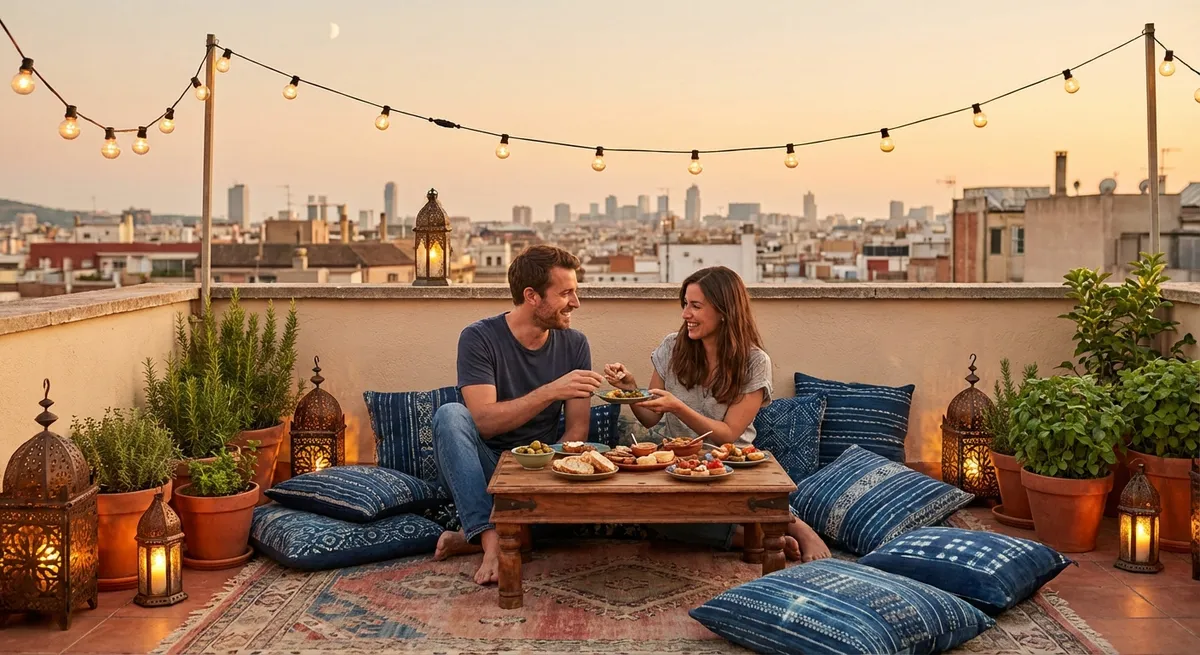
If you’ve been craving an outdoor space that feels like a destination instead of an afterthought, your patio is the perfect blank canvas. With a few intentional choices, you can turn it into a place that invites music, conversation, and quiet mornings—even if all you start with is a single doorway and a patch of pavers.
Below are five design ideas outdoor-living lovers tend to fall in love with. Use them as sparks, not rules, and let your own everyday life be the design brief.
Idea 1: The Storytelling Patio – Designed Around One Special Piece
Every unforgettable patio has a heartbeat—one object that anchors the whole space and quietly says, “This is who lives here.”
Maybe it’s a weathered farmhouse table that’s seen a thousand meals, a vintage metal bench from your grandparents’ porch, or a locally made fire bowl that turns evenings into a circle of light. Start with that one meaningful piece, then design outward around it.
Choose materials and colors that echo your anchor item. If your table is warm, knotty wood, pair it with linen cushions, woven lanterns, and clay planters. If your focal point is a sleek concrete fire pit, lean into blacks, charcoals, and clean-lined chairs.
Let everything else feel like supporting characters—plants, pillows, side tables, even the rug—adding layers of texture and comfort without stealing the spotlight. The result? A patio that doesn’t feel like it came from a catalog, but like a space woven from your own history.
Idea 2: The Garden Rooms Patio – Outdoor Space With Indoor Intent
Indoors, we instinctively know where things happen: we read in the living room, eat in the dining room, work in the office. Outside, everything often blurs into one big open area. To make your patio feel purposeful and endlessly usable, think in “rooms,” not just surfaces.
Carve out zones with subtle boundaries instead of walls:
- A low outdoor rug and a cluster of chairs becomes the “conversation nook.”
- A slim café table and two chairs near the kitchen door turns into a morning coffee corner.
- A bench tucked beside tall planters feels like a private reading hideaway.
Use changes in material to signal different areas: stone under the dining space, a patterned rug under the lounge chairs, pea gravel beside a raised herb bed. Even a simple row of planters or a tall lantern at the edge of a space can say, “You’ve arrived somewhere.”
When your patio has defined “rooms,” it stops being a place you occasionally pass through and becomes a series of small destinations you actually live in—breakfast here, emails there, stargazing over there.
Idea 3: The Seasons-Weaver Patio – Built to Shift With the Weather
A patio that only works for one month of the year isn’t a retreat; it’s a missed opportunity. Designing with the seasons in mind lets the same space feel endlessly new.
Think layers you can add or peel away:
- Shade that moves with the sun: pergolas with climbing vines, retractable awnings, or freestanding umbrellas mean you can chase comfort from morning light to late afternoon.
- Softness that can be stored: weather-resistant cushions, throws, and poufs in breathable fabrics make summer evenings feel like a slow exhale—and can be tucked away when the forecast turns rough.
- Warmth on demand: a compact fire pit, outdoor heater, or even clusters of candles and lanterns extend patio life deep into cool nights and shoulder seasons.
Plantings can play along with the seasonal story, too. Mix evergreens with perennials and flowering shrubs, so something is always happening just beyond the edge of the pavers—spring blossoms, summer fullness, autumn color, winter structure.
Design your patio the way you might design a good wardrobe: timeless basics that always live outside, with accessories that appear, disappear, and rearrange themselves as the weather and your mood change.
Idea 4: The Everyday-Feast Patio – A Kitchen’s Favorite Sidekick
Food has a way of making any patio feel instantly alive. Even a tiny space can carry the spirit of a garden bistro or a family picnic spot if you plan it with meals in mind.
Instead of dreaming only about big parties, design for the meals you actually eat most:
- A slender bar-height counter along a railing with two stools for weekday lunches.
- A compact grill station with hooks for tools and a small prep cart that rolls back inside.
- A built-in bench around a simple table where kids can do homework while dinner sizzles nearby.
Lighting becomes part of the recipe: warm string lights overhead, a lantern in the center of the table, or small solar stakes defining the edge of your dining zone. Add herbs in pots within arm’s reach—rosemary, basil, mint—so a quick snip can transform simple food into something that feels like a celebration.
The goal isn’t a magazine-worthy outdoor kitchen; it’s a space that makes Thursday night pasta, Sunday pancakes, or late-night snacks feel just a little more magical, simply because you’re eating them under the open sky.
Idea 5: The Senses-First Patio – A Place You Can Feel, Not Just See
Patios are often designed for how they look in photos, but the spaces we fall in love with are the ones that speak to all five senses.
Think about what your patio will:
- Sound like: a small tabletop fountain, a rustling bamboo screen, or the quiet click of bamboo wind chimes can soften neighborhood noise and give your space a gentle rhythm.
- Smell like: pots of lavender by the doorway, jasmine or honeysuckle climbing a trellis, or basil and thyme near your chair invite you to breathe deeper without even thinking.
- Feel like to the touch: a smooth stone under your bare feet, a nubby outdoor rug, a cool metal table, a soft throw over the back of a chair—these small contrasts make the space tactile and grounding.
- Taste like: a small planter of strawberries, a citrus tree in a container, or a cocktail herb garden turns the patio into a place where the landscape literally ends up in your glass or on your plate.
- Look like at different times of day: morning light streaming across textured cushions, midday shade, and twilight silhouettes of plants against the sky.
Designing a senses-first patio turns “somewhere to sit” into “somewhere to arrive.” It’s not just about what you see when you step outside, but how your whole body understands: this is where we slow down.
Conclusion
The best patios don’t try to compete with faraway destinations; they bring the feeling of “elsewhere” right to your own back door. Whether you start with one meaningful table, a shaded reading chair, or a single pot of herbs, you’re not just decorating—you’re building a tiny, open-air chapter of your life.
Let your patio be a space that listens to the way you already love to live, then quietly amplifies it: more light, more air, more time, more presence. The slabs and stones are practical, but the real design? That’s made of mornings you linger, conversations that go long, and evenings that end only when the stars finally insist.
Sources
- American Society of Landscape Architects – Outdoor Living Trends - Insight into how homeowners are using outdoor spaces and what features they value
- Better Homes & Gardens – Patio Design Ideas - Practical design inspiration and examples of functional patio layouts
- HGTV – Outdoor Room Ideas - Visual ideas for creating “rooms” and zones in outdoor spaces
- University of Minnesota Extension – Container Gardening - Guidance on growing plants, herbs, and flowers in containers for patios and small spaces
- U.S. Department of Energy – Outdoor Lighting Tips - Information on efficient outdoor lighting options for patios and yards