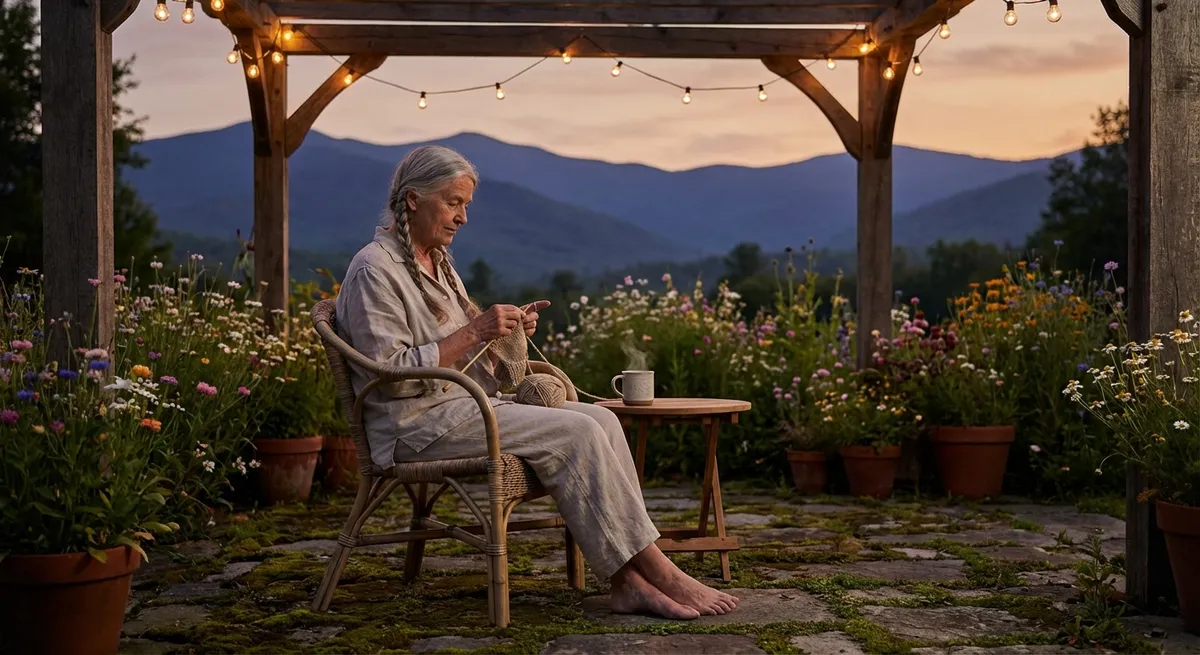
Idea 1: The Sunrise Corner That Resets Your Day
Even if your patio is small, dedicating one slice of it to the sunrise can quietly transform your mornings. Start by noticing where the first light lands—on the far railing, across a particular chair, on a brick step. Let that patch of light become your “sunrise corner.” Place a simple chair or bench there with a small table just big enough for a mug and a notebook. Add a cushion in a soft, light-catching color—buttercream, pale coral, or misty blue—so dawn feels invited to sit with you.
Layer plants to frame the morning: tall grasses that glow when backlit, pale flowers that seem to light up from within, or herbs like rosemary and mint whose fragrance wakes you up before the caffeine does. A lantern with a warm bulb or candle makes this spot usable on cloudy days and in the dim edge of dawn. Over time, this corner becomes a quiet ritual—a place to read, stretch, or simply watch the sky change moods before your phone or inbox ever enters the conversation.
Idea 2: The Long-Table Patio That Holds Your People
Some patios are built for one; others are built to gather stories. Imagine a long table—wood marked with knots and swirls or smooth stone that stays cool under your fingers—anchoring your outdoor space. It doesn’t have to be expensive or elaborate; it just needs to be generous. Generous in length, in spirit, in the number of chairs that can be borrowed, dragged over, or squeezed in at the last minute. Above it, string lights can turn the air itself into a soft ceiling, turning any evening into an occasion without saying a word.
Dress the table with things that invite lingering: a simple runner, mismatched plates, a pitcher of water that looks like it belongs in a painting, and a cluster of low candles or a single, sculptural plant. Surround the table with comfortable chairs—some padded, some simple—and don’t worry if they match. The mix makes it feel alive. Nearby, a small cart or side table can hold extra dishes, drinks, or blankets for cooler nights. This kind of patio turns ordinary meals into little festivals of conversation, where time feels rubbery and everyone loses track of their phones and the clock.
Idea 3: The Quiet-Reading Nook Hidden in Plain Sight
Even on a wide-open patio, you can create a pocket of privacy that feels like a secret library under the sky. Choose a corner that feels slightly tucked away—near a fence, beside a column, under the reach of a tree branch. Add a deep, sink-in chair or chaise with a cushion you could fall asleep in, and a weather-resistant throw that begs to be pulled over your knees with the first hint of evening chill. A slim side table or stacked crates can hold a tower of books, a glass of iced tea, and a tiny vase with a single stem.
To soften the edges, weave in vertical elements: a trellis trailing jasmine or clematis, a bamboo screen, or tall planters with ferns spilling over. Overhead, consider a narrow shade sail, a pergola beam, or even a simple outdoor curtain that billows softly in the breeze. Add focused, warm lighting—a floor lantern, a clamp-on reading light, or a hidden spotlight aimed at the wall behind you so light bounces gently back. This nook becomes a refuge for chapters, daydreams, journaling, and quiet afternoons that feel stolen—in the best possible way—from a busy life.
Idea 4: The Element-Inspired Patio That Plays With Fire, Water, and Air
Your patio can feel like a small, curated piece of the natural world, tuned to the elements that calm you most. Start by choosing which elements you want to emphasize. Fire offers warmth and a place for gathering; water brings reflection and a hush; air invites movement and sound. A compact fire pit or tabletop fire bowl can turn even a modest patio into a campfire circle, drawing people toward flickering light and crackling sound. Surround it with low seating and stone or tile that can handle a stray ember, and keep blankets rolled in a basket nearby.
For water, even a small fountain transforms the emotional texture of the space. The soft, repeating sound can blur neighborhood noise and soothe your nervous system in ways you’ll feel but may never fully explain. A bowl fountain, wall-mounted spout, or modern basin can all become your patio’s heartbeat. To let air have its say, hang wind chimes tuned to gentle tones, plant grasses that sway and rustle, or add light outdoor curtains that flutter like pages turning. When these elements work together, your patio becomes a living composition—always changing, always quietly reminding you that you’re part of something larger and beautifully alive.
Idea 5: The Seasonal Stage That Changes With You
Instead of designing your patio once and declaring it finished, think of it as a stage that shifts with each season and chapter of your life. In spring, your patio might be a gardener’s workshop—containers full of hopeful soil, seed packets stacked near the door, a potting bench with splashes of earth and the smell of new beginnings. In summer, furniture can expand outward, cushions can brighten, and shade solutions—umbrellas, sails, or climbing vines—take center stage to create a living canopy over your days.
As autumn arrives, let the colors deepen: rust, amber, mossy green. Swap out summer textiles for cozier textures, bring in lanterns with stronger, golden light, and add a small outdoor heater or fire feature for crisp evenings. In winter, even if you live in a colder climate, your patio can still speak—evergreen branches in planters, twinkling lights reflected in windows, and a single, sturdy chair with a thick blanket for those brave enough to sip hot cocoa in the cool air. Designing your patio this way gives you permission to keep editing, to keep playing, and to let the space mirror your own evolving rhythm rather than feeling locked into a single look.
Conclusion
A truly soulful patio doesn’t demand that you entertain or impress. It simply whispers, “Come outside for a moment.” It can be sunrise sanctuary, dinner hall, quiet library, element-filled retreat, or ever-changing stage—sometimes all within the same year. When you design with feeling instead of only with furniture, your patio becomes less of a backdrop and more of a co-author in your days. Step outside, notice what your space is already trying to be, and then gently help it become the kind of place that teaches you, again and again, how to slow down.
Sources
- Environmental Protection Agency – Green Landscaping - Guidance on sustainable outdoor design and plant choices that support stormwater management and healthier patios
- Royal Horticultural Society – Container Gardening - Practical tips for using containers to shape patio spaces in all seasons
- Harvard Health – Nature and Mental Health - Research-backed insights on how outdoor spaces support relaxation and emotional well-being
- University of Minnesota Extension – Outdoor Lighting - Information on creating mood, safety, and ambiance with exterior lighting
- National Association of Home Builders – Outdoor Living Trends - Overview of how homeowners are using and designing outdoor living spaces today