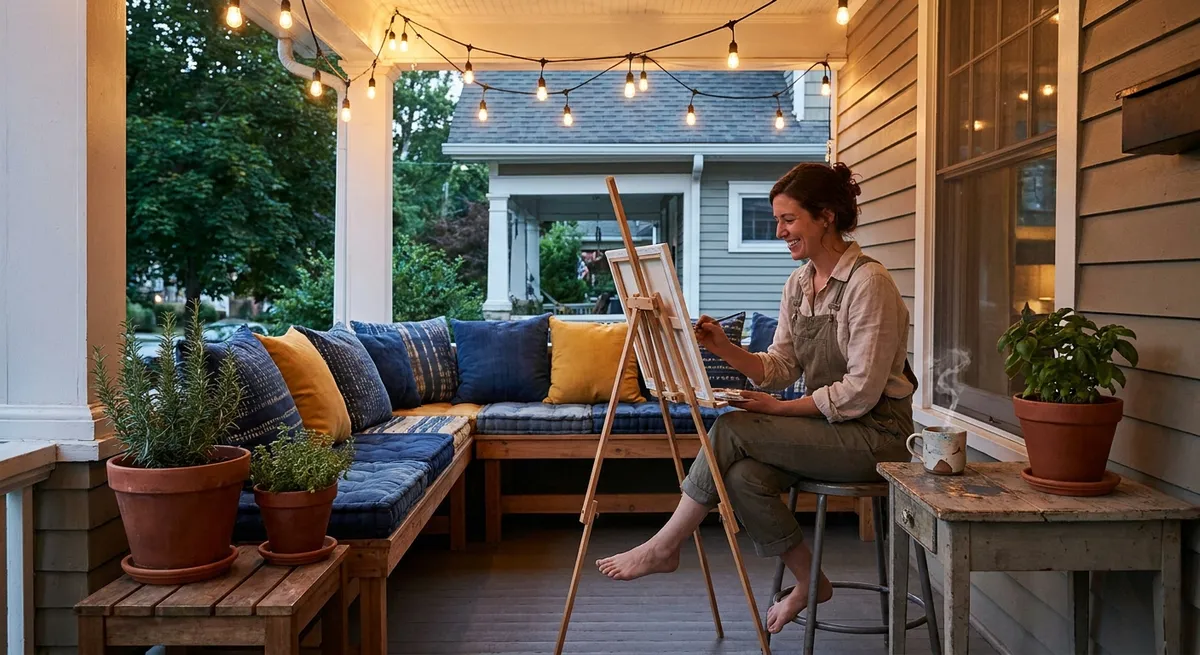
Below are five porch design ideas crafted for people who believe outdoor living is not just a space, but a lifestyle.
1. The Threshold Lounge: Blurring Indoors and Out
Think of your porch as a gentle handshake between your home and the sky. The goal here is to make the transition from inside to outside feel seamless, so stepping through your front or back door feels like entering the next chapter of the same story.
Start with flooring and textures that echo your interior—if you have warm wood tones inside, choose a similar wood stain or composite deck color outside. Layer an outdoor rug that feels like it could belong in a living room: soft underfoot, patterned with personality, and sized large enough that it anchors your seating area instead of floating under a single chair.
Choose furniture that looks like it’s part of a living space rather than “porch-only” utility pieces. Deep-cushioned loveseats, oversized chairs, and a low coffee table invite lingering. Incorporate textiles—throw pillows, light blankets, and even outdoor curtains—that bring indoor comfort outdoors while being weather-resistant. Add a small console table or narrow bench near the door as a landing zone for keys, hats, and morning coffee, so your porch begins to function like a second foyer.
Lighting is the finishing touch in your threshold lounge. Swap harsh overhead bulbs for warm, dimmable options, and add wall sconces, lanterns, or string lights that echo your interior fixtures. When your porch feels like a natural extension of your home, you’ll find yourself stepping outside for everything—emails, phone calls, journals, and quiet moments between tasks.
2. The Reading Porch: A Quiet Corner for Endless Chapters
For book lovers and daydreamers, a reading porch isn’t just a design choice; it’s a lifestyle commitment. This idea turns even a small porch corner into a personal library under the open air.
Start with one exceptional seat—this is the throne of your quiet kingdom. A deep rocking chair, a wide swing with cushions, or a chaise-style lounge chair can become the star of the space. Look for something with armrests (to balance a book or e-reader) and enough depth to curl up with knees tucked in. Surround your main seat with softness: layered cushions, a lumbar pillow for back support, and a small throw blanket for cool mornings or evenings.
Next, think about reachability. A small side table is essential—large enough for a mug, a book stack, and maybe a plant or candle. If space allows, add a slim shelving unit or wall-mounted ledge to keep a rotating selection of books or magazines at arm’s length. For a creative twist, use weather-resistant baskets to hold reading material and cozy textiles, turning function into décor.
Lighting is everything in a reading porch. During the day, angle your chair to capture natural light without putting you in a direct glare. In the evenings, add a plug-in or solar-powered outdoor floor lamp, lantern, or sconce that offers warm, directional light—bright enough for reading, soft enough to keep the mood restful. Layer in greenery with potted plants at varying heights to create a cocooning effect; a couple of tall planters or hanging baskets can act like leafy bookends for your reading nook.
Over time, your reading porch will start to feel like a portal—to stories, to reflection, and to the kind of stillness most of us crave but rarely claim.
3. The Gathering Porch: A Stage for Small, Beautiful Moments
Some porches are born to host people. If you love the sound of clinking glasses, shared meals, and conversations that stretch past sunset, a gathering porch is your design destiny.
Begin with flexible seating. Instead of one rigid setup, think in clusters that can shift and grow: a small bench along one rail, a couple of sturdy side chairs, and perhaps a loveseat or built-in bench. Mix styles and materials—wicker, metal, and wood—to create visual interest and keep things casual but intentional. Use an outdoor rug to define the main conversation zone, visually pulling your pieces together.
A central surface is essential. If your porch is large, a dining-height table can function for meals, games, and laptop sessions. For smaller spaces, opt for a round coffee table or a pair of nesting tables that can be separated when guests arrive. Look for pieces with storage underneath or a shelf for extra blankets, lanterns, or board games.
Lighting sets the mood for gatherings. String lights draped along the ceiling, beams, or railing add instant warmth and charm. Layer those with a few larger statement pieces—an oversized lantern on the floor, candle clusters on the table, or wall-mounted fixtures that wash the porch in a soft glow. Don’t forget sound: a small, weather-resistant speaker tucked into a corner or disguised among plants can turn any evening into an impromptu listening room.
Add personality with details that spark conversation: a collection of vintage planters, framed art rated for outdoor use, a chalkboard for welcome messages or menus, or a small bar cart that can hold drinks, snacks, or a tea station. The goal isn’t perfection; it’s ease. When your porch feels ready for people at a moment’s notice, you’ll find yourself inviting them over more often—sometimes just for half an hour of shared air and shared life.
4. The Green Sanctuary: A Porch Wrapped in Living Color
Designing a “green sanctuary” porch is about turning your outdoor entrance into a living, breathing ecosystem—lush, layered, and alive with texture. This kind of porch feels like stepping onto the edge of a garden, even if you’re working with a townhouse stoop or apartment balcony.
Start with structure: tall plants first, then cascading, then accents. Place larger containers in corners or flanking steps—small trees like dwarf citrus, Japanese maple, or potted olive trees instantly add height and drama where space and climate allow. If you’re in a smaller space, opt for tall grasses, bamboo in containers, or trellised vines that pull the eye upward without eating into your floor area.
Next, layer in mid-height plants—ferns, hydrangeas in pots, or hardy herbs like rosemary, thyme, and lavender. These double as design and function, bringing fragrance and flavor right to your doorstep. Finish with trailing plants like ivy, sweet potato vine, or creeping Jenny spilling over railings and container edges. A mix of leaf shapes and shades—from deep greens to silvery blues and variegated whites—creates a painterly effect.
If your porch is covered or partially shaded, lean into shade-loving beauties like hostas, begonias, caladium, and coleus in bright colors. For sunnier spaces, choose drought-tolerant, sun-loving varieties like succulents, geraniums, and marigolds. Use plant stands, wall-mounted planters, and hanging baskets to build vertical interest and leave space for walking, sitting, and living.
To turn your green porch into a sanctuary, invite other forms of life in, too. Add a small bird feeder at a respectful distance from the seating area, a shallow dish or fountain for water, or pollinator-friendly flowers in containers to attract butterflies and bees. Soft outdoor lighting grazing across leaves at night creates dramatic shadows and a tranquil mood; a simple solar spotlight angled upward can transform a single plant into a focal sculpture after dark.
Over time, you’ll start to notice the quiet rhythm of your porch ecology—new leaves emerging, birds visiting, bees drifting by—and your entrance will feel less like a boundary and more like the beginning of something thriving.
5. The Seasonal Story Porch: A Space That Changes With the Year
The most captivating porches don’t stay the same all year; they evolve like a living story, marking time and honoring the subtle shifts in light, weather, and mood. A seasonal story porch is designed with a flexible backbone and easy-to-swap layers, so you can refresh your space in an afternoon and feel like you’ve moved into a new chapter.
Start with a timeless base: neutral, durable furniture, a classic rug pattern, and foundational planters or containers you love year-round. Choose a consistent metal finish for fixtures and hardware—black, bronze, or brushed nickel—to ground your space and keep it cohesive as you rotate colors and accents.
Then, build a seasonal kit approach. For each season, collect a small set of “porch ingredients” you can swap in and out: pillow covers, throw blankets, lanterns or candle holders, small decorative objects, and fresh plants or wreaths. Spring might be soft greens and florals, summer bold blues and stripes, autumn warm rusts and golds, winter deep jewel tones and twinkle lights. Store off-season items in a labeled bin so seasonal resets feel simple and joyful instead of overwhelming.
Plants are your strongest storytellers. In spring, use bulbs in pots and delicate blooms; summer calls for lush greenery and vibrant flowers; fall can be celebrated with ornamental grasses, mums, and pumpkins; winter with evergreens, branches, and subtle touches of sparkle. A single wreath on the door, refreshed each season, acts like a changing book cover for your home.
Lighting can shift with the seasons too. In long summer evenings, you might rely more on string lights and soft glow; in winter’s early darkness, add extra lanterns, battery-operated candles, or fairy lights woven through railings and planters. Even a small porch can feel renewed with each rotation—reminding you, every time you step outside, that change can be beautiful, cyclical, and welcomed.
A seasonal story porch doesn’t chase trends; it tells your story, month by month, with simple, thoughtful gestures.
Conclusion
Your porch doesn’t need to be big. It doesn’t need to be perfect. It just needs to be yours—a place where the air feels different, time loosens its grip, and life has room to unfold slowly.
Whether you dream of a lounge that blurs inside and out, a quiet reading haven, a lively gathering spot, a living green sanctuary, or a porch that changes with the seasons, each idea is an invitation: to step outside more often, to savor the in-between moments, and to let your home meet the open sky with a little more soul.
Your porch is already a threshold. With intention, it can become a destination.
Sources
- Environmental Protection Agency – Green Landscaping: Greenacres – Guidance on eco-friendly planting choices and landscaping principles, helpful for planning a green, plant-filled porch
- University of Minnesota Extension – Container Gardening – Practical advice on choosing containers, soil, and plants for small outdoor spaces like porches and balconies
- Harvard Health – The Health Benefits of Strong Social Connections – Explores how social spaces (like gathering porches) support emotional and physical well-being
- Mayo Clinic – Light and Your Health – Discusses how light exposure affects mood and daily rhythms, useful when planning porch lighting and usage
- North Carolina State University Extension – Outdoor Living Spaces – Research-based insights on designing functional and enjoyable outdoor living areas, including porches and patios