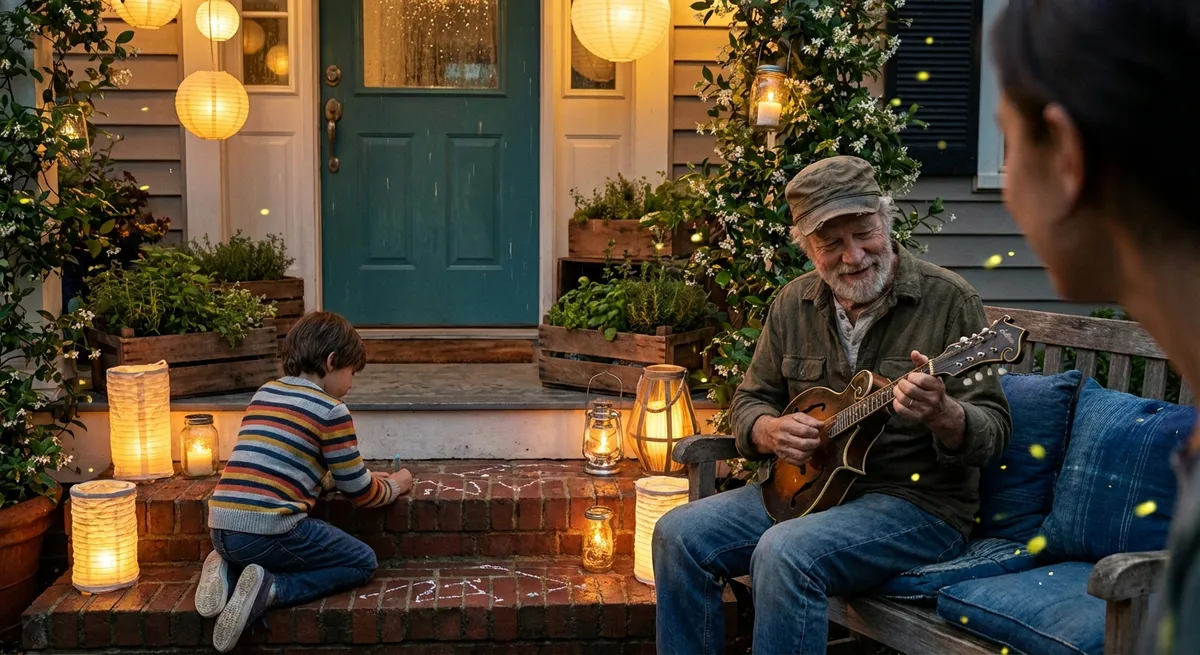
Porch design isn’t about perfection; it’s about possibility. With a few intentional choices, your porch can transform into a living invitation—to pause, to gather, to breathe. Here are five design ideas to help you turn that in-between space into your favorite place.
1. The Slow-Morning Porch: Designing for First Light
Imagine your porch not as a pass-through, but as the first chapter of your day. Before the emails, before the errands, there’s a place where steam rises from your mug and the world is still deciding what kind of day it will be.
Design this space around comfort and ritual. Start with a chair that feels like a welcome, not an afterthought—a classic rocking chair, a deep lounge chair, or a cushioned bench that invites lingering. Layer in soft textiles: an outdoor-safe throw, patterned cushions, and a small, weather-resistant rug underfoot to anchor the space and soften the morning chill.
Add a petite side table just big enough for a book, a journal, and your favorite cup. Keep a woven basket tucked in a corner with a blanket and maybe a pair of cozy porch slippers—little signals to your brain that this is a place for slowness. Incorporate plants that thrive in your porch’s light: a pot of herbs whose scent wakes up with the sun, a fern that loves the shade, or a climbing vine that catches dawn’s first glow.
Lighting matters even in the early hours. Soft, warm bulbs in a porch sconce or lantern let you claim the space even before sunrise. Over time, your porch becomes more than a design project; it turns into a promise to yourself: you get to start gently.
2. The Story-Porch: Layering Texture, History, and Heart
The most memorable porches don’t look “decorated”—they look lived in and loved. The story-porch is about layering objects with meaning until the space feels like a conversation you want to join.
Begin with one anchor piece that holds a bit of history: a refinished wooden bench, a vintage metal chair, your grandmother’s plant stand, or even a salvaged door repurposed as a backdrop. Let that piece set the emotional tone, then build around it with textures that feel collected, not purchased all at once.
Think woven baskets filled with extra pillows, a rattan side table, a terra-cotta pot with a hairline crack that tells its own story. Mix metals—black wrought iron, brushed brass, galvanized steel lanterns—so nothing feels too precious. Add art that can live outdoors: a weathered sign, a framed botanical print behind glass, or a cluster of ceramic wall planters.
Use color like a memory thread. Maybe the blue of your childhood front door appears again in your cushions, or the burnt orange of a favorite sunset shows up in a patterned rug. Over time, let travel souvenirs, handmade pieces, and gifts from friends join the scene. Your porch becomes a quiet museum of your life’s small joys, telling your story without saying a word.
3. The Conversation Porch: Shaping a Space That Holds Connection
Some porches are built for passing by; this one is built for staying. The conversation porch is all about how people sit, see, and share with each other. Instead of lining furniture along the walls, imagine your porch as a campfire without the flames—everything facing in, everything inviting eye contact.
Start with seating that curves or clusters: two chairs angled toward each other with a table between, a small loveseat facing a pair of stools, or a built-in bench wrapped around a corner. Keep the distances intimate; people lean in emotionally when they don’t have to lean in physically too far. Add a central surface—coffee table, trunk, or oversized ottoman—where shared things can land: a board game, a pot of tea, a charcuterie board, or an open book of recipes.
Ambient sound shapes conversations more than we realize. Consider a small water feature at the porch’s edge or a simple wind chime with a gentle tone to soften background noise. Layer in lanterns, string lights, or candles in hurricane vases to create a glow that flatters faces and loosens shoulders. Dimmable or multiple light sources let you shift from daylight chat to twilight secrets effortlessly.
A basket of tactile, low-commitment activities—a deck of cards, a puzzle book, a few favorite magazines—gives people permission to stay longer without feeling “on.” The porch becomes a third place, not quite home, not quite public, where connection feels easy and unforced.
4. The Nature-Drift Porch: Blurring the Line Between Inside and Outdoors
For outdoor living enthusiasts, the magic often lives right where the house ends and the world begins. The nature-drift porch is designed so that, step by step, you feel yourself passing gently from interior to landscape, with the porch as a soft, green bridge.
Start by echoing materials from both worlds. If your interior floors are wood, extend that warmth outside with a stained deck or composite planks in a similar tone. Then invite the garden onto the porch: oversized planters at varying heights, a vertical garden along one wall, or a railing draped with trailing greenery. Think of plants not just as decoration, but as architecture—soft walls and leafy ceilings that reshape the space.
Choose furniture that feels grounded in nature: teak, eucalyptus, or sustainably sourced wood; woven wicker or rattan; stone-topped side tables. Mix in natural textiles—cotton, linen, jute—and keep patterns inspired by the outdoors: leafy prints, earth tones, sky blues, mossy greens. If your climate allows, use sheer outdoor curtains to create a billowy, dreamlike edge that moves with the wind and filters sunlight.
Sound and scent complete the illusion. A small windbreak of shrubs or tall grasses can hush street noise; fragrant plants like lavender, jasmine, or rosemary perfume the air. At night, use downward-facing, warm-white lighting to mimic firefly glow rather than spotlight intensity. The result is a porch that doesn’t end at the railing—it simply dissolves into the world beyond it.
5. The Seasonal-Chameleon Porch: A Stage for the Changing Year
Design a porch once, live in it all year. The seasonal-chameleon porch is built on flexible foundations so it can transform with the calendar—quiet in January, bursting in June, golden in October—without requiring a full redesign every time.
Begin with a neutral base palette for your major pieces: furniture in wood tones, creams, grays, or soft slate blues. Choose a rug that complements all seasons—a simple stripe, a subtle geometric, or a natural fiber that plays well with any accent color. Then create “costumes” your porch can wear: bins or crates labeled by season, each filled with textiles and decor ready to swap in when the mood shifts.
Spring might mean pastel cushions, a vase of cut branches, and seed packets in a small tray. Summer could bring bold, sun-soaked colors, outdoor-friendly floor cushions, and a pitcher ready for iced drinks. Autumn might show up as rust, mustard, and deep green pillows, a stack of cozy throws, and lanterns with pillar candles. In winter, if your climate allows, layer in faux-fur accents, evergreen wreaths, and twinkling lights that feel more like starlight than holiday decor.
Keep a few anchor pieces constant so the porch always feels familiar: a favorite chair, a signature lantern, a piece of art that never leaves its spot. Everything else becomes a gentle rotation that keeps your porch feeling alive, responsive, and in conversation with the world outside your door.
Conclusion
A porch is more than lumber and paint; it’s a promise of how you want to live between inside and out. When you design with intention—inviting slow mornings, honoring your story, nurturing conversation, drifting into nature, and celebrating the seasons—you’re not just decorating a space. You’re rehearsing a life with more pauses, more presence, and more wonder tucked into the edges of your days.
You don’t need a sprawling wraparound or a magazine budget. You need a chair that welcomes you, a light that softens the dark, a plant that keeps reaching for the sun, and a willingness to claim this threshold as yours. Start with one idea, one corner, one quiet change. Let your porch become the place where every day, as you step through the door, you remember: your life is allowed to feel beautiful right here.
Sources
- U.S. Department of Energy – Outdoor Lighting Tips - Guidance on choosing efficient, comfortable outdoor lighting for porches and exterior spaces
- University of Minnesota Extension – Container Gardening - Practical advice on selecting and caring for porch and patio plants in containers
- North Carolina State University Extension – Outdoor Living Spaces - Research-based insights on designing functional, people-centered outdoor living areas
- American Society of Landscape Architects (ASLA) – Outdoor Rooms Trend - Professional perspectives on how homeowners are transforming porches and outdoor spaces into extensions of the home
- Harvard Health – The Health Benefits of Spending Time in Nature - Explores physical and mental benefits of spending time outdoors, supporting the value of well-designed porch spaces