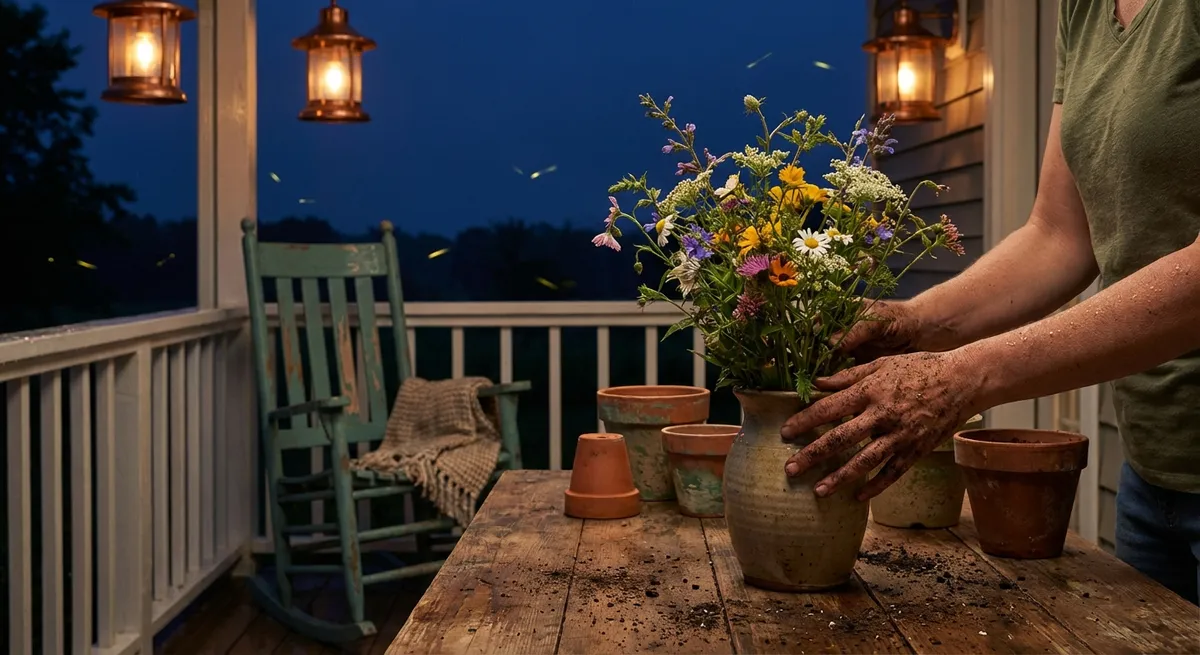
Let’s reimagine your porch as a storytelling space, one that reflects who you are and how you want to live. These five design ideas aren’t about perfection; they’re about creating a front step so welcoming you’ll find yourself lingering just a little longer every day.
1. The Conversation Porch: Designing for Long, Unhurried Talks
Imagine your porch as the most generous host you know—always ready, never rushed. Design it first and foremost for conversation, not for show. Start with seating that faces in, not just out toward the street: two deep chairs angled toward each other, a slim bench tucked along the railing, or a built-in corner seat with soft cushions. When people can see each other’s eyes, words come easier.
Layer the space like you would a favorite reading room. A small, sturdy table between chairs invites tea mugs, notebooks, and late-night takeaway. A low outdoor rug grounds the space and signals, “Stay a while.” Add a soft throw blanket for each seat—that tiny gesture transforms “a place to sit” into “a place to be cared for.”
Lighting is the secret ingredient to conversations that last long past sunset. Use string lights along the ceiling or roofline for a soft glow, then anchor it with one or two warm table lamps or wall sconces. Avoid harsh, single overhead lights that flatten everything; multiple gentle lights wrap the porch in intimacy.
Think about sound too. A simple wind chime, the hush of a nearby fountain, or the rustle of tall grass in planters can give your conversations a calm soundtrack. Your goal isn’t perfection—it’s comfort. A conversation porch is a promise: whoever steps onto it will be given time and attention.
2. The Threshold Garden: Blurring the Line Between House and Nature
Let your porch become a gentle landing zone between indoors and outdoors—a green threshold that feels like a pause before the day begins or ends. Instead of treating plants as decoration, design them as architecture. Use tall, vertical planters or trellises at the edges of your porch to frame your view like living columns.
Mix heights and textures: trailing ivy or sweet potato vine spilling over the sides, mid-height herbs or flowers brushing your knees, and taller shrubs or small trees in containers providing shelter. Choose plants that awaken your senses: lavender or rosemary to brush as you pass, jasmine or honeysuckle for scent at dusk, ornamental grasses that whisper when the wind stirs.
If your porch is small, think upwards. Hanging baskets from the ceiling, slim wall-mounted planters, or rail planters can surround you with green without taking up valuable floor space. Even one courageous plant by the front steps can feel like a welcome committee.
Consider how your garden threshold changes with the seasons. Spring bulbs in pots can burst into color by the front door; in summer, edible herbs invite you to snip as you head inside; in fall, grasses glow gold against cool evening light; in winter, evergreen boughs and hardy planters assure you that life is only resting, not gone.
The threshold garden isn’t about perfectionist landscaping. It’s about the feeling that the world outside your door is alive—and that you’re allowed to be, too.
3. The Daily Ritual Porch: Crafting Space for Morning & Evening Moments
Design your porch around the tiny rituals that steady your days. Ask yourself: What could happen here in five quiet minutes that would change the tone of my whole day? Once you have your answer, shape your space around that moment.
For morning people, create a sunrise seat: one chair that catches the first light, with a small side table for a coffee mug and a journal. Keep a basket nearby with a blanket, a notebook, a pen, and maybe a pair of binoculars if you like watching birds or distant horizons. Let this corner of your porch be your unofficial “start line” each day.
If you come alive at dusk, build an evening nook instead. Think of a low, cozy chair or swing, warm-toned pillows, and a nearby lantern or candle cluster. Battery-powered candles or solar lanterns can add glow without fuss. Make room for a speaker or radio if music helps you unwind, or keep it deliberately analog—just the crickets, the street, and your own thoughts.
Use subtle cues to reinforce your rituals. A simple wall hook for a favorite hat or light jacket by the door says, “Stepping out here is part of how I live.” A small shelf with your current book or sketchpad quietly insists, “You have time for this.”
The daily ritual porch doesn’t need to be big or expensive—it only needs to be intentional. You’re not decorating a facade; you’re designing a habit of coming home to yourself, on your own front step.
4. The Community Porch: Inviting Neighbors, Friends, and Serendipity
A community porch acts like a friendly handshake to the neighborhood. It makes connection easy, almost inevitable. Start by turning your porch toward the street not just visually, but emotionally: instead of hiding behind tall railings or thick shrubbery, consider lower sightlines that say, “Hello, world. I see you.”
Choose seating that can flex between solo and shared. A porch swing that holds two, a bench with extra room, or lightweight stools that can be pulled in when neighbors wander by. Even a wide step with cushions can become a makeshift gathering spot.
Signal welcome with small, thoughtful details. A pitcher of water and stack of cups on a side table on especially hot days. A simple handmade sign—“Porch open. Say hi.”—on a hook that you flip when you’re feeling social. A basket with sidewalk chalk for kids, or a small outdoor game tucked in the corner.
Lighting here is bright enough to feel safe and open, but still warm. Lanterns along the stairs, a porch light with a warm bulb instead of harsh white, perhaps string lights tracing the railing. These touches help guests feel comfortable lingering after dark.
Most importantly, design the community porch so it’s easy to use spontaneously. If you have to drag furniture out every time, you’ll rarely do it. Keep it “always ready”—cushions that can stay outside, a side table stable enough for everyday use, clutter stored in a single basket you can tuck away in seconds.
This porch quietly rewrites the story of modern life—from isolated houses on a street to people living near each other, available for a shared laugh, a borrowed tool, or an unexpected heart-to-heart between errands.
5. The Four-Season Porch: Weather-Ready, Memory-Ready
A porch that works all year becomes less like an accessory and more like a true room of your home. When you design with all four seasons in mind, you’re saying: “This space is part of our life, even when the weather changes its mind.”
Start with adaptable layers. Outdoor curtains or roll-down shades can block summer sun and fall wind while adding softness and privacy. In colder months, they hold in warmth from a space heater or infrared heater (always used with proper safety and ventilation in mind). On mild days, you can tie them back and let the air flow.
Choose furniture that feels welcoming in every season. Wood, metal, or all-weather wicker pieces topped with weather-resistant cushions can handle changing conditions. Add removable textiles—throws, pillows, seat pads—that you can swap as the weather and mood shift: light cottons and linens in spring and summer, thicker knits and flannels in fall and winter.
Lighting is your all-season ally. Solar path lights for early winter sunsets, dimmable string lights for steamy summer nights, and a statement lantern or pendant that works year-round. Think of it as your porch’s heartbeat—steady, gentle, and always on your side.
Finally, mark each season with one small, intentional touch. In spring, a vase of fresh cut branches or tulips by the door. In summer, a basket with sunscreen, fans, or bug spray. In autumn, stacked blankets and a lantern cluster. In winter, evergreen garlands or a single potted conifer dressed in simple lights.
A four-season porch doesn’t fight the weather; it partners with it. Rain, heat, snow, wind—each one becomes another excuse to step outside, breathe differently, and remember that your home includes the air just beyond your front door.
Conclusion
Your porch doesn’t need to be grand to be life-changing. It just needs to be intentional—a shaped threshold between your inner world and everything beyond your front steps. Whether you lean toward deep conversations, daily rituals, neighborhood connection, or year-round coziness, your porch can become a living story that unfolds one small moment at a time.
Design it not for perfection, but for use. Not only for how it looks from the street, but for how it feels from the inside—on a Tuesday morning with your hands wrapped around a mug, on a Friday night waving to a neighbor, on the first cool evening of fall when the air smells like possibility.
When you give your porch a purpose, it gives something back: a reason to pause, step outside, and remember that your life isn’t only lived indoors.
Sources
- U.S. Department of Energy – Energy Saver: Windows, Doors and Skylights – Guidance on choosing doors, windows, and coverings that can improve comfort on porches in different climates
- University of Minnesota Extension – Container Gardening – Practical advice on choosing and maintaining porch planters and container gardens
- Royal Horticultural Society – Container Gardening – Ideas and best practices for creating lush container plantings suitable for porch thresholds
- Consumer Product Safety Commission – Portable Heater Safety – Important safety information for using heaters on covered or enclosed porches
- International Dark-Sky Association – Outdoor Lighting Basics – Tips for choosing porch lighting that is warm, welcoming, and considerate of neighbors and the night sky