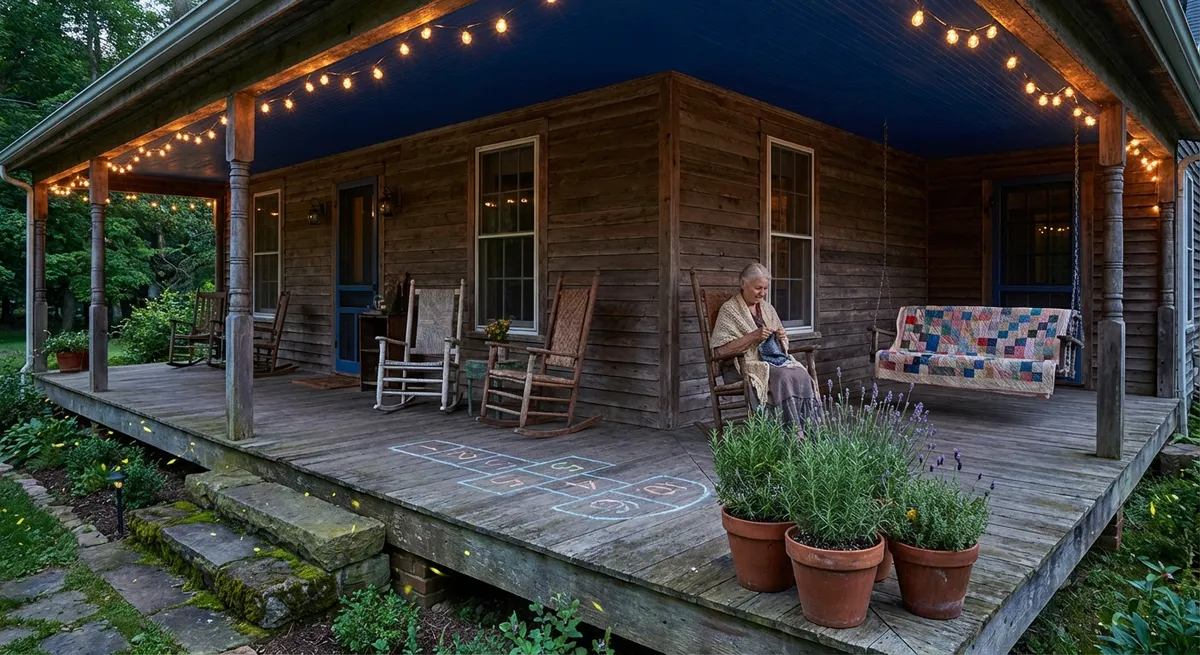
Let’s turn that in-between space into somewhere your life wants to linger.
1. The Sunrise Nook: A Corner for Quiet Beginnings
Every porch has a corner that catches the day before the rest of the world wakes up. Claim it.
Start with a small bistro table or a narrow bench that doesn’t crowd the space—think slim profiles, light lines, and pieces that hug the wall or railing. Layer in a cushion in a sunrise palette: soft apricot, pale lavender, or muted gold. Add one tactile element—a knit throw, a woven stool, or a textured outdoor rug—to signal that this is a place to slow down, not rush through.
Bring life to the nook with something growing. A potted herb trio (mint, thyme, basil) or a single statement plant in a clay pot introduces scent and softness. As the light shifts through the morning, so does the mood: steam curling from your coffee, the faint sound of birds, the first hint of warmth on your skin. This isn’t just decor; it’s a ritual, quietly built into the bones of your porch.
Over time, this small corner becomes a gentle anchor to your day—where you read one page, write one line, or simply look up and remember that the sky is still bigger than your to-do list.
2. The Conversation Circle: A Porch That Holds Your People
A porch designed for conversation feels different the moment you step onto it. Instead of everything facing the view or the street, the focus subtly turns inward, toward the people sharing the space.
Think in circles, not rows. Arrange chairs and a loveseat so they face each other rather than the wall or the yard. A round or oval coffee table or a cluster of smaller side tables in the center keeps things flexible—someone can pull a stool closer or slide a table to the side as the gathering grows.
Mix seating heights and textures so it feels collected, not staged: a classic rocking chair next to a deep lounge chair, a woven pouf beside a metal side table. Add outdoor cushions in colors that feel like conversation—warm terracottas, soft blues, leafy greens. String lights or a simple lantern on the table creates a glow that softens faces and lengthens stories.
What you’re really designing is comfort with intention: a space where friends feel okay lingering after the last drink is poured, where neighbors lean on the railing just a bit longer, where a porch doesn’t just overlook the street—it gathers the people who walk down it.
3. The Green Edge: Turning Your Porch into a Soft Border with Nature
A well-designed porch doesn’t stop at the rail; it blurs gently into the landscape. The secret is to treat plants like a living frame around your outdoor room.
Start by defining vertical layers. Use tall planters or trellised vines at the edges to soften posts and corners—climbing jasmine, clematis, or native flowering vines can turn structural lines into green poetry. Mid-height plants in boxes or railing planters add color at eye level: cascading petunias, ornamental grasses, or leafy greens that sway when the wind moves through.
At ground level, trailing plants or low pots connect the porch to the yard—ferns, hostas, or native perennials create a soft edge instead of a hard drop-off. If privacy is a dream, consider container “hedges”: bamboo in planters, columnar evergreens, or tall grasses that whisper in the breeze while gently screening the view.
By surrounding your porch with life, you transform it from a platform into a perch—a place where you’re not just looking out at nature, but nestled right at its edge. Birds visit the railing, bees hover at the blooms, and even a small city porch starts to feel like a tiny, suspended garden.
4. The All-Weather Cocoon: A Porch That Welcomes Every Season
The most magical porches are the ones that don’t shut down when the weather gets dramatic—they lean into it. A gentle rain, a chilly morning, even a winter afternoon can become an invitation if your design anticipates the elements.
Begin with shelter: if your porch has a roof, you’re halfway there. Add roll-down shades or outdoor curtains that can be drawn against low sun, wind, or drizzle. The movement of fabric—softly billowing, gently tied back—adds a subtle sense of romance even on quiet days.
Next, introduce warmth and texture. Think layers: an outdoor rug to take the edge off cold boards, a basket of weather-friendly throws, pillows with removable, washable covers. A compact electric or gas heater, or even a tabletop fire bowl (where permitted), turns the porch into a refuge on cool evenings. On summer days, a ceiling fan or standing fan keeps the air moving and the space usable long after the sun finds its fiercest angle.
Lighting becomes your invitation after dark. Combine one strong ambient source (overhead fixture or string lights) with pockets of glow—solar lanterns, candles in hurricane glass, rechargeable table lamps. The goal is to make the night feel intentional, not accidental.
An all-weather porch doesn’t chase perfect conditions; it embraces real ones. The tap of rain on the roof, the smell of cold air on a blanket, the late-summer heat softened by a fan—these become part of the storyline, not the reason to go back inside.
5. The Signature Touch: Designing a Porch That Feels Unmistakably Yours
The most memorable porches aren’t the ones that look like they came straight from a catalog; they’re the ones that carry a hint of the people who live there.
Start with one object that has a story—a painted chair from a grandparent’s house, a vintage crate turned into a side table, a handmade wind chime, a quilt you don’t mind occasionally living outdoors. Build around that. Let it guide your palette, your materials, your mood. Maybe your porch leans coastal with pale blues and worn wood, or maybe it leans bohemian with patterned textiles and layered lanterns.
Introduce a “signature” element guests will remember after they leave. It might be a bold front door color, a row of mismatched yet harmonious planters, a swing that faces an unexpected direction, or a tiny outdoor bookshelf with a rotation of well-loved paperbacks. A chalkboard welcome sign, a seasonal wreath that reflects your hobbies, or a quirky doormat can all whisper, “You’re at our place now.”
Don’t be afraid of a little imperfection. A porch is a working space, a living room with weather and footsteps and leaves. Let it show signs of life: the pair of boots by the door, the dog bed in the corner, the coffee mug you forgot to bring inside. When design and daily life overlap, your porch stops being a styled set and becomes a lived-in chapter of your story.
Conclusion
A porch is more than boards and railings—it’s a thin line between your private world and the wider one, a place where you can choose your own pace. When you design it with intention, it becomes a daily invitation: to greet the morning, to gather your people, to sit inside the weather instead of behind a window, to let the edges of your life feel softer and more open.
You don’t need a massive wraparound or a perfect view. You just need a willingness to claim this small slice of space as something worthy of care. Choose one idea to begin with—a sunrise nook, a greener edge, a signature touch—and let your porch evolve as your life does.
Step out the door, pause on the boards, and look around. This is where outside begins. Make it a place your story loves to return to.
Sources
- U.S. Department of Energy – Outdoor Lighting Tips - Guidance on energy-efficient outdoor lighting options and placement
- University of Minnesota Extension – Container Gardening - Practical advice for choosing plants and containers suitable for porch and patio spaces
- Clemson Cooperative Extension – Outdoor Living Spaces - Research-based recommendations for designing functional, comfortable outdoor areas
- Harvard Health Publishing – The Health Benefits of Time Outdoors - Overview of physical and mental health benefits of spending time outside
- American Society of Landscape Architects (ASLA) – Residential Design Trends - Insights into current design trends and priorities for outdoor living spaces