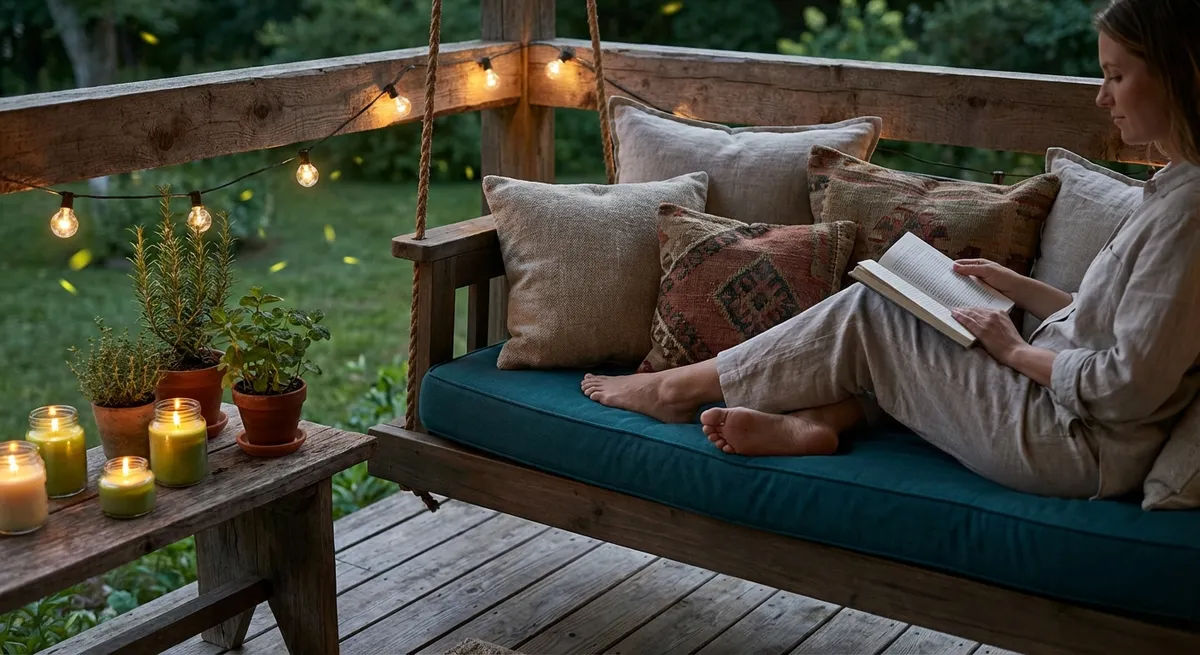
Below are five design ideas to turn your porch into the kind of place you look forward to all day—a space that doesn’t just look beautiful, but reshapes the rhythm of your life.
1. The Conversation Porch: Designing for Story, Not Just Seating
Imagine a porch where every chair feels like an invitation and every corner seems to say, “Stay a while.” The conversation porch is built for connection first, aesthetics second. Start by arranging seating in a loose circle or half-moon rather than facing everything toward the street or a single view. This simple shift tells people, “You belong here. Your story matters.”
Mix seating types to match different moods: a cushioned bench that feels like a hug, two upright chairs for longer talks, and maybe a low stool that can double as a footrest or side table. Layer in soft textiles—weather-resistant cushions, throw blankets in a woven basket, a small outdoor rug underfoot—to make the space feel more like a living room that just happens to breathe fresh air.
Consider a central “anchor”: a small fire table, a sculptural planter, or a round coffee table where you can stack books, set out snacks, or place a single wildflower in a simple vase. When you design a porch for story, you’re not decorating; you’re curating a stage where memories can happen on an ordinary Tuesday night.
2. The Senses-First Porch: Designing with Sound, Scent, and Touch
The porches that stay with us are rarely the ones that were simply pretty—they’re the ones that felt alive. A senses-first porch invites you to experience it with your whole body, not just your eyes. Begin with sound. A small tabletop fountain, a wind chime tuned to soft notes, or even the hush of ornamental grasses rustling in planters can create a natural soundtrack that slows the heart rate and quiets mental noise.
Scent can turn a simple porch into a sanctuary. Add planters of lavender, rosemary, jasmine, or scented geraniums near the seating area, where a brush of the hand releases fragrance. A small herb rail hung along the railing can perfume the air and double as a practical garden for cooking. Even a single potted citrus tree can offer a subtle, uplifting scent throughout the warm months.
Don’t forget touch. Choose cushions and throws with textures that feel inviting—linen that cools in summer evenings, chunky knit throws for shoulder seasons, smooth wood armrests that warm in the sun. Incorporate natural materials underfoot, like a jute or recycled-fiber rug, to make every barefoot step feel intentional. When you plan for sound, scent, and touch, your porch stops being a backdrop and becomes an experience.
3. The Sunrise Corner: A Tiny Ritual Space at the Edge of Your Day
You don’t need a sprawling wraparound to feel like you have an outdoor oasis. Sometimes, all it takes is a single corner dedicated to the first light of day. The sunrise corner is a small, carefully crafted spot where you begin your morning before your phone, your inbox, or anyone else’s expectations can reach you.
Find the part of your porch that catches the softest morning light. Place one truly comfortable chair there—a rocker, a lounge chair, or even a hanging chair if your structure allows. Add a compact side table that can hold two things: a warm mug and one object that centers you (a journal, a book of poems, or a favorite stone from a past adventure).
Keep this area visually simple but emotionally rich. A single large potted plant, like a fern or olive tree, can create a cocooning effect. A thin outdoor curtain or bamboo shade can filter harsh light and add a sense of enclosure. This is not a photo-ready corner meant to impress; it’s a private landing place for your thoughts. When you give your morning a dedicated seat on your porch, you start to shape your days instead of just reacting to them.
4. The Seasonal Porch: A Stage That Changes with the Year
Some porches stay frozen in the style of the day they were decorated. The seasonal porch, by contrast, is alive—changing with the weather, the holidays, and even your own evolving mood. Think of your core pieces (seating, rug, and major planters) as the “bones” that stay the same, and your textiles, plants, and small decor as the “costumes” that transform the space.
In spring, layer in soft greens and blush tones, bulbs in pots, and lightweight throws. Summer might bring striped cushions, woven lanterns, and big leafy plants that make your porch feel like the edge of a vacation. Autumn can lean into rich colors—rust, mustard, deep teal—with textured blankets, mums in planters, and a basket for folded scarves. Winter, if your climate allows porch use, can feature evergreen branches, lanterns with LED candles, and a thick outdoor rug that makes stepping outside feel cozy instead of cold.
Store seasonal items in clearly labeled bins so a quick swap can refresh the entire mood of your porch in an afternoon. Over time, this ritual of changing the porch with the seasons becomes its own kind of celebration—a reminder that your home is not static, and you don’t have to be either.
5. The Porch as Threshold Garden: Blurring the Line Between Indoors and Outside
A powerful porch design doesn’t just sit in front of your house; it connects your interior to the landscape beyond. The threshold garden porch is all about soft transitions—spaces that make stepping outside feel like a natural continuation of life inside rather than a separate zone.
Start by echoing colors from your indoor spaces. If your living room leans into warm neutrals, extend that palette onto the porch with similar tones in cushions and planters. If you have a bold accent color indoors (like deep blue or moss green), repeat it in your porch textiles or a painted side table. This visual continuity makes the porch feel like an open-air room, not an afterthought.
Then, invite nature closer. Use planters in staggered heights—tall trees in containers near the corners, medium plants beside seating, and low groundcovers or herbs along the edges—to frame your view without blocking it. Climbing plants on a trellis or railing can soften hard lines and create the feeling of a green threshold into the world beyond. Add a simple, low-profile outdoor mat or runner that visually “pulls” you from indoor flooring to the porch boards and on toward the yard or street.
When your porch becomes a gentle bridge between inside and outside, it encourages you to move more freely between the two—to drink your coffee outside, answer emails in the breeze, or simply step out for two minutes of air between tasks. Your home starts to feel larger, not because the square footage has changed, but because the way you move through it has.
Conclusion
A porch can be many things: a quiet stage for sunrise, a circle of chairs where friendships deepen, a sensory retreat that reminds you to breathe, a living canvas that shifts with the seasons, a green threshold between your private world and the wider one.
You don’t need a perfect house, a huge budget, or designer furniture to create a porch that changes how your days feel. You just need intention—a decision to treat this small slice of space as more than a pass-through. Start with one idea: a single chair turned toward the morning, a plant that brushes your hand every time you step outside, a cluster of seats that say, “Come sit. Tell me everything.”
Design the porch, and you might just redesign the way you live your life, one quiet, beautiful moment at a time.
Sources
- Environmental Protection Agency – Benefits of Green Spaces - Explores how vegetation and outdoor spaces improve well-being and comfort
- Harvard T.H. Chan School of Public Health – Nature and Mental Health - Discusses research on the mental health benefits of spending time outdoors
- Mayo Clinic – The Benefits of Social Connection - Explains how spaces that foster conversation and connection can improve health
- Cornell University – Biophilic Design and Health - Details how incorporating natural elements into design supports well-being
- Better Homes & Gardens – Porch Decorating Ideas - Provides practical inspiration for styling porches with furniture, plants, and decor