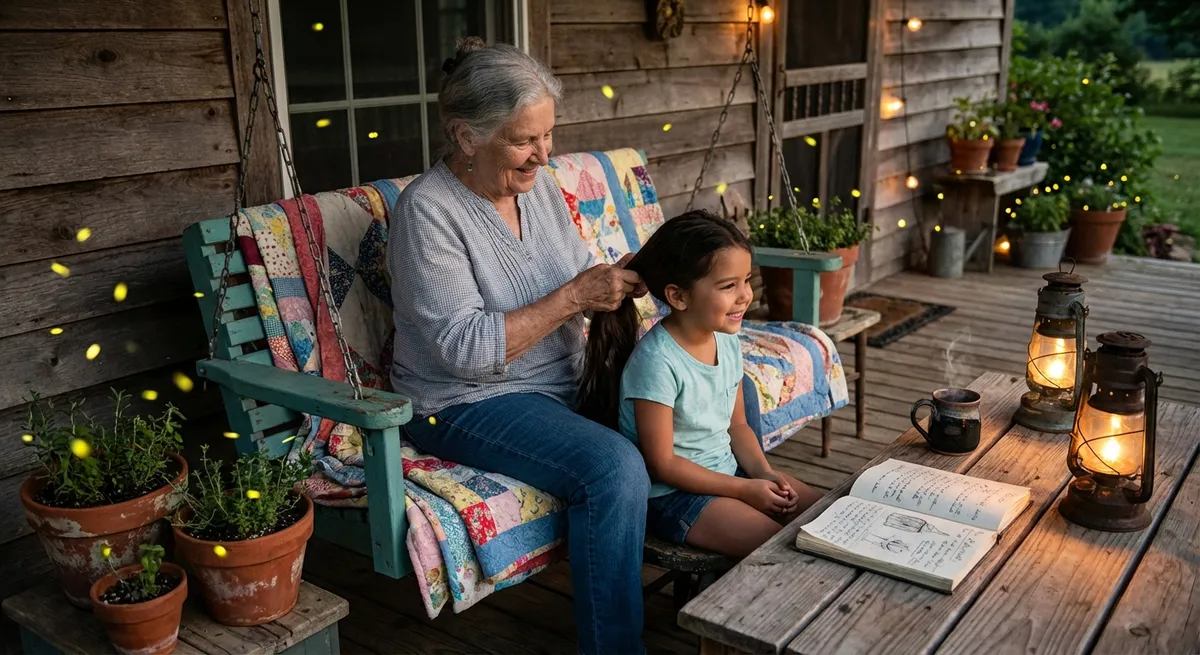
Below are five porch design ideas that don’t just decorate—they invite you into a different rhythm.
1. The Slow-Morning Porch: A Sanctuary for First Light
Imagine a porch that feels like waking up gently—no alarms, no urgency, just light unfolding across your floorboards. The slow-morning porch is designed around one daily ritual: the moment you first step outside.
Start with seating that supports lingering, not perching. Think deep, cushioned chairs or a bench wide enough to curl up on with a blanket and a book. Position them where the first light lands—east-facing if possible—so you can actually see the day arrive. A low side table becomes a small altar for mugs, notebooks, or a single flower in a bud vase.
Layer in texture: a soft outdoor rug under bare feet, woven throws, and natural materials like wood, rattan, or linen that make the space feel warm instead of “outdoor-functional.” Add a single statement plant—like a potted olive tree, fern, or dwarf citrus—to create the feeling of a tiny morning garden. Keep decor intentionally minimal; this is a porch that breathes. When you step out, you should feel the difference immediately: the pace changes, your shoulders drop, and for a few minutes, the day is yours alone.
2. The Threshold Library: A Porch for Readers and Dreamers
Some porches are for passing through. Others are for pausing. The threshold library porch turns that in‑between space into a narrow but powerful world of its own: a micro reading room where outside and inside overlap.
Begin with a built-in or freestanding shelf unit along one wall or under a window—outdoor-safe materials like sealed wood or metal can handle temperature shifts. Fill it with a rotating cast of books: poetry for short sips, novels for long afternoons, field guides for local birds or plants so you can look up what you see and hear. Add a comfortable seat that feels like a promise: a glider, a rocking chair, or a daybed stacked with layered cushions and pillows you’re not afraid to actually use.
Light is everything here. Install warm, adjustable lighting: a wall sconce, a reading lantern, or string lights layered with a focused reading lamp. You want to be able to read comfortably at dawn and after dark. A small side table can hold a tea tray, a candle, and a notebook—for underlining your day as much as your pages. Over time, this porch stops being simply “the front” or “the back” of your home and becomes something more tender: the place where you leave the noise behind and step into imagination.
3. The Gather-Round Porch: A Stage for Easy Evenings
There is a special kind of magic in gathering on a porch where nobody is performing and everybody belongs. The gather-round porch is designed for unhurried evenings: neighbors dropping by, kids traversing in and out, and friends who never quite make it to the dining room because the porch feels better.
Center your layout around connection, not symmetry. Arrange seating in a loose circle or semicircle so everyone can see each other. Mix seating heights and types—chairs, a bench, ottomans, maybe a porch swing at one edge—so people can choose how they want to sit. Leave a clear “path” through the space so it feels welcoming instead of cramped.
A sturdy coffee table or cluster of small tables becomes the heart of the porch: a landing spot for shared snacks, a deck of cards, board games, or a pitcher of something cold. Overhead, install string lights, lantern-style fixtures, or even a simple pendant to create a soft glow that makes faces look warm and evenings feel longer. If your climate allows, add a ceiling fan for summer or a portable heater for cooler nights, so comfort never dictates when you have to go inside. The result is a porch that doesn’t just host people—it invites them to stay until time stops mattering.
4. The Green Edge: A Living Frame Around Your Porch
When you blur the boundary between your porch and your landscape, your outdoor space starts to feel like a living room with walls of sky and leaves. The green edge design idea turns the perimeter of your porch into a soft, breathing frame.
Start by treating your railings, steps, and edges as planting opportunities. Use planters of varying heights—floor pots, railing boxes, hanging baskets—to create a layered “edge” that’s lush but not overwhelming. Choose a mix of evergreen structure (boxwood, dwarf conifers, hardy grasses) and seasonal color (annuals, herbs, or blooming perennials) so your porch feels alive year-round. If privacy is a concern, train climbers like jasmine, clematis, or climbing roses along trellises or wire supports to create a scented, leafy screen.
Think about what you want your green edge to do: attract birds and pollinators with native plants? Filter street noise with rustling grasses and shrubs? Offer shade through a vine-covered pergola? Design with that purpose in mind. Even a small porch can host a miniature ecosystem in a few containers. Over time, you’re not just sitting on your porch—you’re sitting inside a living frame that changes color, scent, and texture as the year moves, quietly shifting the backdrop of your life.
5. The All-Weather Cocoon: A Porch That Refuses to Be Seasonal
The all‑weather cocoon porch is for people who don’t want their outdoor space to vanish with the first cold front or heat wave. It’s a porch designed to flex with your seasons so that stepping outside always feels like an option, not a luxury.
Start with the basics: consider adding roll-down shades, outdoor curtains, or removable screens to manage wind, bugs, and sun. These soft “walls” let you reconfigure your porch depending on the day—open and breezy when it’s beautiful, cocooned and sheltered when it’s not. Choose cushions and textiles specifically made for outdoor use—UV‑resistant, quick-drying fabrics—but soften them with layers: throw blankets for chillier nights, lighter textiles for summer.
If your climate permits, adding a small, safe outdoor heat source (like an electric heater or infrared heater approved for covered spaces) can transform shoulder seasons into your favorite porch months. In warmer regions, a ceiling fan or strategically placed standing fan keeps air moving and comfort high. Include a storage solution—like a deck box or bench with hidden storage—so you can swap seasonal items quickly: thicker throws, extra candles, or citronella lanterns.
The result is less about bravely enduring weather and more about embracing it. Rain becomes something to watch from a dry, sheltered seat. Crisp evenings call you outside instead of pushing you in. Your porch stops being a summer cameo and becomes a year‑round character in your daily life.
Conclusion
A porch is more than a set of boards and railings attached to your house; it’s a lens that changes how you see your days. When you design it with intention, it becomes a place where mornings feel gentler, evenings feel longer, and the in‑between moments of life finally have somewhere to land.
Whether you’re dreaming of a slow‑morning retreat, a tiny threshold library, a gathering spot for your favorite people, a green-edge sanctuary, or an all‑weather cocoon, your porch can become a story you step into every day. Not a perfect space. A lived‑in, weather‑touched, light‑filled one—where you can sit down, look around, and quietly think: this is exactly where I’m meant to be right now.
Sources
- [Environmental Protection Agency – Green Landscaping](https://www.epa.gov/soakuptherain/soak-rain-rain-gardens) - Guidance on plant choices, rain gardens, and sustainable landscape practices that can inspire eco-friendly porch-edge planting.
- [U.S. Department of Energy – Energy Saver: Window Treatments and Awnings](https://www.energy.gov/energysaver/window-attachments) - Explains how shades, awnings, and coverings impact comfort and temperature, useful when planning all-weather porch designs.
- [University of Minnesota Extension – Selecting and Placing Outdoor Furniture](https://extension.umn.edu/yard-and-garden-news/tips-selecting-and-placing-outdoor-furniture) - Offers practical advice on choosing durable, comfortable outdoor furniture and arranging it effectively.
- [American Society of Landscape Architects (ASLA) – Residential Design Trends](https://www.asla.org/residentialinfo.aspx) - Highlights current residential outdoor living trends, including porches and transitional spaces between indoors and outdoors.
- [Mayo Clinic – The Benefits of Time Outdoors](https://www.mayoclinichealthsystem.org/hometown-health/speaking-of-health/benefits-of-spending-time-outdoors) - Discusses mental and physical health benefits of spending time outside, underscoring the value of investing in your porch as a daily retreat.