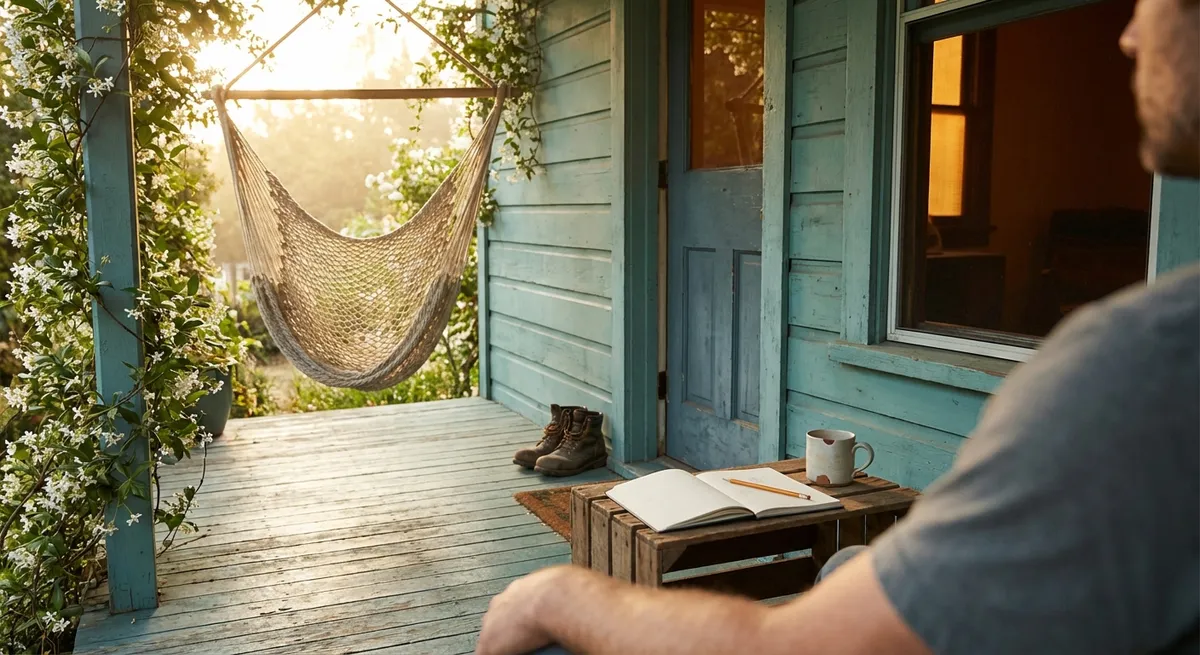
A porch is not just somewhere to sit. It is an invitation—into slowness, into connection, into noticing. With a few thoughtful design moves, you can turn this threshold into a place that holds conversations, quiet mornings, and the kind of evenings you remember years from now.
Below are five design ideas for outdoor living enthusiasts who want a porch that does more than simply exist. Each one is a way of saying: this is where my day begins, and where it gently lands.
1. The “First Light” Porch: Designing for Mornings on Purpose
Imagine a porch tuned to the exact rhythm of sunrise—a place that seems to wake up with you. Designing for morning means thinking about light, warmth, and calm before anything else.
Start with orientation: if your porch faces east or southeast, lean into it. Choose seating where the first rays will find your face without blinding you—angled chairs, a small bench turned slightly off-center from the brightest beam. Soft, light-colored outdoor cushions and rugs will catch and reflect the glow, turning your porch into a shallow pool of morning light.
Bring in textures that whisper “beginning”: a woven jute rug under bare feet, a lightweight throw that lives over the arm of your chair, a simple wooden side table that always has room for a mug and a book. Keep your color palette gentle—misty blues, buttery creams, weathered wood—so your porch feels like an exhale before the day’s noise.
Layer in nature on a small, intimate scale. A low planter of herbs that release scent when brushed, a pot of lavender by the steps, wind chimes tuned to soft tones rather than harsh clinks. When you design your porch to honor the first light, you’re not just decorating a space—you’re building a daily ritual that reminds you to meet the world slowly, on your own terms.
2. The Conversation Porch: Shaping Space for Real Connection
Some porches are built for talking—the kind of talking that wanders, loops back, and settles somewhere deep. To create a porch where conversation naturally lingers, think less about perfect symmetry and more about how people actually move, listen, and lean in.
Start by breaking away from the classic “row of chairs facing the street” layout. Instead, arrange seating in a loose circle or soft U-shape so everyone can see each other’s eyes. A small, central table anchors the group and gives hands somewhere to go—coffee mugs, a deck of cards, a bowl of fresh berries. It’s surprising how a simple shared surface can make conversation feel grounded.
Mix seating types for different moods: a deep lounge chair for the friend who curls up, a sturdy rocker for someone who likes to coast gently while they think out loud, a bench that invites two people to sit closer than they would on separate chairs. Add textured cushions and layered pillows so staying “just a few more minutes” feels good in the body, not just the mind.
Lighting is your secret ally here. Use multiple small, warm light sources instead of one harsh overhead fixture—string lights along the ceiling line, a couple of battery-powered lanterns on the floor or table, perhaps a candle cluster in hurricane glass for windier nights. This kind of gentle, blended lighting softens edges, quiets the nervous system, and makes it easier to say the things that matter.
Most of all, keep a sense of openness toward the world beyond the railing. A conversation porch doesn’t shut out the neighborhood; it sits just close enough to the sidewalk that a passing neighbor can be invited in with a wave, turning a solitary evening into shared laughter that drifts into the dark.
3. The Green-Room Porch: A Soft Border Made of Living Things
If you love the outdoors, let your porch become a green room to the rest of the world—a place wrapped in plants, where you’re technically at home but feel held by leaves, scent, and gentle movement.
Think vertically first. Instead of keeping all your plants at ground level, create layers: hanging baskets that soften the ceiling line; narrow, wall-mounted planters along support posts; tall pots with architectural plants framing each corner. These layers turn your porch into a kind of living cocoon, filtering light and views so your threshold feels lush, not bare.
Choose plants that respond to your climate and sun exposure. Shade-loving ferns and hostas thrive on north-facing porches, creating a cool, woodland mood. South or west-facing spaces can become miniature Mediterranean terraces with rosemary, thyme, lavender, and hardy succulents. Add at least one scented plant near your main seat—jasmine vine on a railing, a pot of basil by the steps—so every breeze brings a small surprise.
Consider the soundscape too. A narrow water feature tucked into a corner can turn street noise into background texture. The rustle of ornamental grasses in tall containers adds a quiet, whispery layer of movement. If birds visit your yard, a feeder or small birdbath in view of the porch subtly extends your living room into the branches.
Use furniture and flooring materials that harmonize with this natural surround: slatted wood, woven cane, natural-fiber rugs. A porch wrapped in green becomes more than a passageway; it’s a threshold where you can feel the seasons touch your life—new leaves, late blooms, the quiet of bare branches—without ever leaving home.
4. The Flexible-Stage Porch: One Space, Many Lives
A truly beloved porch doesn’t stay fixed; it shapeshifts with the needs of your day. Morning solitude, afternoon work, evening gathering—designing for flexibility means your porch can host all of it without feeling cramped or chaotic.
Start with moveable, multi-purpose furniture. Lightweight chairs you can pivot toward the view or pull into a circle. Nesting tables that can be spread out for snacks or stacked back into a single compact surface. Ottomans that act as both extra seating and footrests. Instead of one oversized sofa that locks your layout in place, think in pieces that can be recomposed in minutes.
Look for storage that disappears into the design: a bench with a lift-up seat for cushions and throws, a low cabinet that hides board games and citronella candles, a lidded outdoor basket for kids’ toys or yoga mats. When clutter has somewhere to quietly vanish, your porch can transform quickly from “family chaos zone” to “quiet sanctuary” without a full reset.
Create subtle “zones” even in a small space. A corner chair with a floor lamp and side table becomes your reading or journaling nook. A simple collapsible bistro table and two chairs can appear when you want a date-night dinner outside and tuck away when you crave openness. A wall hook for a projector screen turns one blank surface into an occasional movie backdrop.
Think of your porch as a stage with changeable sets. The same space can hold a sunrise meditation, a laptop work session, an afternoon art project, and a birthday toast—if you design with motion in mind. The goal isn’t perfection; it’s ease. A flexible porch is one you actually use, over and over, in ways you didn’t even plan.
5. The Story-Speaking Porch: Designing With Meaningful Details
What makes a porch unforgettable isn’t square footage or budget. It’s the way it quietly tells your story. When your design choices reflect who you are—where you’ve been, what you love, how you see the world—your porch stops being generic and starts feeling like a living autobiography in wood, fabric, and light.
Begin with one deeply personal anchor piece. Maybe it’s your grandmother’s rocking chair, now sanded and refinished. A quilt you bring out each evening, stitched by a relative decades ago. A vintage sign from your hometown, hung along the back wall. Design outward from that item, echoing its colors, materials, or mood in subtle ways so everything feels connected.
Layer in objects that speak to your passions. A stack of well-thumbed field guides on a low shelf if you love birds or native plants. A weathered crate holding sketchbooks and pencils if you draw. A small shelf dedicated to stones or shells you’ve collected on travels. These details don’t scream for attention—they quietly invite anyone who sits down to ask, “What’s the story behind this?”
Use text sparingly but intentionally. One hand-painted word on a small board (“Gather,” “Listen,” “Begin”) can set the emotional tone of the space more powerfully than a dozen mass-produced signs. Let your porch be a place where language is chosen carefully and holds weight.
Consider sound and ritual as part of your design narrative. A specific playlist you always put on at sunset. A small bell rung at the start of family dinners outside. A lantern you light every night you’re home, visible from the street like a gentle signal: someone is here, living, resting, welcoming.
When your porch carries your story, it becomes not just a backdrop but a memory-maker. Years from now, people won’t recall the exact shape of the railing—but they’ll remember how your porch felt like you, and how sitting there made their own life feel a little fuller.
Conclusion
A well-designed porch doesn’t shout; it hums. It hums in the first light that slips across your mug in the morning, in the murmur of late-night conversations, in the rustle of plants and the flicker of lanterns. It lives in the small, repeated gestures—stepping out barefoot, pausing at the railing, taking a deeper breath than you meant to.
Whether you dream of a space soaked in sunrise, wrapped in green, shaped for connection, ready for anything, or stitched with your own stories, the most powerful design tool you have is intention. When you decide what you want your porch to do to your days—slow them, soften them, widen them—every choice becomes clearer.
You don’t need a sprawling veranda or a perfect view. You only need a threshold, however small, and the willingness to turn it into a place where life doesn’t just pass by, but pauses—and gently, beautifully, changes you.
Sources
- [University of Minnesota Extension – Creating Outdoor Rooms](https://extension.umn.edu/landscaping-and-gardening/creating-outdoor-rooms) – Practical guidance on planning outdoor living spaces, zoning, and furniture layout
- [NC State Extension – Outdoor Living and Landscape Design](https://content.ces.ncsu.edu/outdoor-living) – Research-based ideas for designing comfortable, functional outdoor areas
- [Harvard Health – The Health Benefits of Being Outdoors](https://www.health.harvard.edu/mind-and-mood/a-psychiatrist-on-walking-the-benefits-of-an-outdoor-stroll) – Explores how time outside supports mental health and well‑being
- [American Society of Landscape Architects (ASLA) – Outdoor Living Trends](https://www.asla.org/outdoorlivingtrends.aspx) – Professional insights into how people are using porches and outdoor rooms
- [Better Homes & Gardens – Porch Design Ideas](https://www.bhg.com/home-improvement/porch/ideas/) – Visual inspiration and practical tips for decorating and arranging porches