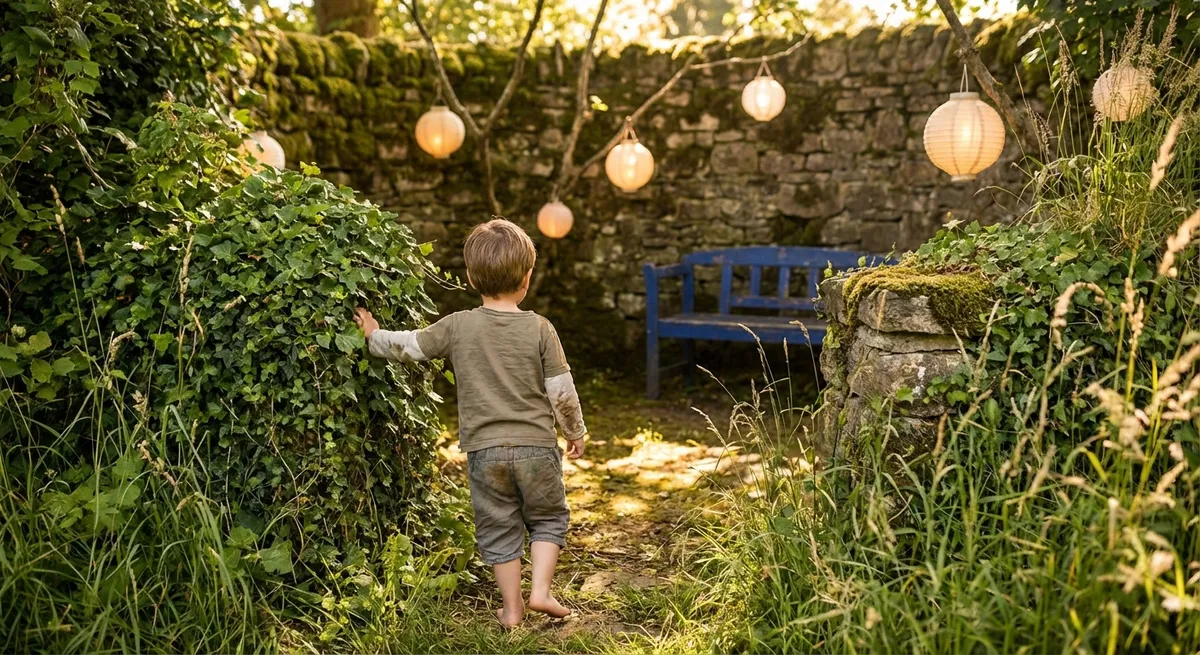
This is the art of creating “secret rooms” in the garden: spaces that feel discovered rather than installed. Below are five design ideas to help you shape a landscape that outdoor living enthusiasts will never want to stop exploring.
1. The Meandering Path That Slows Time
Straight paths are efficient. Meandering paths are transformative. A gently curving walkway asks you to slow down, notice small things, and experience your yard step by step instead of all at once.
Use a mix of textures—flagstone stepping-stones set in moss, fine gravel bordered by low grasses, or reclaimed brick softened by creeping thyme. Let plants gently spill over the edges: lavender brushing your ankles, dwarf mondo grass lining the path like a living trim, or soft lamb’s ear inviting a passing touch.
Add subtle “pauses” along the way: a single bench tucked beneath a small tree, a large boulder warmed by the sun, or a birdbath that anchors a tiny clearing. Each bend in your path becomes an opportunity to frame a view: a glimpse of your porch through foliage, a peek at a distant seating area, or the sky suddenly opening above a clearing.
The goal isn’t to get somewhere quickly; it’s to make the journey through your yard feel like an experience in itself. A meandering path turns everyday movements—taking out the compost, grabbing herbs for dinner—into rituals that bring you back to the present moment.
2. The Layered Border That Feels Like a Living Painting
Instead of lining your fence or foundation with a single row of shrubs, imagine your planting beds as layered landscape paintings—foreground, middle ground, and background—composed in height, color, and movement.
Start with the backdrop: taller elements like native trees, upright shrubs, or ornamental grasses that sway in the wind. In front of these, place mid-height perennials—coneflowers, salvias, black-eyed Susans, or hydrangeas—that bring long seasons of bloom and structure. Then finish with a low, soft “front edge” of groundcovers or small mounding plants that spill towards walkways and lawn.
Think in terms of seasons instead of weeks. Choose plants that hand the baton to one another: early bulbs and hellebores emerging when the world still feels gray, late-summer grasses catching the light when the days feel heavy, seedheads and evergreens holding structure when winter arrives.
To make your borders feel like something you could walk into, layer textures as carefully as colors: feathery grasses beside broad hosta leaves; glossy foliage paired with silvery, fuzzy plants; delicate flower clusters set against bold, architectural stems. When your beds are thoughtfully layered, every glance out the window becomes a changing composition—never quite the same painting twice.
3. The Quiet Nook That Steals You Away
Landscapes often focus on the grand view, but outdoor living really thrives in the small, tucked-away places that feel like a secret only you know. A quiet nook can be as simple as one comfortable chair and a side table gently wrapped in plants.
Look for underused corners: the strip of shade beside your garage, the sloping edge near your fence, the space beneath a favorite tree. Define the nook’s “walls” with tall planters, trellises draped in vines, or clusters of shrubs that gently shield the area without fully closing it off. The idea is to create just enough enclosure that you feel held, but not hidden from the sky.
Choose seating that truly invites lingering: a deep, cushioned chair, a swing that offers the faint rhythm of motion, or a small built-in bench backed by a hedge. Layer in a few finishing touches: an outdoor lantern with a soft candle glow, wind chimes catching the faintest breeze, or a small table where a book can remain waiting for you between visits.
This nook becomes your morning coffee sanctuary, your phone-free twilight refuge, your rainy-day listening post for the sound of drops on leaves. When your landscape includes a spot that whispers “sit down, stay a while,” it starts to feel less like a yard and more like a sanctuary.
4. The Edible Tapestry That Blurs Garden and Kitchen
There’s a special joy in stepping outside and returning with part of your meal in your hands. Edible landscaping invites you to weave flavor into beauty, so your morning walk can be scented by basil and your evening by ripe tomatoes warming in the last light.
Instead of relegating edibles to a separate vegetable patch, blend them into your ornamental beds. Blueberry bushes offer delicate spring flowers, summer berries, and rich fall color. Rainbow chard and red-stemmed amaranth stand as living sculptures. Herbs like rosemary, thyme, and oregano can become fragrant edging along paths and patios.
Consider vertical layers of edibles: espaliered apple or pear trees trained flat against a fence, grapes climbing a pergola, or climbing beans interlaced with flowering vines on an archway. Fill containers with strawberries, dwarf citrus, or cherry tomatoes so you can move little pockets of harvest wherever your seating areas shift.
This edible tapestry turns your landscape into a responsive pantry. You’ll taste your yard as the seasons change—spring salads bright with herbs, summer garnished with fresh berries, fall dinners flavored with your own sage or bay leaves. In the process, you cultivate not just a garden, but a more intimate relationship with what nourishes you.
5. The After-Dusk Glow That Changes Everything
A landscape doesn’t end at sunset; it simply enters a different chapter. Thoughtful outdoor lighting can transform your yard from a daytime backdrop into an evening destination—a place where silhouettes, shadows, and warm pools of light write a new story.
Focus on three layers of light: safety, atmosphere, and highlights. For safety, use low, gentle path lights that guide footsteps without feeling harsh. For atmosphere, incorporate warm, indirect light—string lights draped softly between trees, lanterns scattered across a low wall, or candles nestled in hurricane glass on tables.
Finally, choose a few features to highlight: the textured bark of a favorite tree, the graceful shape of ornamental grasses, the curve of a stone wall. Subtle uplighting at the base of a trunk or under a canopy can create a dramatic, almost theatrical effect while still feeling natural.
Resist the urge to flood your space with brightness. Shadows matter; darkness has its own kind of beauty. Soft lighting draws you outside after dinner, stretches conversations a little longer, and makes your yard feel like a quiet, glowing retreat in a world that often feels too fast, too loud, and too bright.
Conclusion
Landscaping isn’t just about plants or property values—it’s about shaping how you move, feel, and gather outside. A meandering path that slows time, layered borders that act like living paintings, quiet nooks that steal you away, edible tapestries that connect garden and kitchen, and after-dusk glows that change everything: together, these ideas turn an ordinary yard into a place of discovery.
You don’t have to transform everything at once. Start with a single corner, one path, one nook. Let your landscape evolve the way a good story does—chapter by chapter, season by season. Before long, you’ll find that your favorite place to be isn’t somewhere far away. It’s just beyond your back door, waiting for you to step into it.
Sources
- Lady Bird Johnson Wildflower Center – Native Plant Information - Database of native plants with details on habitat, bloom time, and design use
- University of Minnesota Extension – Sustainable Landscape Design - Research-based guidance on creating functional, beautiful, and resilient landscapes
- Royal Horticultural Society – Garden Design Advice - Practical tips and inspiration on paths, planting combinations, and structure
- U.S. Department of Agriculture – Edible Landscaping Basics - Overview of integrating food-producing plants into ornamental gardens
- International Dark-Sky Association – Outdoor Lighting Basics - Best practices for creating beautiful, night-friendly outdoor lighting