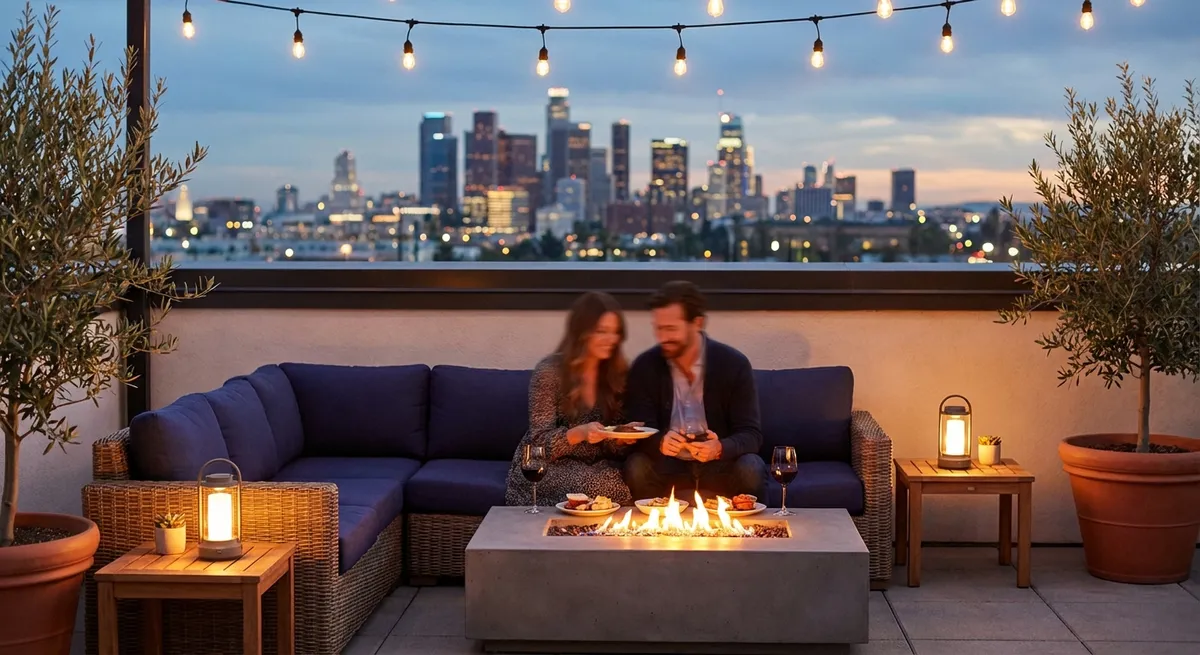
Below are five design ideas to help you shape a patio that feels less like an outdoor add-on and more like the heart of your home under the open sky.
1. The Glow Layer: Sculpting Your Patio With Light
Light is the paintbrush that turns a simple patio into a scene.
Start by thinking in layers, the way a stage is lit. Overhead light—string lights, lanterns, or subtle pendants beneath a pergola—sets the mood and makes the space feel defined. Add a second layer with warm wall sconces, pathway lights, or solar stake lights that trace the edges of planters or steps. Finally, introduce a few points of low, intimate glow: a tabletop candle cluster, a small fire bowl, or LED candles nestled in glass hurricanes.
Aim for warmth in color temperature. Bulbs in the 2200K–2700K range echo the softness of sunset and firelight, flattering both faces and foliage. This golden hue makes wood tones richer, brick cozier, and even concrete feel welcoming. Avoid single harsh spotlights that flatten everything; instead, let the light pool and overlap like watercolor washes.
Think of your patio at night as a story unfolding in circles of light: a reading chair here, a conversation cluster there, a glowing pathway leading back inside. The goal isn’t brightness—it’s invitation.
2. The Soft Frontier: Blurring the Line Between Indoors and Out
The most memorable patios feel like a continuation of the home, not an afterthought tacked onto the back door.
Begin with texture. Echo something from indoors—your living room rug’s color, the wood tone of your dining table, the metal finish on your light fixtures—so the visual language doesn’t break at the threshold. Outdoor rugs in indoor-inspired patterns can anchor a seating area and make bare feet feel welcome. Even a small runner outside the door nudges the patio into “room” territory.
Then, bring out elements you normally reserve for inside life: a stack of throw blankets in a lidded bench, weather-resistant pillows in your favorite palette, a low side table for books and mugs. Choose outdoor fabrics and materials designed to withstand sun and moisture, but don’t be afraid of color or pattern. Your patio can be where bolder choices live—sunset oranges, deep indigos, botanical prints that might feel too strong indoors.
Finally, pay attention to sightlines. When you look out from your kitchen or living room, what’s the first thing your eye lands on? Let that be something intentional: a small bistro set, a sculpture, a potted tree, or a loveseat with an inviting throw. This visual handshake between inside and outside sets the expectation that the patio is an equal character in your home’s story.
3. The Conversation Nest: Designing Seating That Holds Stories
Every great patio has at least one spot where time unhooks from the clock.
Think in terms of “nests” rather than rows or lines. Curved sectionals, circular chair arrangements, or two chairs angled inward around a fire bowl naturally pull people into conversation. Even in a small space, a café table with two chairs turned slightly toward each other feels more intimate than rigid, straight-on seating.
Layer comfort the way you layer light. A supportive base—sturdy chairs, a loveseat, or a daybed—comes first. Then add cushions with enough depth that you sink in slightly, signaling your body that it’s okay to stay. A throw pillow in the small of your back or under your arm transforms a quick perch into a linger. Keep a basket or storage ottoman nearby for blankets that can wrap around shoulders as the evening cools.
If your patio is large, break it into distinct conversational “pockets”: a fire pit circle, a reading nook by the garden, a bar-height table near the grill. These micro-zones encourage movement and different moods through the evening—laughter around the flames, quiet reflection under a tree, animated debates over a shared meal.
Build your seating the way you build your friendships: sturdy, welcoming, flexible, and always ready for one more chair to be pulled into the circle.
4. The Living Tapestry: Greening Your Edges and Overhead
Plants can turn a bare patio into a living tapestry—moving, growing, breathing with the seasons.
Start with your edges. Large planters or raised beds along the perimeter soften hard lines and create a sense of enclosure without blocking breezes. Mix heights: tall ornamental grasses that sway and whisper, medium shrubs or small trees for structure, and low trailing plants that spill over the rims of containers like green waterfalls.
If you’re working with limited floor space, claim the vertical. Wall-mounted planters, trellises with climbing vines, or a slim plant shelf can flood a small patio with life. Herbs like rosemary, thyme, and mint pull double duty as both greenery and flavor for your meals; brushing your hand along them releases scent into the air, turning every walk across the patio into a sensory ritual.
Overhead, consider a pergola, shade sail, or even a simple tensioned wire system where vines can climb and lights can drape. Wild grape, wisteria, clematis, or jasmine (chosen to suit your climate) can create a dappled light canopy as they mature. This layered, filtered light softens harsh sun and creates an ever-changing pattern of shadow and leaf.
Let your plant choices tell a story: a moon garden of white blooms and silver foliage that glows at night, a pollinator-friendly corner that hums with bees and butterflies, or a culinary collection of tomatoes, peppers, and basil brushing up against your dining area. Your patio becomes not just a place to sit, but a place to watch things grow.
5. The Ritual Corners: Designing for the Way You Actually Live
A patio is more than décor; it’s a stage for your daily rituals.
Begin by naming the moments you crave: early-morning coffee with a journal, late-night stargazing, weekday family dinners, weekend yoga, or a space to paint, write, or play music. For each ritual, carve out a corner that makes it effortless.
A “dawn corner” might be a single lounge chair facing east with a small side table and a blanket draped over the arm, ready before you even wake. A “creative corner” could be a sturdy, easy-to-clean table with closed storage for art supplies, a portable speaker, and a chair that feels good for hours of making. For family meals, ensure your outdoor dining table has enough room to spread out—candlesticks for dinners, board games on Sundays, laptops for working al fresco when the weather is kind.
Think of storage as a form of hospitality—for yourself. A bench that hides cushions and games, a deck box for outdoor dinnerware, hooks for lanterns or string-light remotes: these small details remove friction. The less you have to carry in and out, the more you’ll actually live out there.
Most important, leave a little emptiness. A clear patch of patio for kids to chalk, adults to roll out yoga mats, or friends to dance when a favorite song comes on. Not every inch has to be filled; the open space is where spontaneity breathes.
Conclusion
Your patio doesn’t have to be grand to be transformative. With a few choices made with intention—soft layers of light, comfortable nests of seating, a quiet flow of green life, and spaces carved out for the rituals you love—this patch of ground becomes more than a backdrop. It becomes a destination, a small piece of the world where twilight slows down and every evening has a chance to feel like an event.
When the day is done and the sky begins to change, step outside. Sit where the lights are warm, the plants are whispering, and the chairs are waiting. This is your open-air chapter—written in stone and wood and starlight—and it’s only just beginning.
Sources
- U.S. Department of Energy – Energy Saver: Lighting Choices - Explains color temperature, bulb types, and how to choose efficient, warm outdoor lighting
- University of Minnesota Extension – Container Gardens - Practical guidance on choosing plants, containers, and layouts for patio and balcony spaces
- Royal Horticultural Society – Climbers and Wall Shrubs - Detailed advice on selecting and training climbing plants to green up vertical and overhead patio structures
- Harvard Health – The Health Benefits of Being Outdoors - Discusses how spending time outside supports mental and physical well-being, reinforcing the value of outdoor living areas
- American Society of Landscape Architects – Outdoor Living Trends - Highlights professional insights on how homeowners are designing modern outdoor living spaces