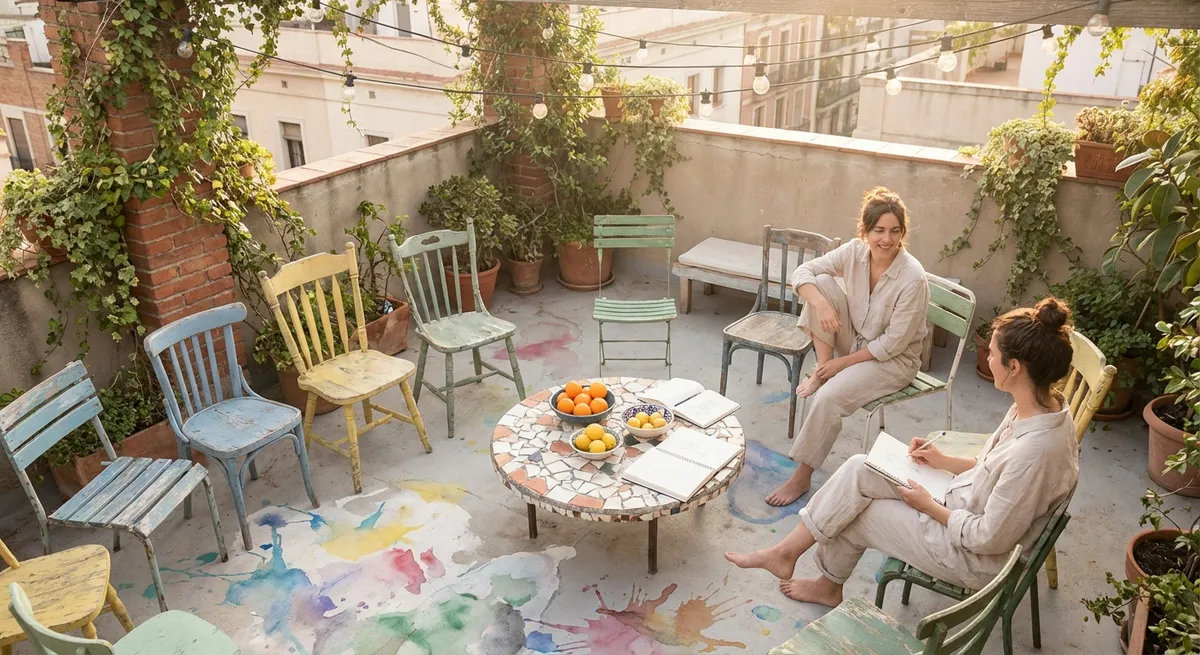
Below are five soul-forward patio ideas crafted for outdoor living enthusiasts who want their space to feel less like a showroom and more like a chapter they’re still writing.
1. The Gathered Glow: Patios That Feel Like a Campfire You Built on Purpose
Some spaces are designed; others feel like they were gathered—pulled together from stories, memories, and mismatched treasures. Aim for that gathered glow.
Start with a central glow source: a fire pit, a bioethanol fireplace, or even a cluster of oversized lanterns with LED candles. Think circular or semi-circular seating that instinctively pulls people closer. Deep lounge chairs, a low-slung outdoor sofa, or even a bench piled high with cushions in sun-faded colors will make people linger.
Layer the light like you’re painting warmth into the night—string lights overhead, a small table lamp rated for outdoor use, maybe a solar lantern tucked beside a plant. Choose textures that feel like they’ve already lived a few summers: stone, weathered wood, clay planters with a little moss on their edges.
This idea works because it taps into our oldest instinct: gather around the glow, share the day, and stay just a little longer than you meant to.
2. The Morning Ritual Patio: Designed for First Light and Quiet Thoughts
Design one corner of your patio as if its only job is to hold your first ten minutes of the day. Let everything else be flexible—but make this one spot sacred.
Place a single, deeply comfortable chair or a two-seat settee where it catches the morning light. Add a small, stable side table—just big enough for a mug, a notebook, and maybe a tiny vase with a clipped stem from the garden. If you can, position this setup to face something you want to see more of in your life: a tree branch that birds love, a horizon line, a small fountain, or even a potted lemon tree.
Surround this “ritual zone” with plants that wake up with you—grasses that rustle, herbs like rosemary or lavender that release scent when you brush past, a climbing vine that changes week to week. Keep a light throw blanket nearby for chilly mornings and a wide-brimmed hat or shade sail for warmer months.
When your patio holds a reliable place for stillness, it becomes more than décor; it becomes a rhythm. Instead of scrolling your way into the day, you step into it, barefoot on cool stone, listening to birds instead of alerts.
3. The Color-Washed Lounge: Let One Bold Shade Rewrite the Whole Space
If your outdoor area feels flat or forgettable, don’t overhaul everything—pick a single daring color and let it rewrite the mood. Think of your patio like a movie still: what color feels like the story you want to live there?
Maybe it’s sun-baked terracotta that echoes desert sunsets, deep ocean teal that cools the hottest afternoons, or saffron yellow that makes even cloudy days feel lit from within. Once you choose, commit. Use that hue in your cushions, outdoor rug, planters, and a painted accent (like a side table, doorframe, or wood screen).
Balance the bold with neutrals: warm wood, sand-colored textiles, charcoal metal. Add depth by playing with tone—lighter, darker, more muted versions of your chosen color. Patterns (stripes, geometrics, or block prints) can carry the shade without overwhelming the eye.
Color has documented effects on our mood and energy. A thoughtfully color-washed lounge can quietly nudge your evenings toward relaxation or your afternoons toward lively conversation—without you needing to say a word.
4. The Pocket Garden Patio: Turning Every Edge Into a Little Wilderness
Instead of thinking of your patio as separate from your garden, blur the boundaries until they disappear. Turn edges, corners, and even vertical surfaces into a patchwork of pocket gardens that make your space feel lush and alive.
Line your patio with a mix of container sizes: small clay pots, tall planters, window boxes, and hanging baskets. Mix structural plants (like dwarf boxwood, small evergreens, or ornamental grasses) with soft spillers—trailing thyme, creeping Jenny, bacopa, or ivy that cascades over the edges. Use vertical elements like trellises, wall-mounted planters, or a pergola draped with wisteria, jasmine, or grapevines.
Include at least a few native plants or pollinator-friendly blooms so your patio becomes a stopover for bees, butterflies, and birds. Place one or two planters within arm’s reach of your seating with herbs you can tear and toss into drinks or dinners: mint, basil, oregano, or chives.
A patio framed in living green doesn’t just look beautiful; it cools the air, softens noise, and makes your outdoor time feel more like a retreat and less like an extension of your driveway. It’s not just décor—it’s a living, changing companion to your everyday rituals.
5. The Flexible Storyline: Patios That Shift From Solo Retreat to Social Stage
The most lovable patios are the ones that can shapeshift with your life. Morning yoga space, afternoon work nook, evening tapas bar, weekend gathering spot—one footprint, many roles.
Start with furniture that’s easy to move: lightweight chairs, stackable stools, nesting side tables, and at least one flat-topped coffee table that can double as a serving station. Consider modular sofas or sectional pieces that can be rearranged for a movie night, a quiet reading corner, or a party.
Store a “party kit” in a weather-safe box: extra cushions, a folded outdoor rug, battery-powered candles, and a lightweight tablecloth. When guests arrive, your everyday lounge can become a celebration space in minutes. Add a portable Bluetooth speaker and a rattling ice-filled tub or beverage cart, and your patio suddenly reads as a tiny outdoor café.
Build in subtle zones using rugs, planters, or screens so you can define spaces without walls. A small bistro table tucked into one corner for two, a larger dining surface for six, and a lounging cluster in the middle can all coexist. Your patio becomes not just a setting, but a tool—you shape it around the story of that particular day.
Conclusion
The patios that stay with us are rarely the biggest or the most expensive. They’re the ones that make us pause—the ones where light falls just right on a chipped mug, where laughter collects in corners, where plants lean in like they’re listening.
When you design your patio as a place for rituals, color, gathering, green edges, and flexible living, you’re doing more than decorating. You’re choosing how you want your days to feel once you step outside your door.
Your slab of concrete, your brick rectangle, your small balcony, your sprawling deck—they’re all blank pages. The sun is already writing its part across them. The question is: what story do you want to tell back?
Sources
- Environmental Protection Agency – Using Trees and Vegetation to Reduce Urban Heat Islands - Explains how plants and vegetation can cool outdoor spaces and improve comfort on patios.
- Royal Horticultural Society – Gardening for Wildlife - Offers guidance on using plants to attract pollinators and wildlife, inspiring pocket garden patio designs.
- Harvard Health Publishing – The Health Benefits of Strong Relationships - Highlights why gathering spaces like patios matter for social connection and well-being.
- American Society of Landscape Architects – Outdoor Rooms - Discusses the concept of outdoor “rooms” and flexible layouts for living, dining, and lounging outside.
- University of Minnesota Extension – Selecting and Growing Perennials - Provides guidance on choosing and caring for plants that can thrive in patio containers and border areas.