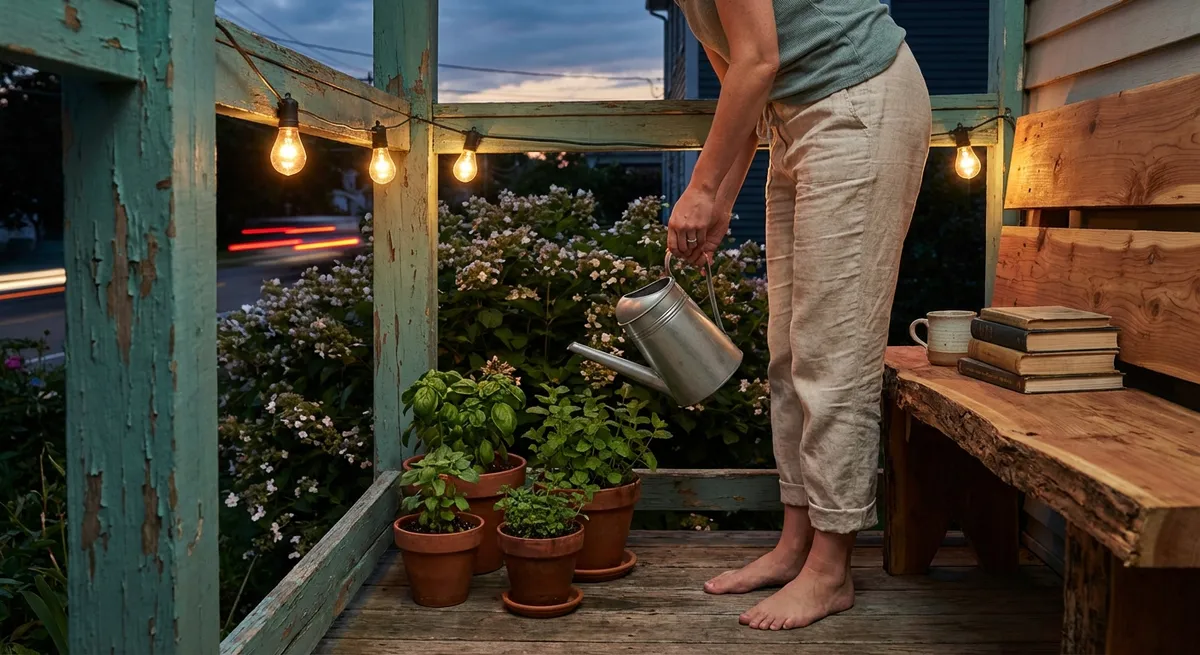
Designing a porch isn’t just about curb appeal. It’s about curating the way you want to move through time at home. Below are five porch design ideas for outdoor living enthusiasts who crave spaces that feel intentional, soulful, and quietly extraordinary.
1. The Slow Morning Porch: A Ritual-Ready Retreat
Imagine a porch that feels like a deep inhale. Soft light spills across wide floorboards, steam curls from your mug, and there’s a chair waiting in exactly the right spot to catch both the sunrise and your thoughts.
Design this kind of porch around ritual. Start with seating that supports lingering: a pair of rocking chairs with cushions that feel like a gentle embrace, a swing that moves as slowly as you want the morning to go, or a built‑in bench layered with weather‑resistant pillows in muted sunrise tones—pale peach, soft dove gray, and warm sand.
Surfaces matter here, too. Choose a side table just big enough for a notebook, a book, and your favorite mug. Add a woven outdoor rug underfoot to soften the first steps out of bed and create a visual “room” without walls. Plants in clay or stone pots—herbs like rosemary and mint, or easy‑care greenery—introduce scent and texture, turning your porch into a living border between house and horizon.
Light this space with gentleness in mind: a simple pendant lantern, candle hurricanes, or low‑glow LED candles that let you enjoy early gray mornings or dusky evenings without harsh glare. The result is a porch that doesn’t just look inviting—it quietly insists that you pause.
2. The Conversation Porch: Designed Around Connection
Some porches are built for passing by. Others are built for gathering. The conversation porch is a place where chairs lean in, voices drop, and phones get quietly forgotten on the side table.
Begin with layout, not furniture tags. Arrange seating in a loose circle or semi‑circle rather than facing the yard or the street. Think of it as setting the stage for eye contact: a pair of loveseats facing each other, a low-profile outdoor sofa with two accent chairs angled inward, or a generous sectional wrapped around a central coffee table.
Layer in comfort that invites people to stay for “just one more story.” Use mixed textures—linen-look outdoor fabrics, chunky knit throws, and woven rattan or teak accents—to make the porch feel less like a set and more like a living, breathing room. A low table, sturdy enough for board games and shared snacks, anchors the space; nesting side tables can float between seats for drinks and books.
To support conversation, let sound be part of the design. A slim, weather-resistant speaker tucked discreetly near the ceiling can play soft background music, while a small tabletop fountain brings in the grounding rhythm of water. As the sun drops, layered lighting—string lights draped in loose, generous lines, a standing lamp in one corner, and wall sconces with warm bulbs—keeps faces illuminated and moods softened.
This is a porch that doesn’t shout for attention from the street. It simply waits for people to come home and sink into it—together.
3. The Nature-Frame Porch: Blurring the Edge Between Inside and Outside
The best porches don’t just overlook nature; they frame it, like a living painting that changes with the light. This design approach is about aligning your porch with what’s beyond it: trees, sky, city skyline, mountains, garden beds, even a single beloved tree or view.
Begin by choosing a “hero view.” Maybe it’s the evening sky over the rooftops, a stand of old trees, or even your front garden buzzing with pollinators. Arrange your primary seating to face or partially angle toward that focal point—not the street, not the driveway, but the view that feeds you.
Then, soften the boundaries. Use rail planters and oversized pots to create layers of greenery at the edges of your porch: tall grasses for movement, flowering perennials for color, and trailing plants that slip over the borders as if they’re trying to join you inside. If privacy is a concern, consider tension wire trellises or lattice screens with climbing vines like clematis or jasmine; they’ll filter the outside world into dappled light and gentle silhouettes.
Color choices can echo the landscape. If your yard is lush and green, use deep forest and moss tones in pillows and rugs. In a desert or coastal environment, pull in sand, stone, and sea-glass hues. Natural materials—wood, stone, wicker, bamboo—bridge seamlessly between the built environment and what lies beyond the rail.
At night, aim your lighting outward as well as inward: small, low-voltage landscape lights in the garden, lanterns resting on the steps, or soft up-lighting on a nearby tree. Your porch becomes both front-row seat and quiet stage, held in the same breath as the world outside it.
4. The Quiet-Craft Porch: A Studio in the Open Air
There’s a particular joy in working with your hands where the breeze can find you. This design turns your porch into a gentle studio—part creative nook, part open‑air workshop—for sketching, knitting, writing, potting plants, or doing light DIY projects that make a house feel more like yours.
Start with a work surface that can pivot roles: a slim, weather-resistant console table, a fold-down wall‑mounted table, or a sturdy café table that can hold both coffee and creativity. Pair it with a supportive chair—something you’d be happy to sit in for an hour or two—with cushions that resist fading and moisture.
Storage can be beautiful here. Use lidded baskets for yarn, fabrics, or tools; a narrow shelving unit for pots, paints, or notebooks; or weather-safe storage benches that double as extra seating. This keeps your porch feeling intentional, not cluttered, even on days when every project is halfway done.
Light is critical for creative work. If your porch faces east, take advantage of the gentle morning glow for calm, focused time. West-facing porches might benefit from sheer outdoor curtains or bamboo shades to filter intense late-day sun while still letting the warmth and color through. Add a focused task light—a gooseneck lamp or adjustable sconce rated for damp locations—so your creativity doesn’t have to end when the sun dips.
Finally, give yourself a signal that this is a place for making, not rushing: a small corkboard or magnetic rail for inspiration images, a stack of well-loved books, or a single plant that marks your “studio corner.” The porch becomes not just a place you pass through, but a place where new pieces of your life actually get made.
5. The Seasonal Story Porch: A Space That Changes With the Year
Some porches feel frozen in time. Others evolve with the seasons, telling a new story every few months without requiring a full redesign. This approach turns your porch into a living calendar, shifting gently around the weather, the light, and the moods of the year.
Anchor the space with elements that stay constant: flooring, major furniture pieces, and primary lighting. Choose classics in neutral or natural tones—warm wood, charcoal, sand, or soft white—so that whatever seasonal accents you layer on will harmonize rather than clash.
Then, build a “seasonal wardrobe” for your porch. In spring, bring out soft pastels or fresh greens in throw pillows and blankets, along with planters full of bulbs or early bloomers. In summer, switch to bolder colors, breezier fabrics, and more open, airy accessories—wicker trays, glass lanterns, and lightweight rugs.
As autumn arrives, trade in the bright tones for rust, amber, and deep teal. Add textured throws, lanterns with flickering LED candles, and potted mums or ornamental grasses. Winter doesn’t have to close the porch entirely: think evergreen boughs, twinkling lights, outdoor-safe lanterns, and cushions in cozy, deeper hues. A small outdoor heater or fire feature (where allowed and used safely) can stretch your porch season dramatically.
Keep a labeled storage bin or two dedicated to “porch seasons,” cycling through pillow covers, table runners, wreaths, and small décor pieces. Each switch becomes a ritual: a quiet acknowledgment that time is passing, and your home is moving gracefully along with it.
The beauty of a seasonal porch is the way it invites you back out, again and again, to see what’s changed—outside your house, and inside your life.
Conclusion
A porch is more than an architectural feature; it’s a philosophy of how you want to live at the threshold of home. Whether you’re designing for slow mornings, deep conversations, framed views, creativity, or the shifting poetry of the seasons, your porch can become a daily reminder to step outside the rush and into a quieter rhythm.
You don’t need acres of space or a perfect view to create something meaningful. You just need intention: a few choices made in favor of comfort, connection, and the kind of beauty that makes you want to linger for one more minute… and then another.
Somewhere between your front door and the open air is a space that’s waiting to become your favorite place in the world. The design is simply how you help it remember that.
Sources
- University of Minnesota Extension – Outdoor Rooms – Guidance on creating functional “rooms” outdoors and thinking through layout and use.
- U.S. Department of Energy – Outdoor Lighting Tips – Practical information on efficient, safe outdoor lighting options and placement.
- The Spruce – Front Porch Ideas – Examples and design inspiration for styling and arranging porches in different styles.
- Better Homes & Gardens – Outdoor Living Spaces – Ideas for turning porches and outdoor areas into comfortable, livable extensions of the home.
- Royal Horticultural Society (RHS) – Container Gardening – Expert advice on choosing and caring for plants in pots, ideal for porch planters and green borders.