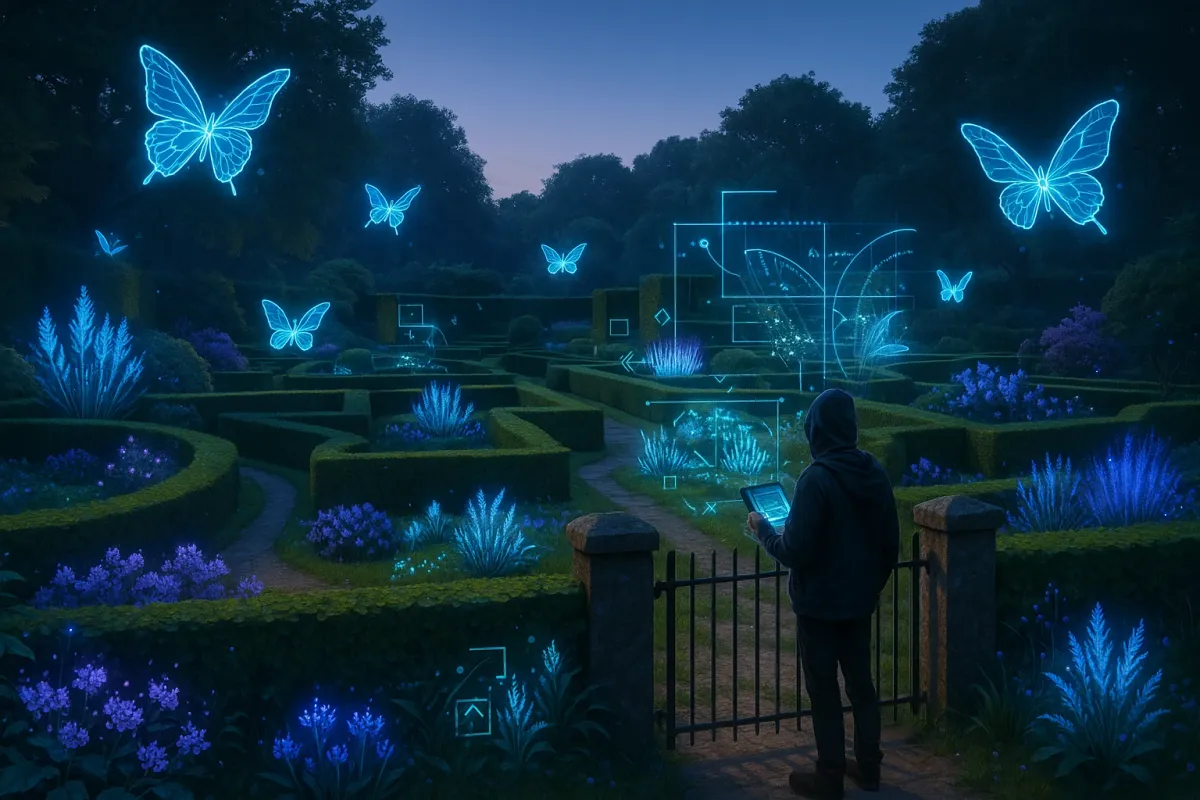
As AI artists reimagine our cities and storybooks, a quiet counter‑revolution is happening in our yards and on our porches: people are turning their outdoor spaces into living artworks that feel just as magical as anything on a screen. Instead of filters, they’re using foliage. Instead of 3D models, they’re using moss, stone, light, and water.
Inspired by the current wave of jaw‑dropping architecture and hyper‑real AI design trending online, here are five landscaping ideas that make your Porch Pad feel like it stepped out of a digital fantasy—only better, because you can touch it, smell it, and live in it.
Sculpted “Portal” Pathways That Look Straight Out of a Fantasy Render
We’re surrounded by images of impossible‑looking buildings right now—gravity‑defying towers and surreal facades that go viral precisely because they barely seem buildable. Take that same energy and pour it into your paths. Instead of a simple straight walkway, imagine a winding, sculpted path that feels like a portal into another world.
Think large, irregular stepping stones set in a bed of dark gravel, flanked by low, soft grasses that spill over the edges like green mist. Add a few slim, arching trellises over the path—painted charcoal or matte black—to echo the dramatic silhouettes of those bizarre viral buildings. Train climbing roses, clematis, or jasmine up and around them so you’re literally walking through fragrance. For a touch of that “is this real?” mood we see in AI art, hide small, warm LED strip lights along the underside of the trellises and under stone lips, so the pathway appears to glow from within at dusk. Every time you step outside, it feels like you’re exiting reality and entering a carefully designed dream.
A Living “Pixel Wall” Inspired by Digital Art and AI Portraits
As AI artists keep turning flat characters into lifelike portraits and filling our feeds with hyper‑detailed faces, you can borrow the same idea—only instead of pixels, you’ll use plants. Create a living wall that changes color and texture like a digital canvas, but breathes and grows.
Start with a sturdy trellis or modular vertical garden frame secured to a fence or exterior wall. Choose plants in distinct “color blocks”: emerald creeping thyme, chartreuse sedum, deep purple heuchera, silvery lamb’s ear, and flowering pockets of lobelia or calibrachoa. Arrange them in geometric bands, waves, or even soft gradients so the wall feels intentionally “composed” rather than randomly planted. If you want a touch of that AI‑portrait drama, integrate a simple, abstract pattern—an ombre band, a circle, or a chevron—in a contrasting color. At night, wash the whole piece in a gentle, indirect light (avoid harsh spots; think gallery glow). You’ll have an evolving, living artwork that looks like it stepped out of an art app and decided to root itself in your garden.
Storybook Corners: Tiny Scenes That Feel More Real Than the Movies
Social media loves transformation stories—“how it started vs. how it ended” posts that show a drab corner becoming something heartwarming. Apply that narrative magic to one forgotten patch of your yard and build a miniature “scene” worthy of its own post.
Choose a corner—by your porch, beneath a tree, or along a side yard—and ask: What tiny world could live here? Maybe it’s a forest‑floor reading nook: a simple wooden chair, a lantern on a stump side table, surrounded by ferns, hostas, and soft moss underfoot. Or maybe it’s a sun‑washed café vignette with two bistro chairs, a round table, and pots of lavender, rosemary, and dwarf olive trees, mimicking those European alleys filling everyone’s travel fantasies. Scatter subtle details: a small bird bath, a stack of weather‑worn books, a basket with a throw blanket. This isn’t about designing the whole yard at once; it’s about curating a single frame that tells a story. Over time, these little vignettes can connect, until your landscape feels like a gallery of moments rather than just “a lawn.”
Shadow‑Play Gardens That Turn Daylight Into Design
As memes, tweets, and social posts remind us daily, the smallest details can completely change the meaning of something—spacing in a sentence, a single emoji, one off‑beat comment. In the garden, light behaves the same way: change the angle, and everything feels different. Lean into that by designing for shadows as if they’re a material all their own.
Use elements that cast unforgettable silhouettes: lacy Japanese maples, upright ornamental grasses, laser‑cut metal screens, and pergolas with bold, simple beams. Position them where the sun will throw their shadows across paths, walls, or your porch floor morning and evening. Paint nearby surfaces in light, matte tones so the shadows show up like ink drawings. Add one or two sculptural objects—a large urn, a geometric bench, or even a trellis with a circular cut‑out—to create high‑impact outlines. The magic here is that your landscape becomes dynamic art: as the sun moves, your garden “redesigns” itself every hour, no app or algorithm required.
A Future‑Proof Sanctuary: Mixing Native Planting with Quiet Tech
We’re living in a world racing ahead—AI, smart homes, online everything—while people simultaneously rediscover the grounding joy of simple, offline rituals: gardening, bird‑watching, sitting under a tree. Your outdoor space can hold both: a sanctuary that’s deeply natural, but gently supported by smart, invisible tech.
Anchor your landscape with native plants—those that already belong to your region and support local pollinators. They’re the ultimate sustainable design tool: lower maintenance, more resilient, and buzzing with life. Layer in a few tactile luxuries: a gravel seating circle, a low stone wall that doubles as extra seating, a hammock or swing chair hung from a sturdy beam or branch. Then, behind the scenes, let quiet technology serve the calm: a drip irrigation system on a smart timer, low‑voltage path lights on an automatic schedule, maybe a discreet solar pump for a small fountain that keeps birds visiting all day. Instead of screens screaming for attention, you have tech whispering in the background, keeping your refuge running smoothly while you focus on the sound of water and wind in the leaves.
Conclusion
The online world is bursting with images of things that defy belief—AI faces that look more real than reality, buildings so odd they stop your scroll, comments so wild you have to share them. It’s easy to fall into the role of spectator, always looking at someone else’s creativity. But your porch, your yard, your balcony—they’re not just backdrops. They’re blank canvases.
When you sculpt a path like a portal, grow a living pixel wall, stage a storybook corner, choreograph shadow‑art, or weave together wild plants with quiet tech, you’re doing the same thing today’s designers and digital artists are doing: you’re reimagining what a space can be. Only you’re doing it in soil and sunlight, with a front‑row seat to watch it change.
Step outside, stand at your own garden gate, and ask yourself: If my feed showed up in real life, what would I want it to feel like? Then plant that feeling. Let it grow into something almost unreal—and beautifully, unmistakably yours.