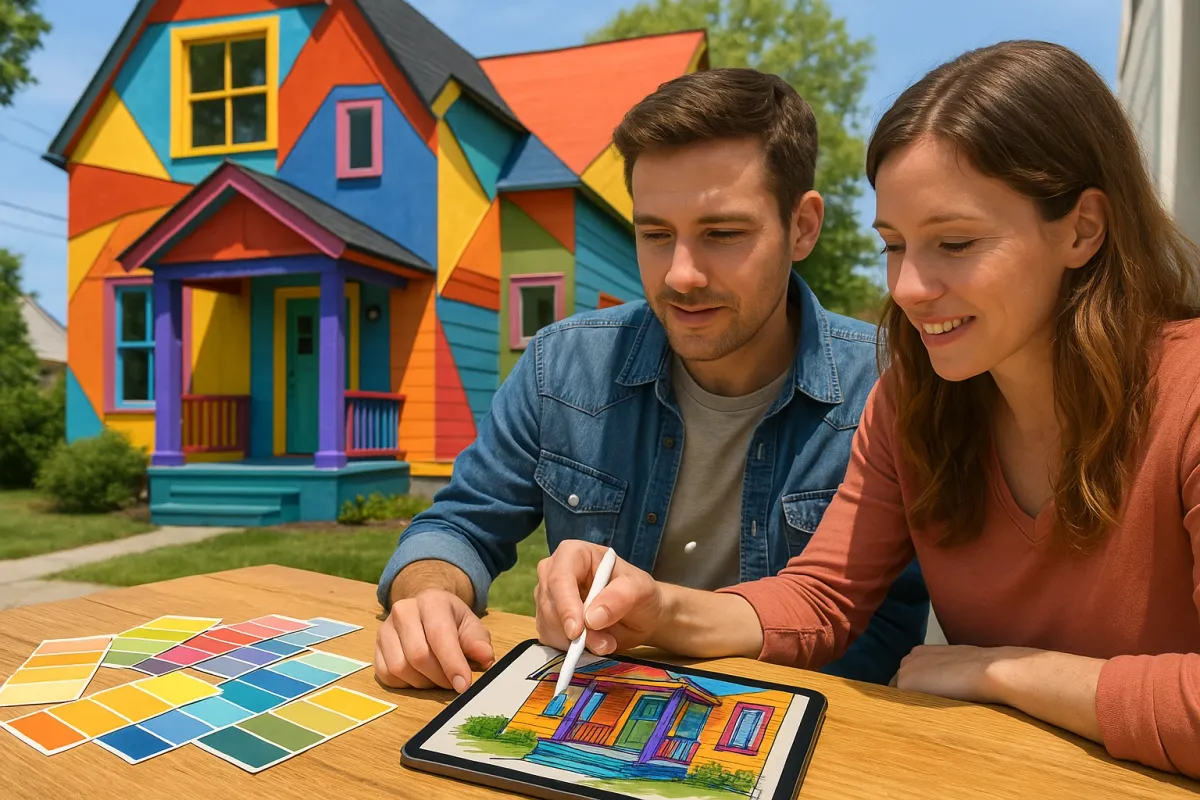
But here’s the secret the article never quite says out loud: those bizarre buildings aren’t just clickbait. They’re permission slips. Proof that your home’s exterior doesn’t need to be “normal” to be beautiful—it just needs to be authentically you.
If architects can get away with a bread-shaped factory in 2025, you can absolutely design a porch that looks like it stepped out of your sketchbook instead of a catalog. Let those wonderfully odd structures be the spark that pushes your porch from predictable to unforgettable.
Below are five design ideas inspired by the global wave of boldly weird architecture—each one tailored for outdoor living enthusiasts who want a porch that feels as daring and delightful as the world’s strangest buildings.
Sculpted Silhouettes: Turn Your Porch into a Mini Landmark
Those viral buildings making the rounds on social media right now have one thing in common: you could recognize them from a single outline. Think of the bread-shaped factory or surreal blob-like museums that look like they melted into existence. That’s the power of a strong silhouette—and your porch can borrow that magic.
Instead of defaulting to a standard railing and rectangular steps, imagine your porch as a little skyline on your street. Try arched balustrades that echo a cathedral, a wave-shaped handrail that gently rises and falls, or a pergola roofline that swoops like a painter’s brushstroke. Use contrasting materials—like dark-painted metal posts against pale wood—to exaggerate the lines and edges, just like iconic buildings use shadows to dramatize their shapes.
You don’t need an architect’s budget to play with form: cut plywood panels into soft curves and mount them as decorative screens, add an oversized circular cutout to a privacy wall, or frame your entry with a bold geometric arch. At dusk, let low, warm lights trace these silhouettes, turning your porch into the landmark your block didn’t know it needed.
Playful Facades: Bring “Bread Factory Energy” to Your Front Steps
The “bread-shaped bread factory” went viral because it’s shamelessly literal and gloriously playful: a building that looks exactly like what it makes. That same spirit can bring a grin to every person who walks past your home.
Ask yourself: What’s the story of this house—and can the porch tell it first? If you’re a plant lover, design a façade that feels like a greenhouse escaped into your front yard: glassy rail inserts, climbing trellises, overflowing window boxes. If your family spends every weekend baking, echo warm bakery tones—cinnamon, caramel, cream—on your decking, door, and ceiling, with round “bun” lights or circular stepping stones leading up.
You might echo hobbies with subtle motifs: tiny metal cutouts of waves if you’re surfers, star-shaped perforations in screens if you’re stargazers, or music-note-inspired spindles if the porch doubles as your jam-session stage. Just like the world’s strangest buildings, your porch becomes a visual inside joke—an introduction to who lives inside, told through color, texture, and form instead of words.
Optical Illusion Corners: Borrow from “Is-This-AI?” Designs
Many of the buildings trending today look digitally rendered because they bend perspective—floating balconies, twisted facades, and patterns that shimmer when you move. You can bring a softer, porch-friendly version of that optical magic to your outdoor space.
Use patterns that shift as you walk by: diagonal decking boards that switch direction halfway, a herringbone rug framed by straight planks, or a mosaic of tiles that creates a gradient from dark at the steps to light at the door. Paint two adjacent walls (or a post and a ceiling panel) in a continuous stripe that only lines up from one perfect viewing point—your favorite chair, of course. Suddenly your morning coffee comes with a built-in art installation.
Even simple trickery works: staggered slats on a privacy screen can appear solid from the street but open and airy from your rocking chair. String lights hung in receding parallel lines can make a shallow porch feel deeper at night. These subtle illusions are your way of whispering to the eye, Look closer. Stay a little longer.
Material Mash-Up: Embrace the “Why Not?” Mindset
The Bored Panda roundup is full of buildings that look like the designers dumped a box of materials on the table and said, “Sure. All of them.” Polished steel next to raw timber. Mosaic tile across brutalist concrete. Glass brushing against rusted metal. It shouldn’t work—but it does, because it’s intentional.
For your porch, think in unexpected pairings that tell a tactile story. Try smooth concrete steps feeding into warm, wide-plank wood decking, edged with cool, dark stone. Pair a breezy cane or rattan swing with a sleek, powder-coated metal side table. Layer a rugged jute rug with a smaller, patterned kilim on top to bridge indoor and outdoor textures.
Don’t be afraid of contrast in color, either: charcoal railings against a pale sage floor, a deep terracotta door trimmed in crisp white, glossy ceramic planters beside raw clay pots. The trick is to repeat each material or color at least twice—like a chorus in a song—so the porch feels composed, not chaotic. You’re not “mixing randomly”; you’re curating tension and harmony, just like those headline-grabbing buildings do on a larger scale.
Wonder Zones: Design a Porch That Feels Slightly Impossible
The oddest global structures often feel like they’re defying a rule—floating where they shouldn’t, doing too much in too little space, or turning a blank wall into an adventure. Let your porch become your personal wonder zone, where one corner always feels a little delightfully impossible.
Maybe it’s a reading nook suspended by thick ropes from the porch ceiling, like a mini floating daybed. Maybe it’s a vertical herb garden that snakes up a narrow support post, turning dead space into a living pantry. Consider a “secret” fold-down bar tucked into the railing, or a built-in bench with a hidden planter well in the center, where lavender or ornamental grasses rise right out of your seat.
If your porch is tiny, embrace that constraint the way small urban buildings do: go up, not out. Stack shelves of trailing plants, lanterns, and art up the wall. Mount a narrow ledge that acts as both desk and dining bar, with stools that tuck neatly underneath. Your goal isn’t to create a bigger porch—it’s to create a porch that makes people say, How did they fit all of this in here—and make it feel so peaceful?
Conclusion
As the internet buzzes over bread-shaped factories and surreal structures that look AI-generated, there’s a quiet invitation hidden in the spectacle: you’re allowed to be bold. You’re allowed to be playful. You’re allowed to let your porch stop blending in and start speaking up.
Your outdoor space doesn’t have to be outrageous to be extraordinary. It just needs a few brave decisions: a sculpted silhouette instead of a straight line, a playful façade instead of a safe one, an illusion or two that reward anyone who lingers, materials that dare to collide, and one tiny corner that feels like a magic trick.
The world’s strangest buildings prove that we remember the places that make us feel something. Let your porch be one of those places—your very own, human-sized landmark where daily life meets a little everyday wonder.