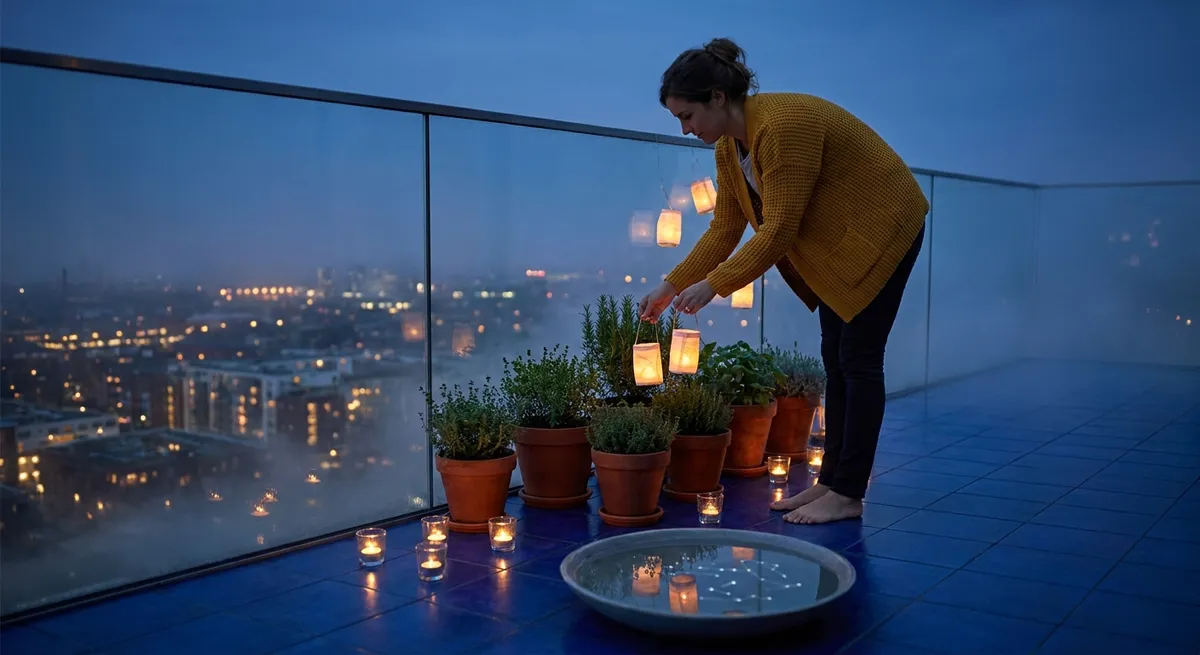
Below are five design ideas to help you shape a patio that feels less like a “project” and more like a living invitation—to linger, to connect, to breathe a little deeper.
1. The Soft Glow Patio: Designing for Golden Hour All Day Long
Imagine stepping outside and feeling like the light itself is on your side. A soft glow patio is all about crafting an atmosphere where every hour feels a little like golden hour—gentle, flattering, and forgiving.
Start with layers of lighting that feel like candlelight in different forms. String lights overhead can trace the lines of your space, making the night feel closer and kinder. Solar lanterns along the edges create a quiet pathway of light, guiding bare feet across stone or wood. Add a cluster of real candles or LED tapers on the table, and your patio begins to feel like a story unfolding after dusk.
Warm-toned bulbs (around 2700K–3000K) are your best friend here; they soften shadows and turn hard edges into comfort. Reflective surfaces—a glass-topped table, a metal lantern, a mirror on an exterior wall—scatter that glow softly around you. Think of the light as fabric, and your job is to drape it.
Colors should feel like the moment just before sunset: terracotta, sand, rust, gentle peach, dusk blue. They won’t shout; they’ll nod politely to the changing sky. Add a light throw on each chair so staying outside “just ten more minutes” turns into another hour without a second thought.
This kind of patio doesn’t just look warm; it reminds you that the day doesn’t end when the sun goes down. It just changes tempo—and you’ve built the stage for that softer song.
2. The Green Threshold: A Patio That Feels Half-Garden, Half-Room
Some patios feel like they were built and the plants added later. Others feel like the plants were always there—and someone kindly placed a floor in the middle so you’d have a place to sit. The green threshold patio aims for that second feeling: a quiet, leafy blur between indoors and outdoors.
Start by breaking up hard boundaries. Instead of a stark edge between patio and yard, let plants spill and creep. Large containers with herbs, grasses, or dwarf shrubs can mark transitions the way doorways do inside. Try grouping pots at different heights so your eye moves upward instead of stopping at the ground.
Vines are your secret bridge-builders. Train jasmine, clematis, or climbing roses along a trellis or over a pergola, and suddenly the air overhead feels alive. A simple railing can become a miniature hedge with railing planters full of trailing ivy, petunias, or even strawberries.
Bring in textures that echo the natural world: woven chairs, jute rugs, wooden benches, linens that move when the breeze does. Let your plant choices serve multiple roles—lavender for scent, rosemary for cooking, hostas or ferns for lushness in shady corners. When you reach to snip basil from a pot beside your chair, the patio stops being “outdoor decor” and becomes part of how you live.
The goal isn’t to create a curated garden showroom; it’s to feel slightly held by green—like the patio is the one clear patch in a friendly, growing world.
3. The Conversation Nest: A Patio That Pulls People Closer
Some seating arrangements keep people lined up like a waiting room. The conversation nest does the opposite—it gently gathers everyone inward, as if the patio itself is curious about what you’ll talk about next.
Begin with flow. Arrange seating in a loose circle or horseshoe that makes eye contact easy and side comments natural. Instead of one long sofa pushed against a wall, consider two loveseats facing each other, or four generously cushioned chairs angled toward a shared center.
The center, by the way, matters. A low table, a fire pit, or even a cluster of stump stools can anchor the space and give people a place to set down drinks, plates, or books. That physical grounding often leads to emotional grounding—hands free, shoulders down, attention finally present.
Layer in softness that invites people to stay: cushions that feel like a yes instead of a maybe, pillows with different fabrics (linen, cotton, bouclé) that you can’t help but touch, blankets in a basket for when the evening temperature dips but the stories aren’t done.
Think about sound, too. A small fountain, a rustling ornamental grass, or even a Bluetooth speaker tucked discreetly away with soft background music can create a sense of privacy, like your gathering exists in its own little bubble. If your space is close to neighbors or a street, tall planters, trellises, or outdoor curtains can muffle noise and blur sightlines, nudging the patio into a more intimate, cocoon-like feel.
What you’re building isn’t just seating; it’s a reason people linger after the plates have been cleared, talking in the dark until the bugs become part of the conversation.
4. The Weather-Proof Daydream: A Patio Ready for Every Season
The most magical patios aren’t perfect on perfect days; they’re lovable in almost any weather. This idea is about turning your patio into an all-year co-conspirator instead of a fair-weather friend.
Shade and shelter come first. A retractable awning, pergola with slats, shade sail, or even a generously sized umbrella gives you control over light and rain. When a sudden drizzle starts, you don’t run inside—you just shift your chair a few inches, smile, and listen.
For colder months, think about warmth you can see and feel. A fire pit, chiminea, or outdoor heater makes chilly evenings not just tolerable but romantic, wrapping the air itself in a sense of occasion. Adding an outdoor rug warms the space visually and physically, making bare feet braver.
Flexible layers make this patio adapt like a wardrobe. Stackable chairs, nesting side tables, and lightweight poufs can be rearranged for solo reading, family dinners, or spontaneous gatherings. Storage benches or a small deck box can hold cushions, blankets, and lanterns that come out when needed and tuck away when weather turns.
Consider all your senses: wind chimes that sing on breezy days, potted lavender or mint that release scent when touched, a small fan for summer afternoons, a thick robe or sweater waiting on a hook by the back door for winter mornings.
A weather-proof daydream patio doesn’t fight the seasons—it welcomes them. You stop measuring your outdoor life in “patio months” and start noticing how February sunlight feels different from August sunset, each one with a seat saved for you.
5. The Daily Ritual Patio: A Space for Quiet, Practice, and Small Joys
The most powerful patios aren’t just designed; they’re woven into your day. This idea is about creating an outdoor space that naturally hosts your favorite rituals—the little practices that make life feel more like living and less like rushing.
Begin by asking what you want more of: Reading? Stretching? Journaling? Shared breakfasts? Evening stargazing? Then shape the patio around those answers. A small café table and two chairs can transform a bare corner into a morning coffee haven. A cushioned bench with a side table and a basket for books can become your new reading nook.
If you’re drawn to movement or mindfulness, leave a clear patch of floor for yoga or simple stretching. Store a rolled mat in a nearby basket and add a lantern or single potted plant that acts as a focal point. Over time, your body will start to associate that exact spot with calm and replenishment.
Tiny altars of intention can live outdoors, too: a tray with a candle and a stone you picked up on a trip, a small vase that always seems to find a new flower, a notebook and pen waiting for ten minutes of evening reflection. None of this has to be staged or precious; it just has to be ready when you are.
Lighting again plays a role—soft in the morning, gentle and welcoming at night. A single well-placed lamp or sconce can make the difference between “too dark” and “just right for one more chapter.” Think about where you’ll set your mug, your glass of wine, your journal; make sure your patio actually supports the rituals you dream about, not just photographs well.
Over time, this kind of patio becomes less of a “space” and more of a rhythm. You step outside not to admire your design, but to return to yourself.
Conclusion
A patio is more than flooring, furniture, and a few plants. It’s a threshold—a place where you’re allowed to be both inside your life and just outside of it, watching with a little more softness and a little more wonder.
Whether you’re drawn to glowing evenings, green edges, deep conversations, all-weather living, or quiet rituals, your patio can carry those intentions in wood and stone and fabric. Start with one idea, one corner, one chair. Let it grow slowly, the way the best stories do.
One day, you’ll step outside, take a breath, and realize: this isn’t just a patio anymore. It’s where your house ends, the sky begins, and your favorite parts of life meet in the middle.
Sources
- Environmental Protection Agency – Green Landscaping – Guidance on using plants and landscaping to create healthier, more sustainable outdoor spaces
- U.S. Department of Energy – Outdoor Lighting Tips – Practical information on choosing efficient, warm-toned lighting for outdoor areas
- Royal Horticultural Society – Container Gardening – Expert advice on using pots and planters to green up patios and small spaces
- Mayo Clinic – The Health Benefits of Time Outdoors – Explores how outdoor time supports mental and physical well-being
- Harvard Health Publishing – Relaxation Techniques – Useful background on simple rituals and practices that can be supported by a calming patio environment