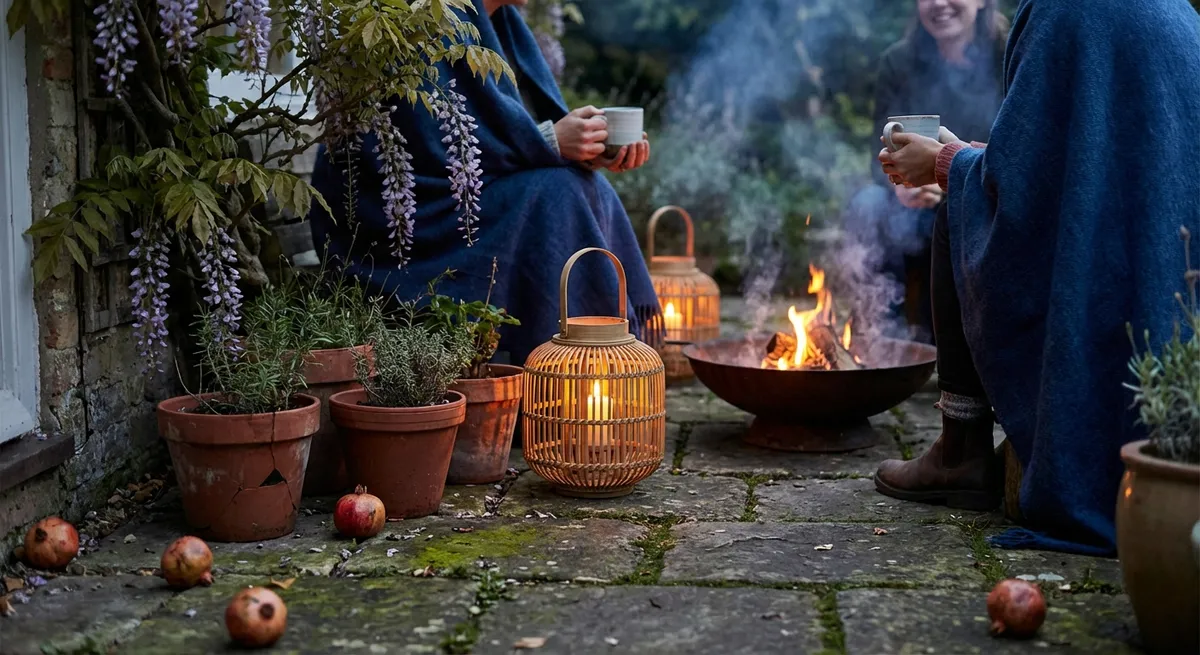
Below are five design ideas crafted for outdoor living enthusiasts who want more than décor. These are atmospheres, not just layouts—spaces that invite you to stay one more song, one more story, one more quiet breath.
Idea 1: The Lantern Orchard – Layered Light That Feels Like Storytime
Imagine stepping outside and feeling as if you’ve walked into a cluster of stars that chose your backyard as their hiding place. The “lantern orchard” approach turns your patio into a soft constellation, not with harsh spotlights, but with layers of gentle, human-scaled light.
Start with a foundation of warm, low-level lighting: string lights draped loosely overhead, solar path lights tucked into planters, or low-wattage sconces along walls. Then introduce a scatter of lanterns—metal, bamboo, or frosted glass—resting on steps, tables, and the floor. Mix candle lanterns (real or LED) with battery-powered options to keep maintenance easy. The goal is a rhythm of glow and shadow, not a flood of brightness.
To deepen the feeling, cluster three or five lanterns together in odd-numbered “groves” around a rug or seating corner, like miniature neighborhoods of light. Add one statement piece: a larger floor lantern or a pendant-style light hanging above a coffee table. The result is a patio that feels like a bedtime story waiting to be told, perfect for reading, soft music, or letting conversations drift long after the sun is gone.
Idea 2: The Textured Nest – Layering Comfort Like a Favorite Sweater
A truly magnetic patio feels like your most beloved sweater: familiar, forgiving, and quietly luxurious. The textured nest idea is all about layering touchable materials so the space invites you to sit, sink, and stay.
Begin underfoot with a substantial outdoor rug—woven jute, patterned flatweave, or a washable performance fabric. This rug becomes your visual “island,” gathering furniture into a single cozy zone instead of scattered pieces. Build upward with furniture that has strong shapes but soft finishes: teak or eucalyptus chairs with deep cushions, a low coffee table in stone, tile, or weathered wood, and maybe a built-in bench with plush seat pads.
Now, layer textiles like you would in a bedroom: outdoor throw pillows in different fabrics (canvas, boucle-style textures, even outdoor velvet), lightweight blankets draped over chair backs, and perhaps a floor cushion or pouf. Include at least one unexpected texture—like a ceramic stool, a woven side table, or a metal accent chair—to keep things from feeling too matchy or flat.
In cooler months, a portable fire bowl or tabletop heater adds physical and emotional warmth. The more tactile layers you add—within reason—the more your patio feels like a nest you can curl into at any time of day, from early-morning coffee to late-night stargazing.
Idea 3: The Green Room – Plants That Turn Your Patio Into a Soft Enclosure
Theaters have green rooms where performers rest and reset. Your patio can be your own green room—part garden, part retreat—using plants not just as décor, but as living walls that hold you.
Start by thinking in three heights. At ground level, use wide planters or low beds for herbs, groundcovers, and compact shrubs. Move up to mid-height with potted grasses, ferns, and flowering perennials placed along the edges of your seating zone. Finally, add height with trellises, tall containers, or climbing vines (like clematis, jasmine, or climbing roses) to visually “raise” the space and soften any harsh fences or railings.
Choose a mix of evergreen structure (boxwood, dwarf conifers, hardy shrubs) and seasonal change (annual flowers, ornamental grasses, and herbs like rosemary or lavender). This blend keeps your patio feeling alive year-round. If your space is small, vertical gardening—wall planters, rail-mounted boxes, or a ladder-style plant stand—can surround you with green without taking up floor space.
For outdoor living enthusiasts, this kind of planting scheme creates more than beauty; it crafts privacy without walls and offers sensory rewards: the rustle of leaves, the scent of herbs crushed underfoot, the dappled shade that moves across your table. Add one focal container—a large olive tree, a Japanese maple, or a statement tropical plant—as the living “sculpture” your seating naturally faces.
Idea 4: The Moveable Feast – Flexible Zones for Food, Fire, and Conversation
A great patio feels ready for whatever the day asks of it: solo journaling at sunrise, a family brunch, or an impromptu evening with friends who “stop by for a minute.” The moveable feast idea focuses on flexible zones, not fixed rules, so your patio can shift and stretch with your life.
Begin with a single anchor—a table or sectional—that defines your main gathering spot. Then, instead of building everything rigidly around it, introduce pieces that can roam. Stackable chairs, lightweight stools, and small side tables can shuffle between eating, lounging, and playing board games. A rolling bar cart lets you transform any corner into a drink or dessert station in seconds.
If cooking outdoors is part of your dream life, consider a compact outdoor kitchen zone: a grill or pizza oven, a sturdy prep surface or console table, and weatherproof storage for tools. Even on a small patio, a narrow, wall-hugging workspace can turn simple meals into events. Add an outdoor-safe tray system—prepped snacks and drinks can be carried out quickly, making the transition from kitchen to patio feel seamless.
Lighting and warmth are the finishing ingredients. A fire pit or fire table with movable chairs around it becomes a secondary “gravity point” people naturally gather around. When it’s just you, it doubles as a solo retreat for reading or reflection. The power of a moveable feast patio is that nothing is so precious, or so fixed, that it can’t bend to the moment you’re living.
Idea 5: The Sound & Silence Patio – Designing for the Ways You Unwind
Your patio doesn’t only exist in sightlines; it lives in sound, in silence, and in the air between them. The sound & silence idea is about shaping what you hear outdoors, so the space becomes a reliable refuge for your nervous system.
Start by listening to your patio as it is now. Do you hear street noise, neighbors, or traffic? If so, introduce gentle sound layers that soften the world: a small fountain or bubbling water feature, wind chimes with lower, bell-like tones, or rustling grasses that catch the breeze. Water features are powerful here; even a compact, plug-in fountain placed near seating can create a veil of sound that makes you feel cocooned.
If you crave music, add discreet outdoor speakers or a portable Bluetooth speaker you can tuck onto a shelf. Curate playlists for different moods—acoustic mornings, jazz at dusk, ambient instrumentals for reading. Keep the volume low enough that conversation and birdsong still have room; the aim is atmosphere, not performance.
For silence-lovers, use design to create pockets of stillness. Solid fencing or tall hedges can buffer noise. Outdoor curtains or bamboo screens subtly divide the patio into “public” and “sanctuary” sides. A single, deeply comfortable chair with a side table—slightly removed from the main seating area—signals this corner is for journaling, prayer, meditation, or simply staring at the sky.
In the end, the most restorative patios are tuned like instruments: a little sound here, a little quiet there, each detail chosen to welcome you back to yourself.
Conclusion
A patio can be many things: a room the sky never quite closes, a garden that holds your evenings gently, a stage where ordinary days feel strangely luminous. You don’t need a sprawling yard or a designer budget to begin. You only need intention—light that flatters dusk, textures that ask to be touched, plants that breathe with you, furniture that shifts with your life, and soundscapes that calm instead of crowding.
Start with one idea: a cluster of lanterns, a single lush chair, a pot of rosemary that perfumes your night air. Then let the space evolve with you. Over time, your patio stops being “the area out back” and becomes something quieter and more powerful: the place where you remember how you actually want your life to feel.
Sources
- U.S. Department of Energy – Exterior Lighting – Guidance on energy-efficient outdoor lighting and fixture choices
- Royal Horticultural Society – Container Gardening – Practical advice on choosing and caring for plants in pots and planters
- Better Homes & Gardens – Patio Design Ideas – Inspiration and examples of patio layouts, furniture, and decor
- University of Minnesota Extension – Creating Outdoor Rooms – Research-based tips on zoning and designing outdoor living spaces
- Harvard Health – The Health Benefits of Being Outdoors – Overview of mental and physical health benefits of spending time outside