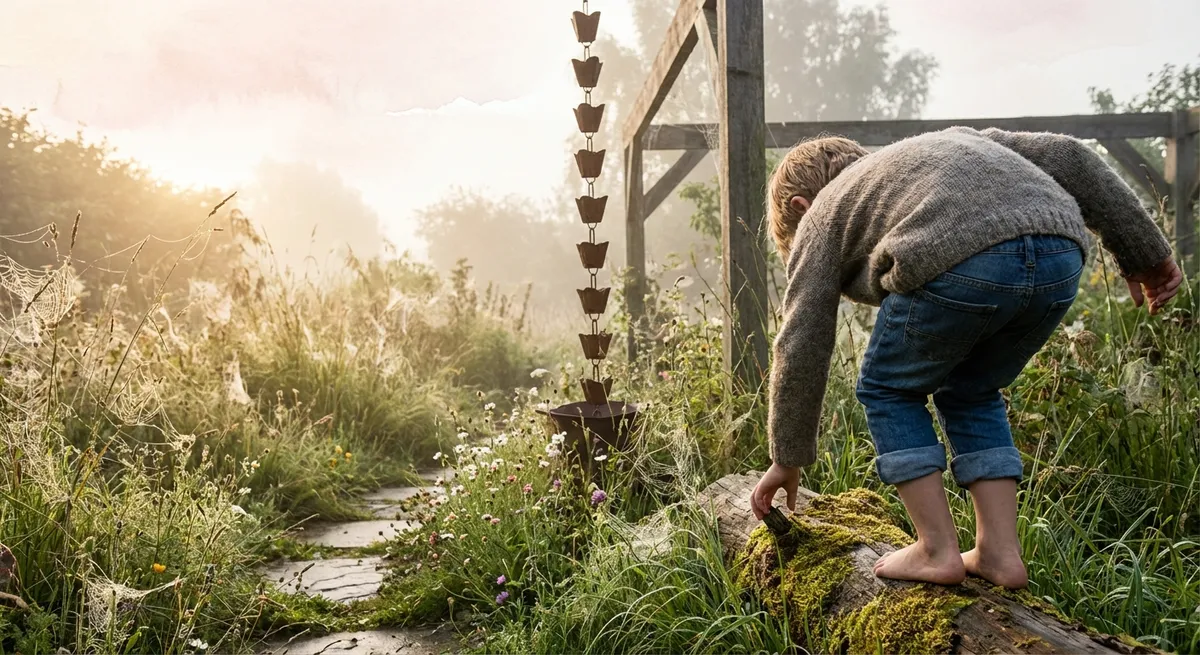
Below are five design ideas to help you shape a landscape that feels alive, layered, and loved—an outdoor world where paths don’t just go somewhere, they mean something.
1. The Overlook Garden: Framing a View, No Matter How Small
Every property has a “best angle”—a sliver of sky between rooftops, a distant hill, a quiet neighbor’s tree line, or even the glow of the city at night. An overlook garden starts by honoring that view, then gently choreographing everything else to guide your eyes and your breath toward it.
Begin with one focal line: a low stone wall, a simple wooden bench, or a slender metal railing, placed where you naturally pause. Layer plants around this pause point like soft curtains: airy grasses in front that sway with the breeze, mid-height perennials to blur the edges, and a few taller shrubs or small trees to create a sense of shelter behind you. The effect is subtle but powerful—you’re both held and opened at the same time.
Choose plants that echo the mood of the view. Looking out over city lights? Try structured plants like boxwood, feather reed grass, or architectural succulents that mirror the urban geometry. Gazing toward a meadow or woods? Let loose with coneflowers, native grasses, and flowing catmint. Even in a small yard, a tiny “overlook” at the top of three steps or at the end of a narrow deck can transform how you experience your space. It turns standing outside into arriving somewhere, every time.
2. The Seasonal Tapestry: Planting for Time, Not Just Space
Most landscapes are designed as if time doesn’t exist—perfect on planting day, then strangely flat by midseason. A seasonal tapestry garden flips that script. Instead of asking, “How full does it look now?” ask, “What story will this spot tell in April, July, and October?”
Start by mapping your year in color and texture. Early spring might belong to bulbs and flowering trees—daffodils, tulips, serviceberry, or redbud. Summer could be about generous blooms: black-eyed Susans, hydrangeas, salvias, bee balm. Autumn might lean into fiery foliage, seed heads, and ornamental grasses that catch the low sun. Even winter has a role: exfoliating bark, evergreen structure, and dried seed stalks that sculpt shadows in the snow.
Plant in forgiving drifts and clusters rather than isolated dots. A wide river of one grass variety, a repeated patch of the same perennial along a path, or a trio of matching shrubs creates rhythm, which makes the garden feel intentional even when individual plants are emerging or fading. Instead of “dead spots,” you get transitions—those quiet weeks where one layer hands the baton to another.
The magic of a seasonal tapestry isn’t just visual; it’s emotional. You start to notice the first hint of color in the buds, the exact day the garden hums with pollinators, the moment the leaves deepen into late-summer green. Your landscape becomes a living clock that pulls you gently out of your head and back into the unfolding year.
3. The Grounded Sanctuary: Creating Calm with Low Layers and Soft Boundaries
Tall trees and sculptural shrubs often steal the spotlight, but tranquility usually begins close to the ground. A grounded sanctuary uses low, layered planting and blurred boundaries to create a sense of safety and calm, like a soft rug for your entire yard.
Focus first on the “floor” of your landscape. Replace bare mulch or patchy lawn with groundcovers and low plantings—creeping thyme between pavers, sweet woodruff under trees, clumping sedges, or low-growing native perennials. These plants knit the space together, soften noise, and visually lower the whole scene, making everything feel more intimate.
Next, rethink the edges. Instead of hard, straight borders, carve in gentle, wavy planting beds along fences and property lines. Fill them with a gradient of heights: low at the lawn or path, mid-height perennials and grasses in the middle, and slightly taller shrubs at the back. The result is a soft “hug” around your space, a contrast to the rigid lines of houses and fences.
For seating, tuck chairs or a simple bench into these planted edges rather than putting everything in the center of the yard. Being partly surrounded by foliage—ferns brushing your knees, grasses at your shoulders, branches above—creates an instant cocoon effect. Suddenly, your yard doesn’t feel exposed; it feels like a room with green walls and a sky ceiling, made for slow mornings and quietly stretching evenings.
4. The Living Corridor: Inviting Wildlife into Your Daily Orbit
Landscaping can be more than pretty—it can be a lifeline. A living corridor turns your property into a welcoming route for birds, pollinators, and beneficial insects, linking your home to the wider web of life that stretches beyond your fence lines.
Begin by choosing a few native shrubs, trees, and perennials that provide food and shelter—berries for birds, nectar for butterflies and bees, and dense branches or grasses for nesting and cover. Plant these in connected bands or islands that create “stepping stones” of habitat. A small hedgerow along a side yard, a strip of flowering plants between the driveway and lawn, or a layered border near the back fence can all serve as wildlife highways.
Add vertical variety. A single tree over low groundcovers might be enough in a tiny yard; in larger spaces, blend canopy trees, understory shrubs, and flowering perennials. Even a few pots filled with pollinator-friendly blooms on a balcony can connect to street trees and nearby parks, extending the corridor upward.
To make this corridor part of your daily life, stitch it into your human paths too. Let a simple gravel or stepping-stone walkway pass near a bird bath, under a fruiting shrub, or alongside a patch of wildflowers. The more you share space with the creatures you’re inviting in, the more you’ll feel the quiet thrill of coexisting: the hummingbird that remembers your bee balm, the goldfinch that clings to your coneflower seeds, the fireflies that sparkle where you once had only lawn.
5. The Night Garden: Designing for After the Sun Slips Away
Daytime gardens get the attention, but evenings are where outdoor spaces often become unforgettable. A night garden isn’t just about lights; it’s about how plants, shadows, and moonlight conspire to create a different, more intimate world once the sun is gone.
Choose plants that glow at dusk: white or pale blooms like moonflower, white phlox, shasta daisy, or evening primrose, and silver foliage like lamb’s ear, artemisia, or certain sages. These catch even the faintest light and seem to float against the darkness. Add a few fragrant night performers—jasmine, nicotiana, or certain varieties of honeysuckle—to create invisible “moments” you can walk into, where scent suddenly deepens the air.
Layer lighting sparingly and thoughtfully. Soft, low-level path lights, a single uplight on a tree with interesting bark, or a warm pendant over a small table is often enough. Aim for pools of light rather than an evenly lit yard. The darkness between them is what makes the lit areas feel magical.
Finally, give your night garden a purpose: a single chair angled toward a favorite tree, a simple built-in bench along a low wall, or a small café table where you can land with a blanket and a warm drink. When the day’s demands finally ease, your landscape can shift into a dimly lit sanctuary—a place where leaves rustle differently, stars feel closer, and your thoughts have room to stretch out and soften.
Conclusion
Landscaping isn’t about achieving a final, flawless picture; it’s about setting up a living conversation between you and the place you call home. When you frame a view, layer the seasons, soften your boundaries, welcome wildlife, and honor the night, your yard stops being a project and starts becoming a companion.
You don’t have to do everything at once. Start with one corner—the future overlook, a small wildlife border, a single night-blooming vine near the porch. Let it grow, teach you, and surprise you. Over time, your outdoor space will become something deeper than curated “curb appeal.” It will feel like a quietly evolving world of its own, one that you get to step into every day—and keep rediscovering for years to come.
Sources
- U.S. Forest Service – Landscaping for Wildlife – Guidance on creating wildlife-friendly gardens with native plants and layered habitats
- National Wildlife Federation – Garden for Wildlife – Explains the benefits of turning yards into habitat corridors for birds, pollinators, and other species
- Royal Horticultural Society – Year-Round Interest in the Garden – Practical advice on designing planting schemes with four-season appeal
- University of Minnesota Extension – Sustainable Lawn and Landscape Practices – Research-based information on low-maintenance landscaping, groundcovers, and plant selection
- International Dark-Sky Association – Outdoor Lighting Basics – Best practices for night-friendly, low-glare outdoor lighting that enhances evening gardens while reducing light pollution